Winter gives way to Spring in New Jersey

Winter has receded and Spring has sprung in central New Jersey, and we’re seeing the changing of the guard in the birds that frequent these parts. Warblers are starting to arrive, although I have yet to get a confirmed sighting in my recent outings.

Who’s on the way out? White-throated sparrows and American tree sparrows will soon be gone. Within the last week I’ve seen just one of the latter and a few of the former, at the Mercer Meadows Pole Farm and at our main feeder at home. Dark-eyed juncos are gone from the parks but are lingering at the house, but won’t for long. Taking their places in abundance are my friends the field sparrows, one of whom sings out at the top of this post, and chipping sparrows.

At John A. Roebling Park at Trenton marsh, I was thrilled to see great egrets fly in for the first time in many months. An even greater treat at the park was to watch three Caspian terns flying over and diving into Spring Lake. They are infrequent visitors in Mercer County.

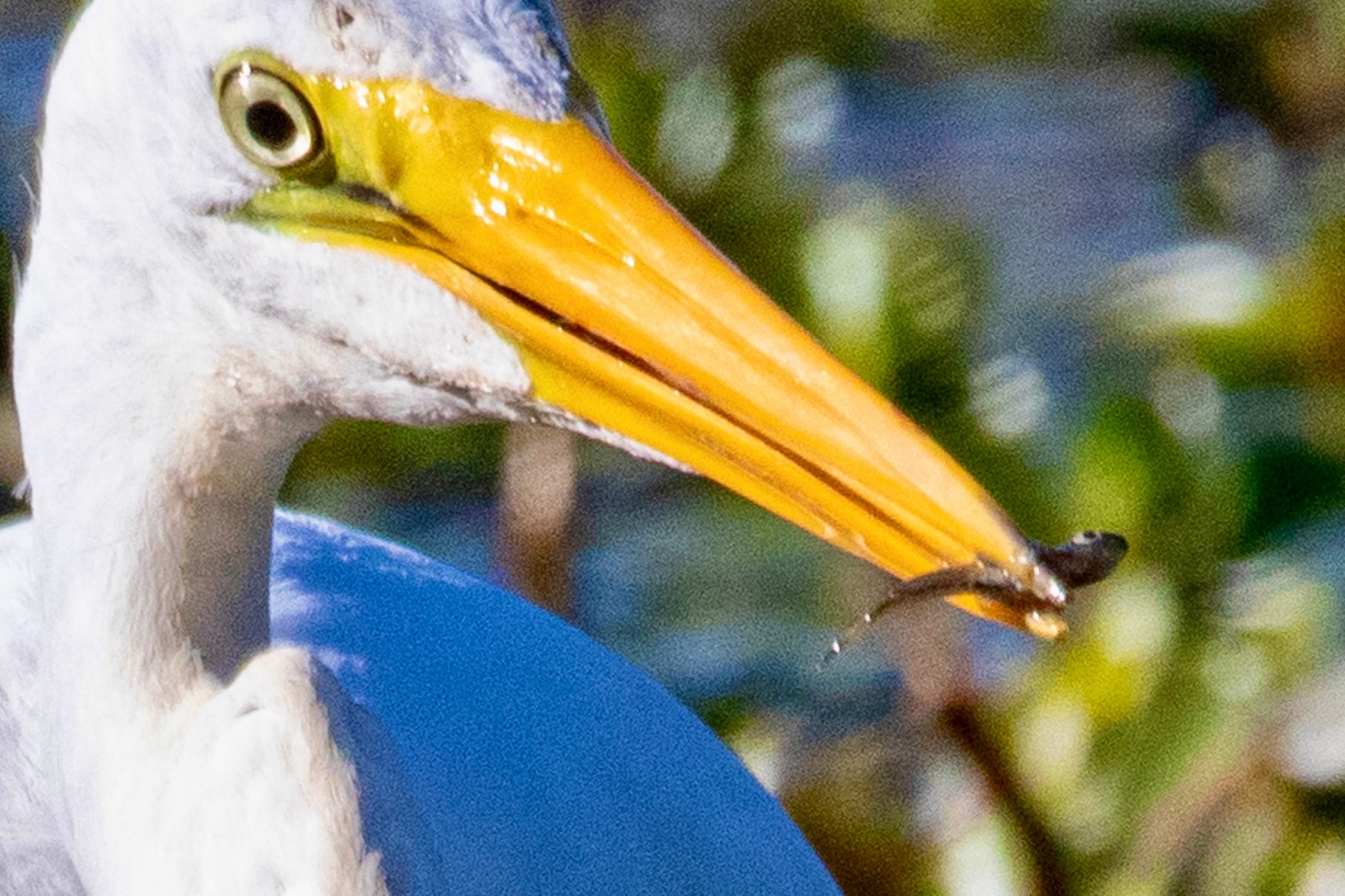
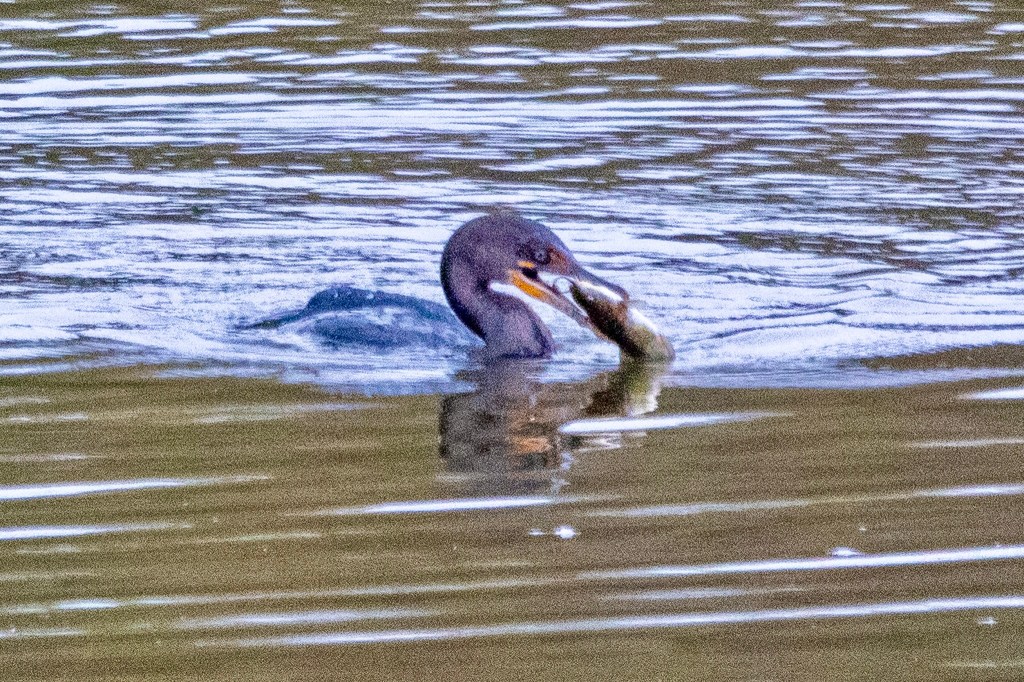
After finally finding the parking lot, I paid my first call to the Millstone River Impoundment in Princeton on Saturday. Although I didn’t see any warblers, I was able to see several recently returned double-crested cormorants and more great egrets.

A double-crested cormorant floats toward Lake Carnegie at the Millstone River Impoundment.

It’s a wonderful time of year, and the variety of birds will be increasing in the coming weeks as the great migration heats up. I look forward to it.

As the moon recedes shortly after sunrise, a red-winged blackbird sings its raucous song at the Mercer Meadows Pole Farm.

Caspian terns pay us a visit at Trenton marsh

After the Mercer Meadows Pole Farm, one of my favorite places to bird is the Trenton marsh. After seeing an alert that Caspian terns were spotted there on Saturday, I drove down as the sun came out that afternoon and was treated to a delightful display by these unusual visitors.

The terns are fast flyers, and I watched as three of them jetted about, looking for fish to pluck out of Spring Lake. The lake is one of the main features of Trenton marsh, and I need to make some distinctions for those interested in visiting.

A Caspian tern soars over Spring Lake at John A. Roebling park, part of Abbott Marshlands.

The marsh — more formally Abbott Marshlands — sprawls from Trenton into neighboring Hamilton and even a bit of Burlington County, and there are a few entrances. The one I usually visit is at the end of Sewell Avenue, just off Broad Street in Trenton, where you’ll find the John A. Roebling Park sector of the marsh.

From the parking lot, Spring Lake is off to the left and the marsh to the right. A pair of mute swans are in residence on the marsh, and they’ll occasionally pop over to the lake. The marsh is a great spot for herons, egrets, kingfishers and several varieties of ducks (mallard, American black, wood, e.g.) while the lake often has ring-necked ducks, gadwalls and gulls.

A great egret sits at the top of a tree, high above the Trenton marsh.

The narrow band of trees between the lake and marsh during migration seasons teems with birds: sparrows, wrens, kinglets, palm warblers and more. There’s a straight path along the lake edge, with a few cutovers to a more undulating path to the right that goes through the trees and offers openings to the marsh edge.

Ospreys like the one above and bald eagles often visit Abbott Marshlands.

Up the path is a junction at which you can turn left to walk around the lake or cross a narrow concrete bridge that brings you to the wooded Island Trail that takes you to the back stretches of the marsh. The trail is marked with red blazes (or are they orange?) and there’s a turnoff to the white Annabelle Trail, which I often take. It’s short, offers a nice mix of woods and marsh, and is less confusing than the red trail, on which I got lost on one of my first visits and seemed to trek forever before finding my way back.

An old friend returns, and a new one arrives

I stepped out of the car and turned toward the Delaware and Raritan Canal just a few yards behind me, and I heard something I wasn’t expecting. It took a few seconds before I could train my binoculars on the source of the spondaic call: a small green bird on the stalk of a short, barren tree.

Once I spotted the bird, my brain fully kicked in as I clearly heard and identified the slightly buzzy “Fee-bee! Fee-bee!” of the Eastern phoebe. The phoebe — shown above singing from the near bank of the canal across from the old Port Mercer canal house — was my first of the year and brought me instant joy.

The bird stayed in place for a minute or so before flying to another tree closer to the Quaker Road bridge, busy with morning commuter traffic headed to and from Princeton.

I was delighted to see the phoebe for its own sake, but also because when I started this website and blog two years ago, the Eastern phoebe was the first bird I wrote about, in my second post.

The phoebe sighting was a bonus. I had come to visit the Dyson Tract, along the stretch of the canal where Princeton meets West Windsor, a half mile or so from a cluster of shopping centers along U.S. Route 1. What drew me were recurring reports that a tundra swan was in the area, and after the phoebe flew off, I looked for the swan on both sides of the bridge.

No luck.

So I turned away from the bridge and headed along the towpath toward the wooden fences that mark the entrance to the Dyson tract. In a minute or two, I spotted the swan stationed on the opposite bank, grooming itself.

Tundra swans are rare in these parts, and I had only seen one previously. That was last month in neighboring Monmouth County, where I spotted it along with two trumpeter swans (also lifers) and a mute swan at Assunpink Wildlife Management Area.

I crept forward to take a few stealth shots of the swan through the branches of the trees and shrubs along the bank. Then the swan cooperatively started edging off the bank and swimming toward the bridge, bringing me a clear view through a gap in the branches.

Magnificent, I thought to myself, breaking into a big grin. As a light rain started to fall, I knew my visit would be a short one, but within the first five minutes I had two great avian encounters. I call that a good day.

A tundra swan, with its distinctive black beak, floats on the Delaware and Raritan Canal at West Windsor, New Jersey.

Finding birds on new trails

With a nod to Robert Frost, I’ve always been one to take the road less traveled, seeking new paths even in familiar places. I’ll approach an intersection and wonder, “Where does this road go?” More often than not, I’ll turn and drive on to see what new wonders await me.

So it is with the paths I walk, camera in hand, while birding in my favorite places. It’s rare for me to walk the same path twice in a row, and even if I do, I will switch from clockwise to counterclockwise to get a fresh perspective on the second trip.

That’s my m.o. at the Mercer Meadows Pole Farm, and after birding steadily there the last three years, I’ve walked just about every path there is. But not all.

This morning, I drove to the Reed Bryan side of the park and walked down the central path toward a small bridge where I typically turn to the left on either side of the woods straddling a creek.

While I did turn left briefly to follow some song sparrows flitting through the trees, I decided it was time to walk one section of trail I had not walked previously.

I turned around, crossed the path to the parking lot and walked uphill past the Reed Bryan observation platform and reached the boardwalk from which I usually turn off to head to the Pole Farm side of the park.

Not today.

An American tree sparrow, not far from Federal City Road.

I kept on going along the boardwalk and followed the path to the end of the woods, where on previous hikes I always turned around. Today, I kept going and walked the trail until it reached Federal City Road. At that junction, I turned right to head back along Federal City to the parking lot, a stretch I had never walked either.

With the path paralleling the road only a few feet away, I wasn’t sure I’d encounter many birds. Surprisingly, I did.

Tree sparrows and song sparrows — one of the latter is at the top of the post — presented themselves off to the right, and a Northern harrier startled me by flying up out of the field.

While I have seen those species many times, it was fun to know their range extends to that sector of the park that I had not bothered to explore before.

And that has made all the difference.

A female Northern harrier flies low over a field at the Reed Bryan Farm side of Mercer Meadows.

Advanced birding fever: Chasing a rare sparrow

Today afforded a unique opportunity to merge two of my favorite pursuits, baseball and birding. In the process, I got a glimpse of a bird common in the central plains of this continent but a rare visitor here in New Jersey, the Harris’s sparrow.

I’d been following reports of a Harris’s sparrow hanging out with white-crowned sparrows in a field in East Windsor, and I hoped the bird would stick around long enough for me to spot him over the weekend.

This morning, I picked up my friend Laura at 8 o’clock, and we drove about 25 minutes to Hancock Field, a youth baseball field. From the parking lot, we took a short walk along the side of the field to where a few other birders were gathered, their scopes pointing away from the diamond and across an open field to a row of tangled bushes.

We were fortunate to arrive when the bird was active. Almost immediately, the birders were excitedly calling out the bird’s movements: off to the right, hopping up, facing away, on the ground in front of the brush, etc.

I set up Laura’s scope, and she was able to spot Mr. Harris quickly. (That’s Laura in the photo at the top of the post, with fellow birder “Old Sam Peabody” partially visible behind her.)

Although I picked up my Canon at one point, the bird was too far out of camera range for me to even try a shot. I contented myself with seeing the bird through the scope and otherwise taking in the experience. I did so while standing a few feet from home plate in the baseball field bullpen, making the moment doubly enjoyable.

I doubt I’ll ever get birding fever in such an advanced stage that I’d rent a helicopter to spot a rare bird in Nevada. But following up on eBird alerts and postings on Facebook and GroupMe birding channels has revealed twitcher tendencies.

The great thing about today’s brief trip was that it was great fun — a great ride out and back with a good friend, book-ended around an enthusiastic shared experience with other birders enjoying the sight of a rare creature in our part of the world.

Bird song is returning, an early signal of spring at the Pole Farm

At the Mercer Meadows Pole Farm, a few early signs that spring will get here eventually are starting to show. Over my last couple of visits, I’ve started hearing after a long layoff the raspy cries of red-winged blackbirds, and the Eastern bluebirds are calling to one another.

An American tree sparrow forages along one of the trails at the Pole Farm.

This morning, I noticed that a few varieties of sparrows that have kept low to the ground over the last couple of months are again perching on tree branches and on tall stalks of grass in the fields. Savannah sparrows, song sparrows and American tree sparrows are abundant.

I don’t seem to see or hear as many white-throated sparrows as I have in previous winters. That said, while I was walking one of the back trails today, I said half aloud, “There’s nothing out here,” and suddenly a group of white-throats appeared directly in front of me.

Northern harriers are clearly at home at the Pole Farm this winter. As usual, I’ve seen them at the Pole Farm and on the Reed Bryan Farm side of the park. Even better, the “gray ghost” males have not been nearly as elusive as they were in recent years. I saw one again this morning, along with at least three females, including the one shown in the photo topping this post.

Mercer County had announced a planned burn of some of the fields this week, but that hasn’t happened. I know the burns are designed to preserve the meadows, but I worry that the fires will hurt or scare off the birds nesting in the grasses and depending on the voles, mice and other critters that make those fields their home, too.

In any event, even in the dead of winter the Pole Farm offers a variety of birds to discover. I’m happy to spot those whose paths I cross.

Super Bowl Sunday: A great day for (bald) eagles

Mercer County Park has become a haven for bald eagles and a terrific place for birders and bird-fanciers to watch them. If you’ve never seen a bald eagle in the wild, you have an excellent chance of seeing one and probably more this time of year at Mercer Lake in the center of the park.

It was this time last year — right around Super Bowl Sunday — that I watched several bald eagles swooping over Mercer Lake and parking on the giant electric power towers that cross the park. At least one breeding pair of bald eagles have built their enormous nest just off the lake at the border with Mercer Oaks golf course.

To view the eagles, I’ve most often driven into the park and turned into the marina parking lot. I walk down the paved path toward the gazebo that juts out into the lake, offering wide views of the action on the lake.

From the gazebo, you can look straight across the lake to the parking lot for the Casperson Rowing Center. That’s another great vantage point from which to view the eagles. However, there are no formal trails on that side of the lake, so your mobility is limited. You can, however, get good views of the great blue herons that roost in that area and hang out on the shore and in the trees.

For the best viewing overall, I recommend that you head to the West Picnic Area and park at the end of the lot, near the big shelter. From there, walk to the left along the trail that skirts the lake. A few “eagle viewing” signs will point you to a stretch of the shore from which you can look across the lake to the aerie of the breeding pair.

On the nest: A pair of bald eagles look out over Mercer Lake.

Besides the eagles, you can also see herons on the far side of the lake and, depending on conditions, spot common mergansers, Canada geese, mallards, sea gulls and other water birds that visit regularly.

You can also access the trail that skirts the lake from the marina lot. Getting out of your car, look for the footbridge to your left. Take the path, cross the bridge, pass the picnic shelter and keep following the path to the edge of the lake.

That’s the route I took Friday, and I had great looks at two mature and one immature eagle that had flown into the trees along the shore. One took off right overhead, as seen in the shot topping this post.

Being wild creatures, eagles follow their own schedules not tied to the whims and wishes of birders and photographers. I have gone to Lake Mercer some days and seen no eagles or hardly any birds at all. But that’s all part of the birding game.

At the nest viewing area, there’s a great explanatory sign on bald eagles that gives a timeline for eagle activity throughout the year. At this part of the year, the odds of seeing one are in your favor, if not for the fish in the lake on which the eagles feast.

This board contains great information on bald eagles and their habits. The board is placed at a great vantage point for seeing the nest across the lake, near the power tower.

On the hunt for that Superb Owl shot

Finally I got back to the Mercer Meadows Pole Farm for a late afternoon visit this weekend and got a fair look at a short-eared owl. Although I continue to visit regularly in the morning, I had stayed away on weekend afternoons because it was difficult to find parking as photographers on the prowl for owls were jamming the park.

After paying a visit Saturday morning at the bitterly cold 8-degrees sunrise, I took advantage of the late afternoon sunshine and relatively balmy mid-20s temperature to head back. Objective: short-eared owl photo.

The lot was nearly full, but cars were not parked willy-nilly along the driveway to it as they had been previously. Still, there were plenty of photograhers lugging tripods and long lenses out on the paved section of the Lawrence-Hopewell trail running through the park.

A Northern harrier made an initial appearance, and I was hopeful a “shortie” would soon follow. I was maybe a third of the way up the trail from the entry curve to the woods when suddenly a bird popped out of the brush back down the trail.

It was indeed a short-eared owl, and it flew up and over the central section of the park before heading off toward the parking lot and who knows where beyond that.

After tracking the bird in my binoculars for a few seconds, I picked up my camera and took a few shots. What showed up on screen at home was better than expected, and the sharpest image and the only one worth sharing tops this post.

I put in the “pretty good” category, but I still have a long way to go before getting an owl shot of which I can truly be proud.

At least this year I’m seeing the occasional owl. I had not seen one in the wild — anywhere, ever — before December, so my odds are improving.

I should add sporadic sightings of a barred owl and even a couple of long-eared owls have come in several times in recent weeks at the Pole Farm. The barred owl has typically been spotted on the left side of the woods that begin after you’ve walked half a mile up the central, dirt path coming out of the Cold Soil parking lot.

I’ve looked and looked but haven’t been able to spot the barred owl or the long-eareds, either. I haven’t heard of any sightings on the Reed Bryan Farm side of Mercer Meadows, if you were wondering about that.

If you want my advice on finding those owls, go to the Pole Farm when I’m not there!

Sometimes, the birds come to us

You can tramp for an hour through the woods and fail to find a bird to photograph, and sometimes all you have to do is look up from the kitchen table to find something magnificent paying you a call.

The latter happened yesterday as my wife and I sat down to lunch. I was one or two bites into my ham salad sandwich when my wife blurted out, “Hey, it’s the big one!”

The “big one” was a pileated woodpecker, chipping away at one the maple trees at the back edge of our property line. Our back yard is wide, not deep, so the bird was only about 75 feet away.

I grabbed my camera and shot a few frames out the dining room window. As quietly as I could, I slipped out the back door to shoot some more.

The best of my first few shots.

The bird suddenly dove toward the ground, then flew over to a cluster of trees at the back corner of the lot. I took a few more photos, then came back inside to get ready to head out for the afternoon.

As I was gathering my things, the woodpecker was still banging away in the tree cluster. I couldn’t resist taking a few more shots. As my wife noted, at that point, the bird was facing toward us, and the sunlight was favorable.

Any visit by a pileated woodpecker is a cause for elation. It may be hard to believe, but we’ve seen many more bald eagles fly over and around our home than pileated woodpeckers. By my recollection, this was only the third time a pileated has visited, while we’ve seen bald eagles here at least a dozen times.

We welcome all avian visitors to our property, with one exception. Canada geese come by the hundreds to the golf course that our property adjoins. Should any one of them cross the line into our yard, my wife brings out her bullhorn and orders them to back off. I handle the fertilizing of our yard.

The best of the second batch of shots.

Patience pays off, in birding and nature photography

On most Saturday mornings, I start my day at the Mercer Meadows Pole Farm. I don’t have the pressure of having to get back in time to catch a bus to work, so I have more time to wander the fields.

This morning, I arrived before dawn, hoping to catch sight of the short-eared owls that have been visiting this winter. I also thought I might have a chance to spot a woodcock that had been reported this week on the Reed Bryan Farm side of the park.

I would strike out on both of those counts, but I did make one fortuitous decision. As I looped around the park, I came to an intersection with a turnoff to Reed Bryan. I had been in too much of a hurry to get out of the house to put on my knock-off Bean hunting boots, and as I stood in my low-rise, slip-on Merrell hiking shoes, I hesitated to make the turn that would take me across a long run of muddy trails.

But the temperature was a notch or two above freezing, and I figured the ground would still be frozen enough for me not to get stuck in the muck.

That call turned out even better than I’d imagined. Immediately after turning onto the trail, I saw a Northern harrier sailing ahead of me. I kept along the trail and at spot where the woods stopped and the terrain was mostly open field, I could see the harrier parked in the stubble a hundred yards ahead.

I walked up slowly, took a few shots from a distance and slowly crept up to a trail-marker post to steady my camera. Anticipating that the bird would sense me and take off, I switched my camera dial to shutter priority and aimed. On cue, Ms. harrier took flight, and I pressed the shutter. The bird landed another hundred yards or so away, too far for me to get a fair shot of her on the ground.

About that time, my friend Mark — whom I often encounter on the trails on Saturdays — came up from behind. We walked the remainder of the circuit back to the parking lot, and at some point on the way I mentioned that I was still hoping to get a killer harrier shot. I’ve shot many previously, but never one when the light was just right and the bird was within a decent range and facing me. I said I knew that shot would come eventually, as long as I remained patient and persistent.

When I got home and brought the day’s catch of shots up on screen, one frame stood out, and it tops this post. I had managed to get this one sharp frame of the harrier as she was looking back toward me. Because of the warm, low-angle light, the detail on her feathers was good, and her wingtips were nicely displayed. There was also a catchlight in the eye. With a few minor adjustments in Lightroom, I could happily point to the best harrier photo I’ve ever taken.

Now to go back out and get a better one!