Heinz wildlife refuge, a special place for birds and birders

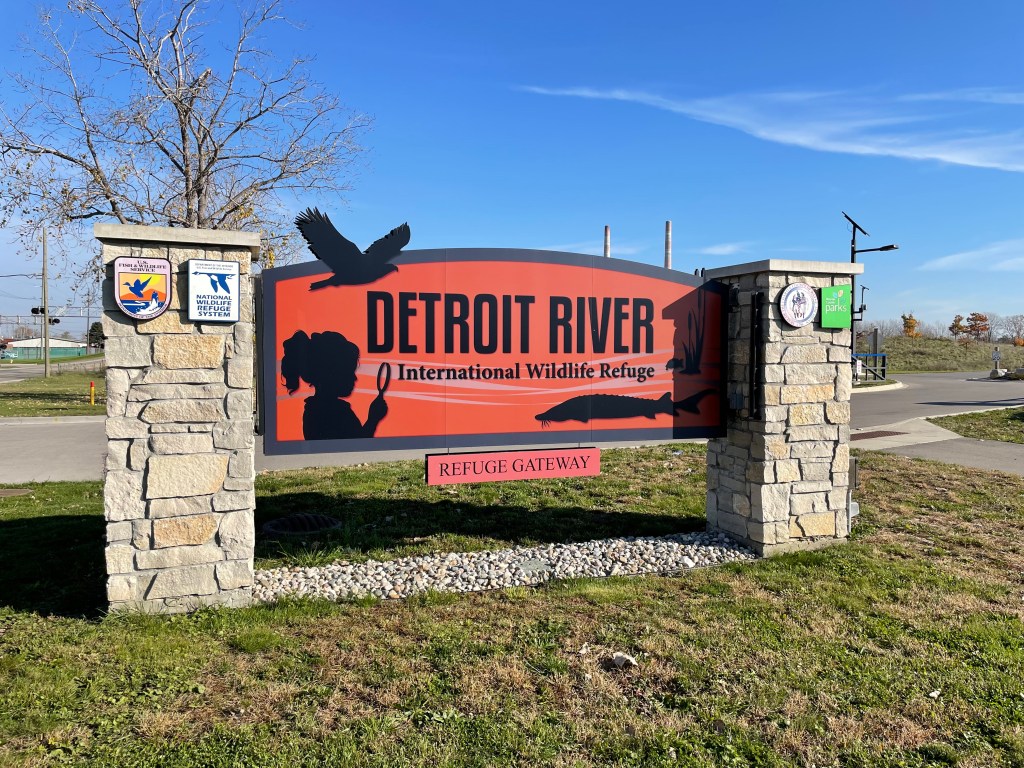
With jets taking off and landing next door at Philadelphia Airport, it’s hard to believe the abundance of wildlife at John Heinz National Wildlife. On countless treks to PHL in recent years, I’ve seen the signs for the refuge but was never able to explore it until this past weekend.

I arrived mid-morning Saturday at the refuge in Tinicum Township, Pennsylvania, adjacent to Philadelphia. The airport lies between the Delaware River and the refuge, on the eastern flyway.

A great blue heron stalks the Emergent Wetland, with the Big Boardwalk behind. Note at center top the double-decker viewing platform, which I couldn’t access because of trail work.

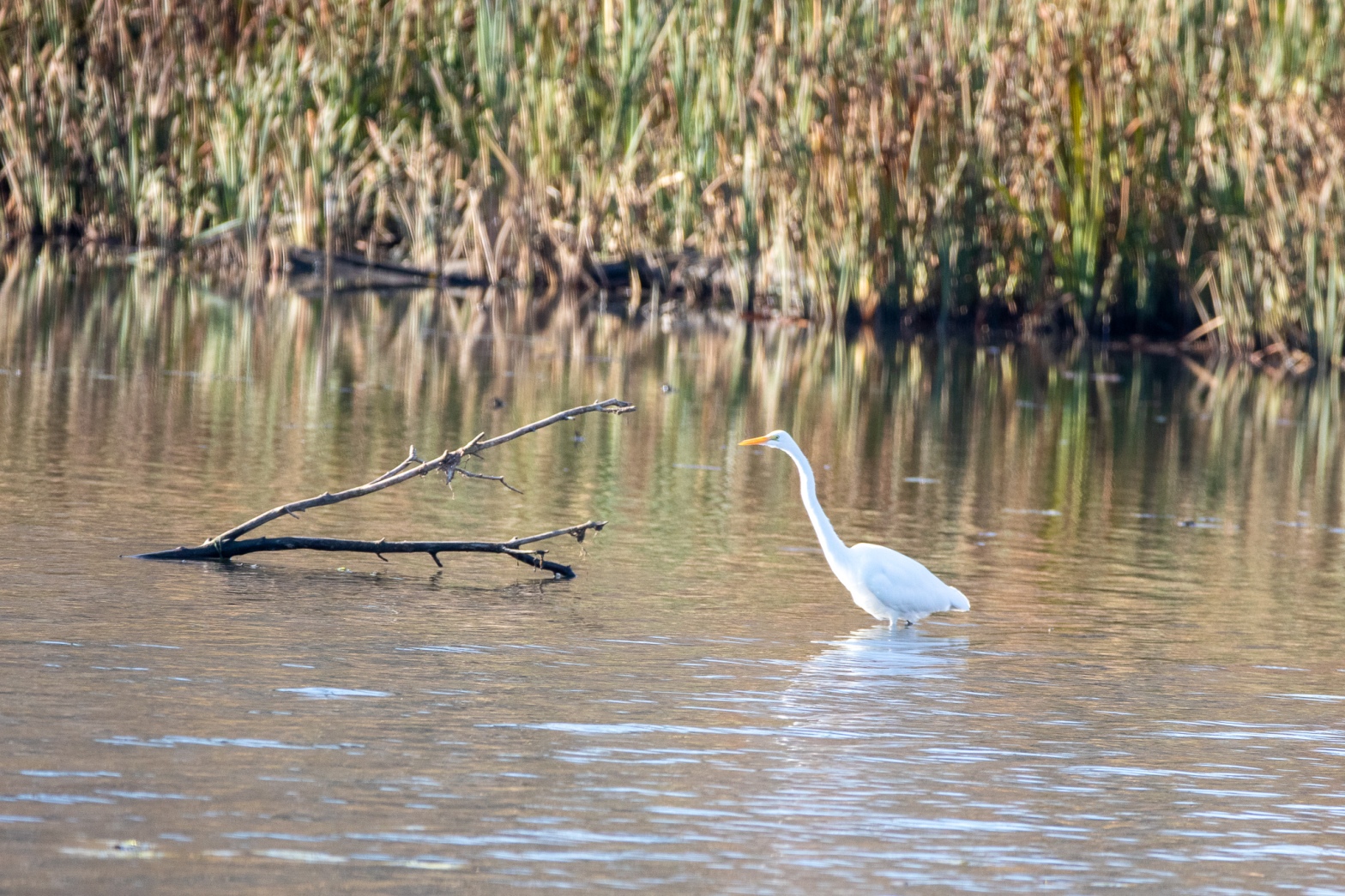
I spent most of my 90-minute visit on the Wetland Loop Trail and the Big Boardwalk Loop Trail, with some time in the Warbler Woods. One of the trails was blocked as a work crew was repairing what I assume was recent storm damage. I diverted onto the boardwalk across the Emergent Wetland, a big, lake-like area where I saw several great blue herons, a great egret and one delightfully noisy belted kingfisher.

The wide boardwalk that crosses the marsh is also great. It’s not merely a footpath. The boardwalk has cutout platforms that jut into the water, giving visitors room to look more closely at the turtles and birds without having to worry about impeding others walking by. Nicely illustrated signs show and tell visitors about the creatures they might see.

View over the Emergent Wetland, from one of the cutout platforms on the boardwalk.

I encountered two friendly, helpful birders who know the refuge well. One gave me some tips on navigating the paths, and the other turned out to be a special treat.

Early in my walk, I had spotted a small group of people in a clearing between two sections of woods. A tour, I thought. Later, after spotting a black-and-white warbler on the wetland trail, I veered off and headed back toward the park entrance through that same clearing. One young man was still there, peering intently into the woods on one side.

I asked him what he was looking for, and he told me that this particular area was a warbler hot spot in fall and spring.

Was it ever.

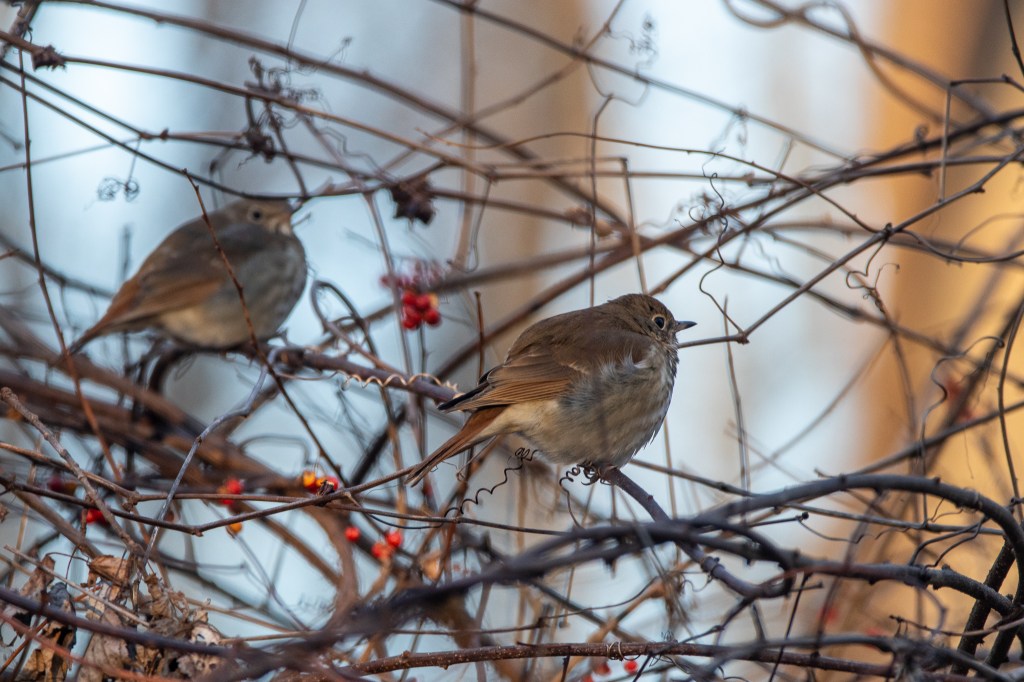
He rattled off a list of several birds he had spotted for the group he’d been guiding earlier. This was a jackpot for me, as he pointed out a beautiful veery perched on a tree and an American redstart, both additions to my life list. The guide also spotted a northern parula for me, only my second sighting.

The Heinz refuge is roughly 35 miles from my home, and I will be going back.

The magnificent hummingbird

As the pandemic wore on last summer, I hung a hummingbird feeder from a portable metal stand outside the window where I set up my home office. The wind kept knocking the stand over. I managed to nick the stand with my lawn tractor one day, and to my great dismay the glass portion of the feeder shattered when it hit the ground.

I decided to try again this year, although I chose a much better place: a shepherd’s hook sunk into the ground near the kitchen window looking out toward our front yard.

It took a while for the hummingbirds to find the nectar I mixed from concentrate. When they showed up, they brought instant joy.

I spotted one out a back window last weekend and figured there was a good chance the bird would zip around to the front of the house. I grabbed my camera and, heading out the door, spotted the bird hovering near the feeder. Alas, the screen door slammed shut behind me, scaring off the bird.

I parked on a bench on the porch for a short while, and soon the bird — a female ruby-throated hummingbird — returned. She lit on the opposite side of the feeder for a bit, then shifted to the feeding ports where I could see her. My first shots were out of focus, and she flew off.

Patience is not a virtue I have in abundance, but I decided to wait quietly in case she’d come back. A few minutes later, she did, and I got a few good shots. She even hovered for a few seconds near the porch, but I wasn’t fast enough to catch her with my camera. She came back two more times, and I grabbed a few more shots before heading in from the heat.

I hope to go out again soon, hoping (like the female?) to catch a male.

My bird identification skills are shaping up

When I was a kid, my dad showed me outlines of Japanese aircraft in cards and books that he’d been issued while stationed in the South Pacific during World War II. Recognizing the difference between a Japanese Zero and an American P-51 Mustang, he told me, could give you and your buddies a few precious seconds more to hunker down in a bunker and not get strafed.

There’s no comparison between taking cover in the jungles of New Guinea and strolling the suburban woods of New Jersey, of course, but those lessons on fighter and bomber silhouettes translate well to bird identification.

I’ve been ruminating on how clever our animal friends have been over the centuries in evolving natural camouflage, like the coats of squirrels that blend them into the bark on the trees they climb, affording them a bit of protection against predator hawks circling above.

Birds have the knack for concealment, too. I’ve been struck by how well they blend into the branches of the trees where they perch. I’ve been fooled many times by birds standing stock still on a limb, at which my eyes send a signal to my brain that says, “branch, don’t bother raising your binoculars.” Then the bird shakes its wings and flies off, leaving me to wonder at how blind I was.

The longer I’ve been birding, though, the more likely it is that the eye-to-brain messaging works the other way around. I think I see a bird in the tall grass and it turns out to be a cluster of leaves. Decaying plant matter, to my eyes at least, has an amazing ability to emulate the form of birds.

This morning, I was walking on the golf course adjacent to our lot and from about 50 yards out from a retention wall, I halted at what I thought might be a great blue heron. I often see them at the ponds at the course, but not today. The sinuous pattern I spotted was not the graceful neckline of a heron but merely an illusion presented by the gaps in the stone wall hugging the green.

Is it a bird or is it a plane? My tissue dispenser plays tricks on me.

The most absurd example of my eyes and brain trying to identify everything around me came yesterday as I approached a box of tissues. What kind of bird is that, I wondered as I looked at the tissue poking out of the top of the dispenser. Or does it look more like an airplane?

I laughed at myself for trying to map a bit of nature onto a Kleenex. But later I smiled because that little bit of foolishness told me that I’ve trained my brain to look for bird-like patterns all around me. I believe I’ve progressed to the point where at a glance I can tell the difference between a magpie and a Mitsubishi.

I will need to work harder, though, on identifying the wide varieties of flycatchers — or are they just branches poking through the leaves?

The colors of the day: scarlet and indigo

What a thrill! I finally got a good look at scarlet tanagers today out at the Mercer County Pole Farm. I had only seen a scarlet tanager once before, during a previous summer when on a bicycle I flushed one from the trail-side brush.
That was only a glimpse, but the sighting was a no-doubter: blazing red body and coal black wings speeding away in a flash.

This morning I played a hunch and varied one of my standard routes. Instead of taking a left onto two wooden bridges that bring me to a meadow with nice light, I turned right and deeper into the woods. Soon I heard what I thought was a robin, but the call was shorter than usual. To check myself, I took out my iPhone and opened the Sound ID section of the Merlin app. That short call came again, and the app gave its deduction: scarlet tanager.

I stopped and looked around, then walked forward, stopped and looked some more, walked forward and — there! To my left, I saw two tanagers flitting from tree to tree. By the time I set my camera on the ground and brought my binoculars around, they’d flown off. I turned to my right and just ahead, about 15 feet up in a tree branch, I spotted one. I managed to get a couple of handheld shots off before getting my monopod extended to the ground.

A scarlet tanager perches on a branch at the Mercer County Parks Pole Farm on Aug. 1, 2021.

The bird flew behind me, and I spun around to get a quick glance as he stopped on a tree for a few seconds before flying off.

That encounter likely lasted no more than 90 seconds, but it has stuck with me the whole day.

Earlier in the morning, I had emerged into the fields near the Pole Farm’s south observation tower and heard a fair amount of bird chatter. Out came the Merlin app, and it repeatedly heard an indigo bunting in the area. This was no surprise as other birders have reported them regularly in recent days and I’d seen one myself on a previous trip.

I could hear the bird in the tall grasses in front of me, and I waited a good five minutes to see if it would emerge. Impatient, I wandered over the observation deck and on the first level waited some more. After another five minutes of peering into the field, I raised my gaze. There, atop a bird box a couple of hundred yards away, was the bunting. He may have been there the whole time.

The box was out of camera range, but I got a fair glimpse of him with binoculars before he flew down into the grasses.

The scarlet tanager and indigo bunting are uncommon sights in these parts, and it’s gratifying to know that I beat the odds in finding them. Merlin keeps taunting me with blue grosbeak and red-eyed vireo readings off the Sound ID. I have yet to catch a glimpse, but I shall persevere!

An indigo bunting sings from atop a tree at the Mercer County Park Pole Farm on July 26, 2021.

Crowing about the mute swans

I spent the last week and a half on the road, visiting family in Michigan and taking a side trip to Milwaukee. Between the time in the car and all the things I was doing with family, I had only a limited time to look for birds.

The most satisfying opportunity was at Cass Lake in Keego Harbor, Michigan, which is about 30 miles northwest of Detroit. For photos I decided to rely on my iPhone rather than the my Canon camera with its zoom lens. But once three swans swam past us on the beach, I headed back to the car to fetch the Canon. I was lucky, because two of the swans hooked around the shoreline and swam into an inlet. I was crossing a bridge over it as they approached and was able to get a couple of decent photos.

Although I’ve seen many swans in many places over the course of my lifetime, this was the first time I’d recorded them since I began birding seriously the last few years. In my part of New Jersey, we’re fortunate to have trumpeter swans in a few nearby lakes, and I see them often. Seeing the mutes (there were about a dozen overall, including several a ways down the beach) was a treat.

I also took a short walk one afternoon at the Orchard Lake Nature Sanctuary, a small park with nice trails just off its namesake lake (like Minnesota, Michigan is pocked with lakes seemingly everywhere you look). I wasn’t in the park but one minute when a pileated woodpecker flew across the trail, landed on a tree and, just as I was going for my camera, flew off deeper into the woods. Although I didn’t spot them, I certainly could hear Eastern wood pewees not far off.

Unless you count watching seagulls and swallows from a riverside restaurant downtown, I didn’t get to do any birding in Milwaukee. Now that I’m back home, I need to strike out into the woods again. Blue grosbreaks have been reported at the Pole Farm, and it’s time to go back to see if I can spot one.

A new tool for better birding: Merlin’s Sound ID

Wouldn’t it be great if you could record the song of a bird you can’t identify and have it instantly recognized? The Cornell Lab of Ornithology has taken a major step forward in realizing that dream with its recently launched Sound ID feature in the Merlin app.

I’ve used that app for the past few years to pin down the identities of various birds I’ve seen and heard, but Sound ID makes the app even more useful. Here are some of the advantages I’ve already experienced:

With the touch of button, Sound ID starts recording and quickly notes which birds are calling or singing nearby.
  • If you hear a familiar bird singing, within a few seconds the app will bring up the most likely candidate. I toggled Sound ID on and off while walking the nearby golf course, where I spotted and heard plenty of familiar birds. Northern cardinals, blue jays, Carolina wrens, American robins — their names and photos all came up instantly. It was gratifying to get confirmation that I can ID these birds so easily.
  • The app will alert you to birds you might not know are nearby. On my golf course walk, I turned on the app and up popped a belted kingfisher, a split second before I confirmed the sighting. At Reed Bryan Farm at Mercer Meadows Park yesterday, the app kept hearing a blue grosbeak, a bird I know from other birders is common there now. I didn’t find one, and I will try again soon.
  • The app can hear birds quite a ways off. I first tried Sound ID in my yard, and I was impressed with its ability to identify distant bird calls. I’d hear a cardinal or tufted titmouse off in the distance, and the app would pick up on it. Also, human voices, vehicles and other background noises don’t seem to faze Sound ID.
  • It can distinguish Carolina chickadees from black-capped chickadees! To me, this capability is the Holy Grail. I live in an area where the two populations intersect and maybe even inter-breed. The Carolina version was on the golf course, while the black-capped turned up when I took a short walk on the Princeton University campus. I’ll be curious to corroborate these findings when I can simultaneously get photos of the birds and a recording of their songs from the app.
  • The app allows you to save recordings. You have a choice of saving the recordings or trashing them once they’ve been made. Either way, you have the option of playing them back (listening on headphones or at low volume so you don’t freak out our little bird friends).
  • The app isn’t perfect, but it’s a huge asset. The app reported a great crested flycatcher on the golf course and, today, in my yard. While it’s possible one could be nearby, I suspect the reading is spurious, even as I hold out hope that I’m wrong.

Overall, I’ve been overwhelmingly impressed by Sound ID. Identifying birds by their calls is a skill I need to develop, and this new feature is already helping me learn and improve.

Seattle: City of Crows

Other than making a few quick trips across the Delaware River into Bucks County outside Philadelphia, I’ve been a New Jersey birder exclusively since the COVID pandemic arrived. Finally I was able to venture afar, traveling to Seattle to visit one of my sons.

When I lived in Seattle 30 years ago, I didn’t pay much heed to the birds around me. I was determined to pay more attention — much more — on this trip.

And what did I find?

Crows.

In the trees outside the windows of my son’s third-floor apartment. On the telephone wires strung across Aurora Avenue. In every park we visited.

Photo by Pixabay on Pexels.com

I encountered so many crows, in fact, that I suggest Seattle’s biological classification name should be urbs corvidarum.

I saw more crows than seagulls, even allowing for the many gulls I spotted on the roof of Ivar’s restaurant as our ferry from Bainbridge Island pulled into the slip on the Elliott Bay waterfront downtown.

I believe all the crows I saw were American crows, rather than the regional variant Northwestern Crow that lives along the Pacific Coast from Puget Sound to the Aleutian Islands of Alaska.

As frequent as they were, the crow sightings were incidental. Only on one morning during my week-long stay was I able to get out into the woods to look methodically for birds. After a frustrating drive around Thornton Park, we finally found a trailhead and took a short walk on narrow, overgrown trails.

I could hear a few chirps but, in what was no more than a 20-minute walk, I spotted exactly one bird: a song sparrow, the same variety of bird I see in my yard every day.

The visit also coincided with the record-breaking heat wave that gripped the Northwest in late June. My son will have air conditioning the next time I visit, and I’ll plan more fully to lock in some birding time.

I’m uncommonly fond of the common yellowthroat

A common yellowthroat belts out his song in an open field at the Mercer Meadows Pole Farm June 11, 2021.

I believe I crossed the threshold from casual birder to thoroughly hooked last spring when I began recognizing the song of the common yellowthroat. The song was unique, and it was driving me crazy that I couldn’t see the bird chirping it from the trees at the Pole Farm at Mercer Meadows Park.

Finally, I got a chance to ask a passerby on the trail if he could identify the bird. Without hesitation, he said, “Common yellowthroat.” He made a few “whish, whish” sounds, hoping to draw the bird out of the trees, but no luck.

Weeks, if not months, passed before I finally connected song to bird while crossing an open field. I was a few hundred yards from the row of trees where I usually heard the witchety-witchety song. There he was, the masked yellow bandit, perched on the branch of a spindly tree and singing his heart out. I even got a photo.

This spring, I’ve had no trouble finding the erstwhile elusive bird. Maybe the yellowthroats have concluded their threat assessment and consider me low risk. I have heard and seen quite a few at the Pole Farm since May, in the alley of trees I frequently walk and out in the fields as well.

As I was hiking back to my car this morning, I heard a couple of yellowthroats singing in one of the main fields. To my delight, one was maybe 20 feet off the trail, and I quickly brought my camera up and zoomed in. The result was five frames of the bird, and I’ve cropped in on the best of the lot to illustrate this post.

For me, that common yellowthroat I spotted last spring was a departure point, signifying my advancement in recognizing new species and my growing enthusiasm for birding.

For a point of comparison, I’ve gone through various stages of knowledge and capability in playing guitar. I got the easy chords (A, C, D, Em, G) down quickly. But I struggled with the fingering for the tricky B and F chords. Eventually I figured them out, and I can play them with confidence, if not competence. I can even pull off a C#m without much trouble. As my skills improve, I appreciate the music even more.

So it goes with birding. I’ve moved well past the cardinal-blue jay and raptor-vulture stages and on to warblers. With the huge variety of birds in this state, nation and world, I have plenty more to learn.

Bring it on!

A close encounter with Brood X

This afternoon I set out into the 90-degree heat to look for birds in the Institute Woods, whose paths Albert Einstein walked during his Princeton years. The woods, named for the adjacent Institute for Advanced Study, are ordinarily a place for a quiet, contemplative ramble on the trails through the trees, with birds chirping and flitting about.

But this is no ordinary time. The Brood X cicadas emerged from below ground a few weeks ago to engage in a once-every-17-years bacchanal in the treetops. These red-eyed insects cavorting today are the grandchildren of those who emerged in 1970 during Princeton University’s commencement exercises. They were the muses for Bob Dylan, who received an honorary degree from Princeton while the cicadas roared. He later wrote “the Day of the Locusts” about the experience.

A cicada clings to a branch in the Institute Woods, Princeton, June 6, 2021.

I saw and heard few birds during my walk today, which was overwhelmed by the droning of the cicadas. I’m accustomed to the usual buzzing noise the annually emerging cicadas make during the summer, but the sheer numbers of Brood X looking for love created a high-pitched, almost metallic din. Their mating cry is incessant, at a volume that approaches or even exceeds 100 decibels, from what I’ve read.

To give readers a sense of the din raised by the cicadas, I’ve added this Facebook live video I did during my visit to Institute Woods.

The only other natural word experience I’ve had that made a similar racket was from the sandhill cranes congregating on the Platte River in central Nebraska many years ago. But that noise wasn’t as loud or all-encompassing as the clamor of Brood X.

Two cicadas lie dead or nearly so on the ground, near the holes in the earth that they and their fellow creatures made when emerging from the ground in recent days.

Many people are repulsed by the cicadas. With their bulging red eyes and their propensity land on anyone who wanders into their way, the cicadas can be creepy. One landed on my thumb as I was holding a paper map just after I’d passed the trailhead today, and I instinctively jumped back and shook the bug off. Another landed on my shoulder a minute later, and I initially panicked before calmly flicking it away with my hand.

Even with a high “ew!” factor, the cyclical emergence of the cicadas was a wonder to behold. I am grateful that I was able to experience the phenomenon, which I believe is a particularly apt occurrence for those of us humans living in 2021.

We are emerging from an underground of a sort, having been locked down, quarantined, isolated and otherwise cut off from our families and friends because of COVID-19 restrictions for the past year-plus.

The cicadas are proof of that life renews itself, even after a long period of darkness. They are a sign of resilience through the ages. I hope to see their offspring in 2038.

Naming our neighbors in nature

Like so many others keeping close to home since the onset of the coronavirus pandemic, we’re paying much more attention to the creatures inhabiting and visiting our yard and neighborhood. We can’t resist naming some of them.

I mentioned recently that we’ve named Aeneas and Dido the house wrens who’ve moved into in our backyard bird house, after the hero and his tragic lover in Virgil’s epic poem, The Aeneid.

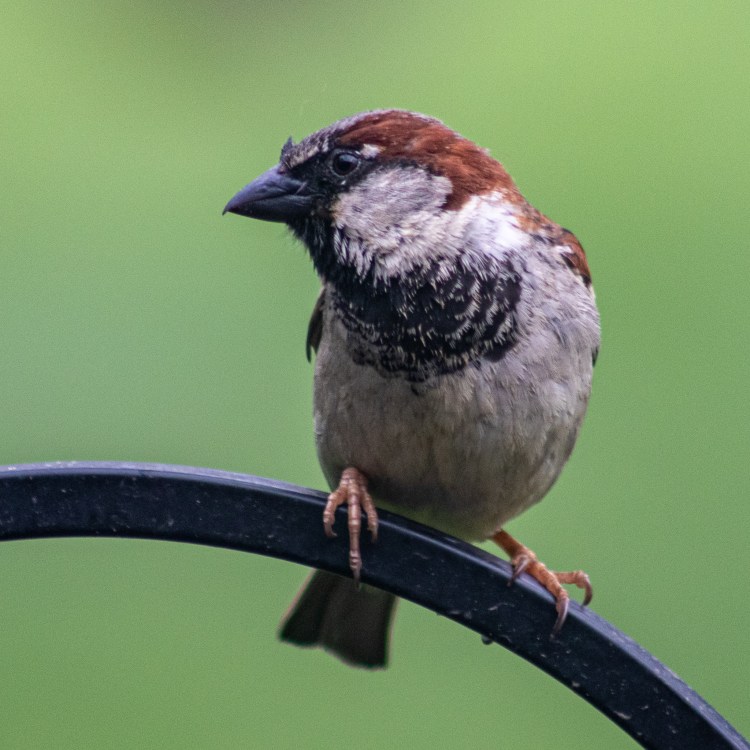
A prior pair of house wrens were dubbed Peter and Ginny after good friends. One wren I called Jeremy Wrentham, a nod to the British philosopher Jeremy Bentham. It was he who noted that “the greatest happiness of the greatest number is the foundation of morals and legislation,” an idea that would seemingly appeal to the house sparrows who gorge themselves all day at one of the feeders.

Naming the critters is not a recent phenomenon.

A hummingbird who regularly buzzed around the pool at our central California home was called, for no particular reason, Larry, after my father-in-law. Whether Larry was one bird or several, we couldn’t be sure.

But as for Emile, we were certain.

Emile was the albino squirrel, named by a neighbor’s daughter, who lived in our neighborhood when we first moved to the Princeton area a few years ago. He flourished for a few years, a regular visitor to our yard. But then he stopped coming around. We wonder what happened to him, and we remember him with a small white squirrel figurine that sits on a bookshelf.

Squirrels were the first critters I can remember having names. My father called squirrels what my young ears heard as “Stricko.” That’s also what he called his uncle who lived with my grandparents in Pennsylvania. I figured Stricko was just a nickname, and it wasn’t until years later that I figured out that Stricko was really “Stryko,” the Slovak word for uncle.

My great uncle was something of a character, and Dad always had a twinkle in his eye when he’d say the name.

We had a squirrel with half a tail who was with us a for a while here in New Jersey, but Stubby disappeared, too. We call the groundhogs who live on the neighboring golf course Joaquin, Alejandro and Esperanza, for characters in the movie “Mask of Zorro.” Oh, and there were the bunnies, Dave and Pam, an inside joke about other friends.

Last March, a pair of house finches built a nest in a wreath on our front door. The work was done in just a few hours, and the prospect of facing angry birds as we stepped outside was too daunting. I moved the nest down the wall, still under the eaves, affording them some protection.

We named them Mark and Laura, after friends who are bird lovers and have given me many, many birding tips.

Mark and Laura Finch were welcome companions, arriving just as COVID lockdown hit. We enjoyed watching them so much, I put a motion-triggered camera near the nest to catch the action.

By April, we noticed a few eggs in the nest and told everyone we were expecting grandbirds.

Then one day I noticed another egg had been added, a brown one slightly larger than the first batch. I don’t remember the sequence of events, but a day or two later, I spotted dead on the ground an infant bird. Steeling myself, I peeked inside the nest. All the eggs were gone.

I suspect that the brown egg was laid by a catbird, and I’m not sure exactly who killed the baby and what happened to the eggs. Mark and Laura never came back, but whenever I see a pair of house finches in the dogwood tree or at the feeder, I wonder: did they move nearby?

And what, if anything, do they call us?