Fall Big Day: Two great birding destinations and a boat ride

What a trip! For the fall “Big Day” of birding, I hitched a ride with friends Saturday and went on a journey that expanded my horizons and my life list.

Mark and Laura and their friend Keri picked me up an hour before dawn, and we drove 90 minutes to reach the Edwin B. Forsythe National Wildlife Refuge on the New Jersey shore. Forsythe has long been in my sights as a premium birding destination, and the experience lived up to my expectations.

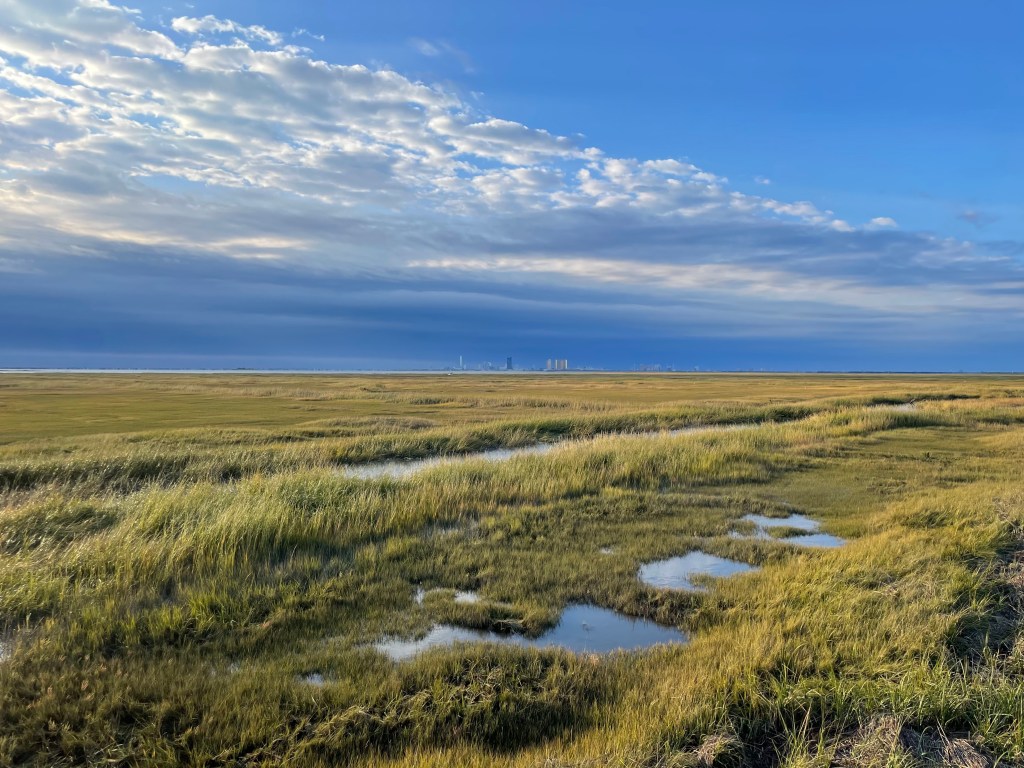
At the refuge, an osprey auspiciously soared over the parking lot as we made ready to embark on a three-legged odyssey on which our group would log 90 species. Joining a small caravan of birders in an event sponsored by Birders of Central New Jersey, we set out on an eight-mile driving loop that that took us through some sensational wetlands. Tour leader Tim stopped periodically to point out the avian wonders off to one side of the road or the other, often both.

One of the host birders kindly logged the sightings in eBird, which were shared at the end of the day. Adjusting for the birds I didn’t observe, I counted 63 species at Forsythe. Without the sharp-eyed help of our hosts, I would have been thrilled to have spotted half that many in our three hours there.
We left the refuge at 11 a.m. for the second leg of our trip, a ferry ride across Delaware Bay from Cape May, New Jersey, to Lewes, Delaware. The crossing took an hour, during which we saw a lifetime’s worth of seagulls. I missed out on seeing the best of the group’s targets (Northern gannet, parasitic jaeger), yet I still managed plenty of great and lesser black-backed gulls, a brown pelican and even, most unexpectedly, a common pigeon.
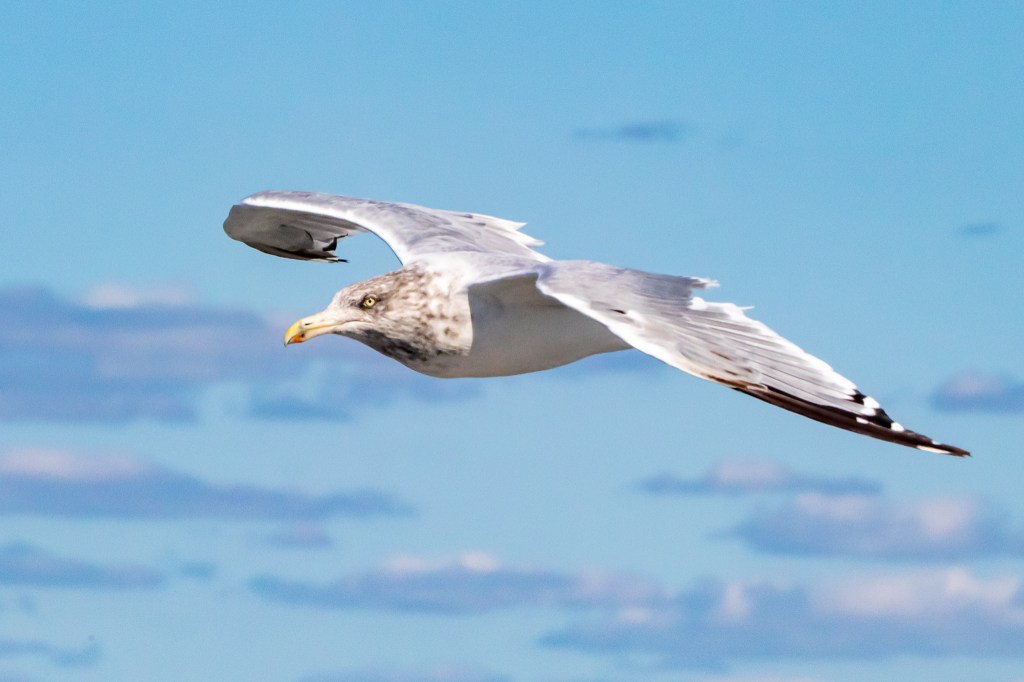
A herring gull isn’t rare, but I do like this photo, shot on the New Jersey portion of Delaware Bay.

Disembarking at Lewes, we drove a pleasant hour north to Smyrna, Delaware, and Bombay Hook National Wildlife Refuge, which we reached around 3:30 p.m. We spent the next two and a half hours driving through the marshes, observing more marvelous birds, including a marbled godwit, a black-bellied plover and cute little white-rumped sandpipers. I was hoping to see my first avocet, and I saw plenty from a distance and through spotting scopes. One of them came fairly close to shore late in day, and I was able to get a few photos showing its upward-curving bill.

My personal total at Bombay Hook was 48 species, and the ferry ride totals were 9 and 7 in New Jersey and Delaware waters, respectively. I have yet to do a precise check, but I believe my total for the day was 84, with 18 lifers.*
As delighted as I am with those numbers, what mattered more was being with friends, old and new, experiencing nature on a beautiful, sunny day. As we looked out from the stern at the gulls floating above the ferry’s wake, I marveled at the freedom they have to fly seemingly wherever they wish. I also wondered if they wondered about us humans, bound to the land and having to build huge machines for passage across expanses of land and water over which the birds so effortlessly soar.

I’m glad we co-habit the planet, and I’m grateful for every day, big or small, in which we get to share it.

An avocet trolls for food in the marsh water.
An avocet, one of my many lifers on the day, trolls for food in the marsh waters of Bombay Hook National Wildlife Refuge.

Image atop post is a view out the car window toward a Caspian tern at Forsythe NWR.

*It was 14 lifers, but no complaints!

Capturing Feathers: A digital bird image gallery

We’ve had an awful lot of rain in New Jersey the past few days, much of it the remnants of Hurricane Ian that did so much damage in Florida. With the sky weeping each morning, I have not had a chance to get out with my camera since Saturday.

Fortunately, a rainy-day option is available for birders, particularly those of us who trek the trails at the Charles H. Rogers Wildlife Refuge in Princeton. The Princeton University Library has digitized more than 10,000 pages of the journals of the man for whom the preserve is named.

The university library (full disclosure: I work at Princeton and have friends on the library staff) has begun pulling back the curtain on the project.

The library’s summary page has background on Rogers (1888-1997) and further links to descriptions of the various aspects of the project. It’s worth a look any day, especially on a rainy one like today.

The Rogers preserve, by the way, is listed on eBird as a single entry with the neighboring Princeton Institute Woods. Over time, 206 species have been observed there. I’ve seen 59 to date, with surely more to come.

American kestrels in the gloaming

American kestrels have been hanging out at Mercer Meadows for several months, and I’ve seen as many as five at one time on the Pole Farm side of the park.

Unable to go out birding this morning, after work I dashed out to the Reed Bryan Farm side of the park in hopes of catching a few kestrels at play. They did not disappoint.

As I came down the path from the parking lot about 6:15 p.m., I spotted a few birders by the line of bushes and trees that intersects the main trail where it winds to the right, toward the observation deck. The birders were hoping to get a better view of a magnolia warbler of which they had caught a glimpse. They also alerted me that kestrels were about.

While I had no luck with the warbler, I soon saw two kestrels fly overhead off to my left, and I went to the back side of the lines of bushes and trees. I could see from a distance that one of them had perched on a tall bare tree. As I moved in closer and raised my camera, I was lucky enough to catch a second kestrel fly in and challenge the perching bird.

The photo topping this post shows that challenge developing, and the photo below shows them at close quarters. The perched kestrel kept its perch, and the challenger flew off. They reminded me of two kids in the back seat of a car, jockeying for position. Although I missed capturing peak action in my photos, I was pleased to have been able to witness the spectacle and convey a bit of the drama in my shots.

Two kestrels play (or fight?) at the top of a bare tree the evening of Sept. 28, 2022.

Some birds are not always as they seem

The weather turned colder late last week, and every birder I know was smiling. Colder weather brings a greater variety of birds this time of year, when the fall migration is underway.

I’ve been spending more time of late at the old AT&T Building One site at the Pole Farm, at a crossroads in the woods about three-quarters of a mile up the central trail from the Cold Soil Road parking lot. The area is a great spot to spot warblers during migration, and on last week’s visits I found the activity varied from day to day. Jim Parrish, the leading birder at the Pole Farm, and I often end up in that area around 7:30 in the morning.

As we were peering into the brush and trees Friday morning, I spotted something small moving in the foreground. “Just a yellowthroat,” I said, but Jim added a caution that turned out to be as prescient as it was wise. Don’t dismiss a bird just because it’s something you expect to see in that area. It could be something special.

I went back Saturday morning and was over on the Reed Bryan Farm side of Mercer Meadows. There’s a corner where the woods end on your left and you suddenly have open fields on both sides of the path. In the past, I’d often seen a lot of activity in that section, and the sun was favorably positioned for me to look back at the wall of trees on the edge of the woods.

I must have spent 20 minutes there, frantically pointing my camera up and down, left and right, trying to capture whatever birds were flitting about. They had to be warblers, I figured. I moved on and when I got to a shaded area, checked my camera to see what I had. I zipped through the photos and laughed: it seemed I had nothing more exotic than a common yellowthroat and a female American goldfinch.

A Philadelphia vireo.

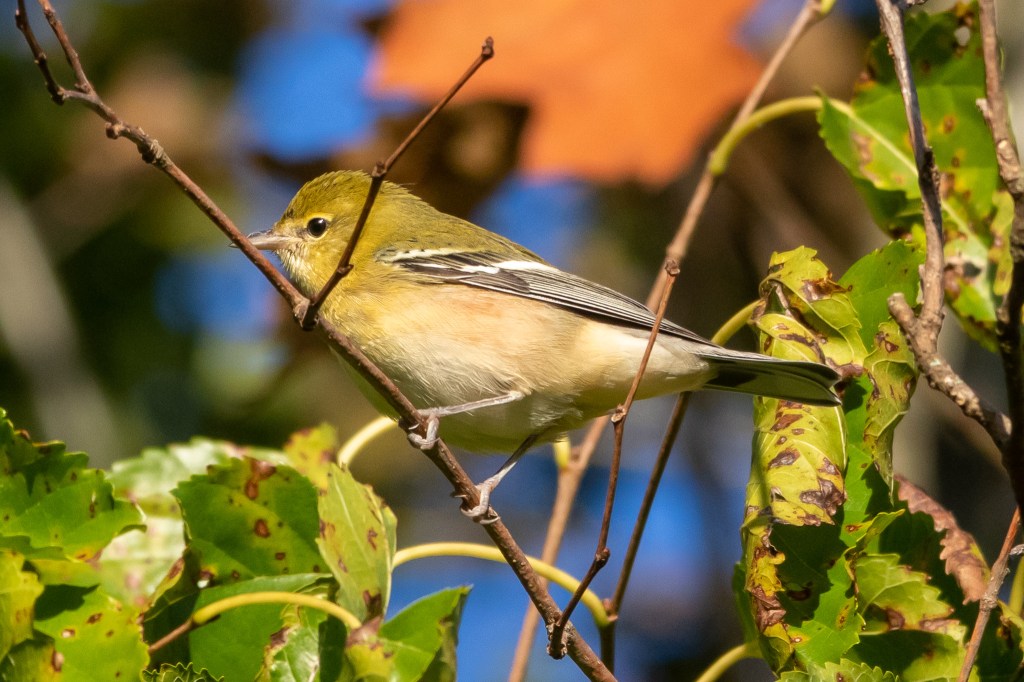
When I got home and brought the images up on screen, I was in for a surprising treat. Not only did have photos of a black-throated green warbler (one tops this post), but to my utter delight I also had not a goldfinch but a bay-breasted warbler and not a yellowthroat but a Philadelphia vireo.

It’s as if Jim had predicted I’d cavalierly dismiss a few birds that were greater than what they seemed. In this case, I had spotted two lifers (the bay-breasted and the Philly) and got my first photos of the black-throated green. That was cause for rejoicing.

A bay-breasted warbler, either a female or immature. Note that brown tinge on the side below the wing.

Birding photography guide: Check your settings

Back in the pre-digital years, a photographer’s worst nightmare was concluding a shoot and discovering either that the film had not gone through the camera or the camera wasn’t even loaded. That happened to me a few times.

Today’s version is discovering a mile and a half into the woods that your photo card is not in your camera.

You’d think I’d learn from my mistakes. At least twice I drove out to the Mercer Meadows Pole Farm and discovered that I’d forgotten to put the card in the camera. Knowing that no matter how diligent I am at putting the card back in the camera after editing on the computer that I would still forget occasionally, I had a brilliant backup plan: stash a second card in the car.

I did that, but even then I wandered off from the car one recent morning and didn’t realize I hadn’t put either card in the camera. Ordinarily, I take at least one photo within the first five minutes of any birding jaunt, a way of forcing myself to check to make sure the card is installed (my camera won’t fire if it’s not), to adjust the ISO setting for the lighting and to check the focus point setting.

On that particular morning, I did none of that. So I had to content myself with relying on binoculars and, noting the paucity of birds that morning, secretly hope that no great photo opportunities would present themselves as I hiked back to my car. As fate would have it, I got my first good look at a Savannah sparrow for the season but had no photo to show for it.

Lesson learned.

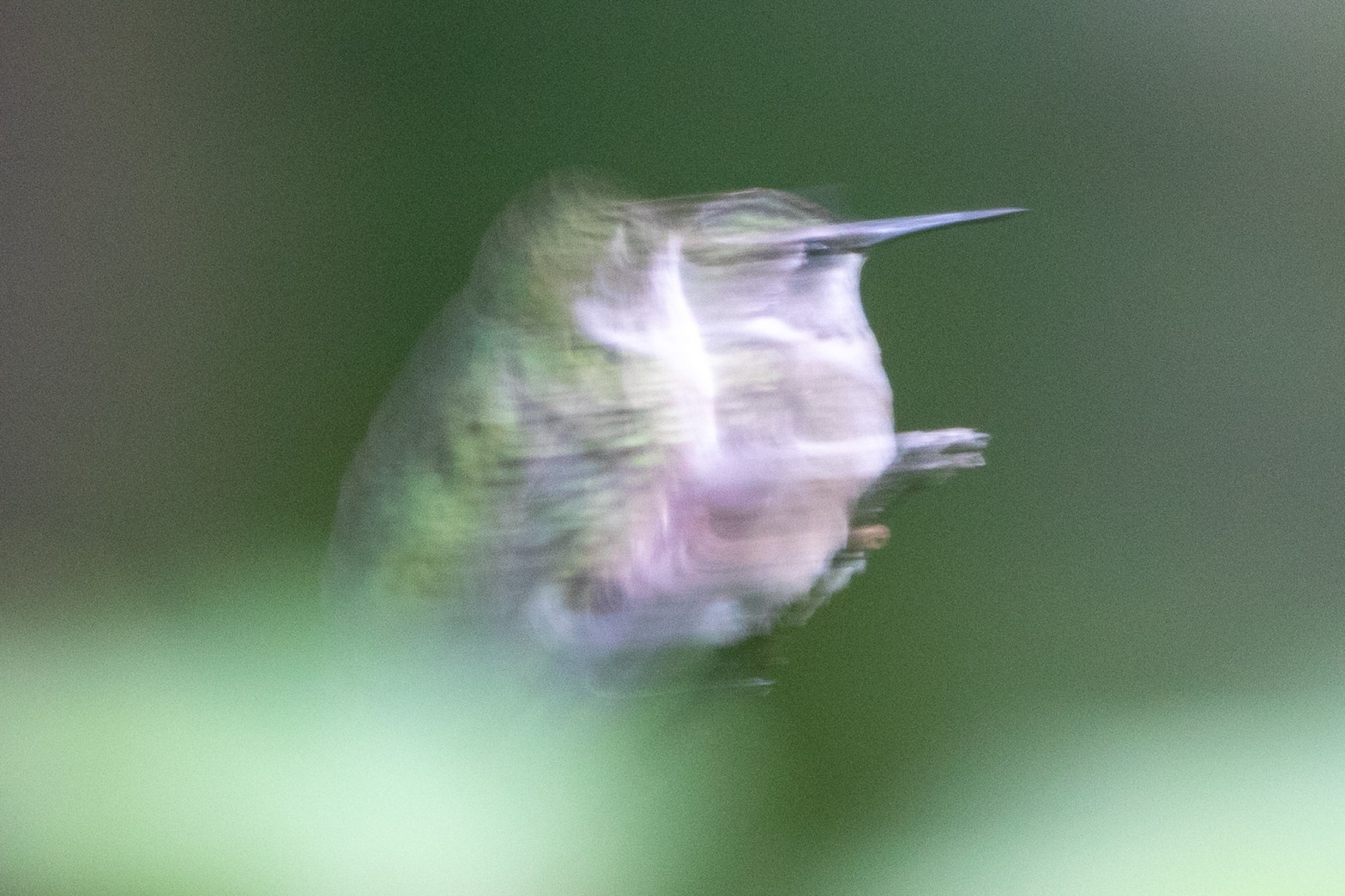
Last week, I happened upon an accommodating ruby-throated hummingbird that perched on a stem in the woods, and I had probably a minute to snap photos of it. Excited at the prospect of what I’d captured, I hit playback on the camera and was devastated to discover that the photos were blurry, including the one topping this post. The day before, my photos had also been a little off, with none of them as sharp as I demand.

A check of my lens revealed that the image stabilization slider was mysteriously set to the “off” position. I had not encountered that problem before. I suspect the slider was turned off when I tucked the camera and lens under my arm at some point, carrying it like a football for a while to relieve the weight that my shoulders normally carry.

With the stabilization setting back on, I quickly took some sharp photos. Order was restored and another lesson was learned: before setting off, check all your settings!

After turning my lens stabilization back on, I was in good shape to take this photo of a great blue heron at Colonial Lake in Lawrence Township.

I rely upon the kindness of other birders

Every day I’m reminded of how kind other birders can be in sharing their knowledge. Thanks to one of them, today at the Abbott Marshlands at the edge of Trenton, I was treated to a rare sight: a least bittern.

Knowing that these elusive birds have been visiting the marsh across from Spring Lake at John A. Roebling Park, I headed out this morning with fingers crossed. Although I’ve made several trips to the marsh, this was my first morning visit.

Arriving at 6:50 a.m., I set out on the tree-lined path that skirts the marsh. I was delighted to be greeted by a couple of high-volume belted kingfishers. I also spooked three wood ducks as I continued up the path, taking each turnoff to the edge of the marsh.

If a bittern was about, I couldn’t tell. I continued on the trail across a concrete bridge onto the red trail (which I’ve done several times before) and veered off onto the orange trail just to see where it would take me. I soon discovered a new view of the marsh and also came upon an intersection with the white trail, which I followed for a while.

Although I saw two great blue herons, there wasn’t much other activity, so I retraced my steps and when I got back to the bridge, I spotted Jim Parrish coming up the trail. Jim is one of the top birders in Mercer County, and he’s No. 1 in species spotted at the Mercer Meadows Pole Farm. We cross paths a couple of times each week.

It was his reports of least bitterns at the marsh that brought me out. In his usual accommodating way, Jim volunteered to show me the best spots to watch for the bittern.

Our first couple of stops produced another heron, a spotted sandpiper and a warbling vireo. We eventually moved on to a spot off the main trail that he said was the best prospect for catching the bittern. The bird, he said, tends to park in one place for a good while, then jump up and fly to another spot in the marsh for another extended stay.

We were in luck. Within five minutes, Jim spotted the bittern flying left to right. I picked it up in my binoculars, and the bird nestled into the greenery on the edge of a channel running through the marsh. We waited another five minutes or so, and the bird re-emerged and flew off deeper into the marsh.

It was a thrill to see this bird, rare in this part of the world, and add it to my life list. I might have spotted it on my own, but it’s highly doubtful. Jim has taught me quite a bit about birds and how to find them, and I am grateful.

Beyond birds: Butterflies and other flying creatures abound

If the birds are shy, I turn to butterflies. I usually can count on spotting at least bird 20 species whenever I visit the Mercer Meadows Pole Farm, but that’s usually under ideal conditions in the morning when the birds are at their most active.

Whenever I get an opportunity to make an afternoon visit to the Pole Farm (or any other birding site, for that matter), the birds can be scarce — especially in the midst of a long summer heat wave.

I ventured out to the Pole Farm on Friday afternoon, Aug. 5, with the temperature in the 90s. Few birds were out, let alone in reach of my camera.

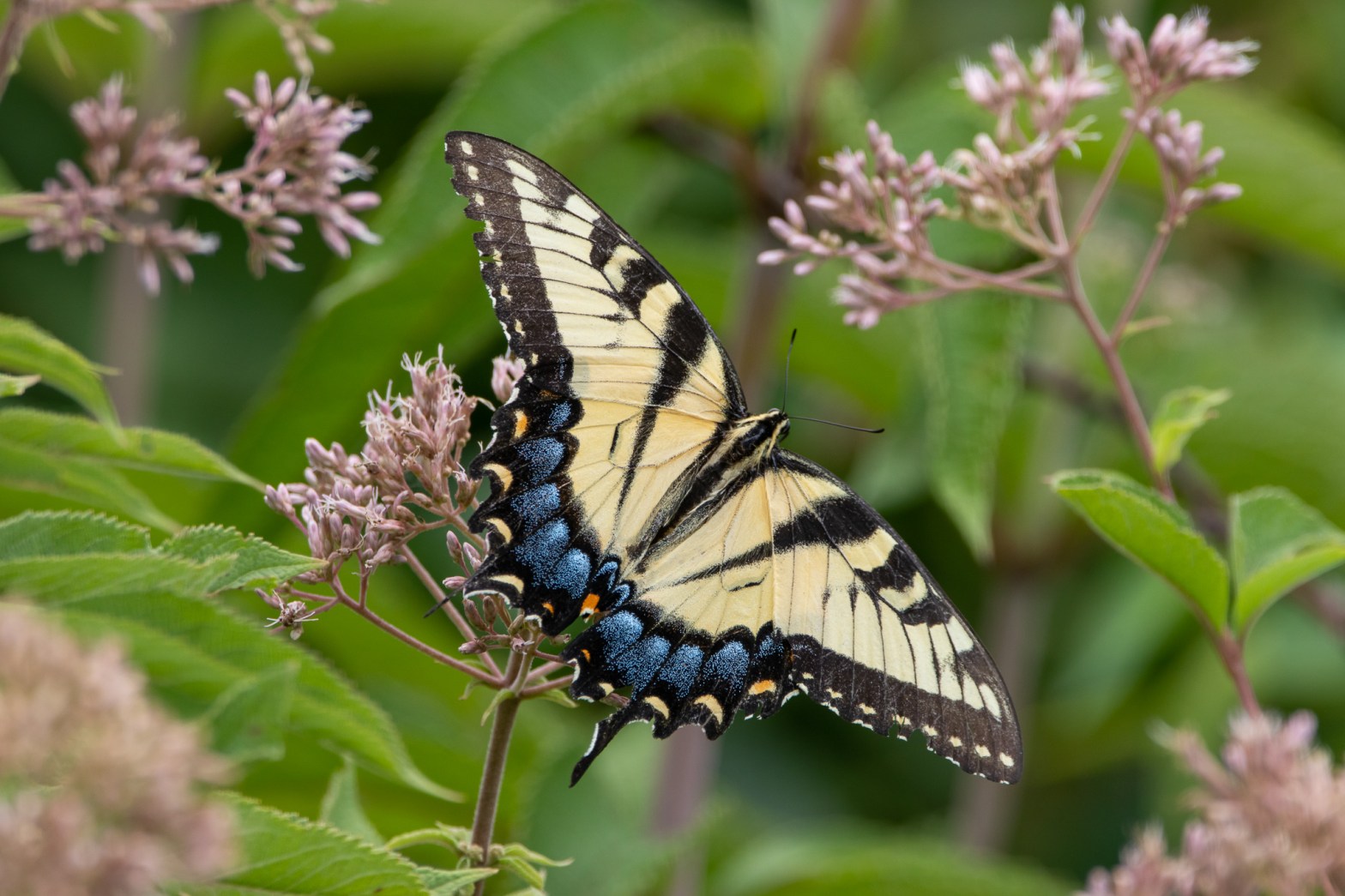
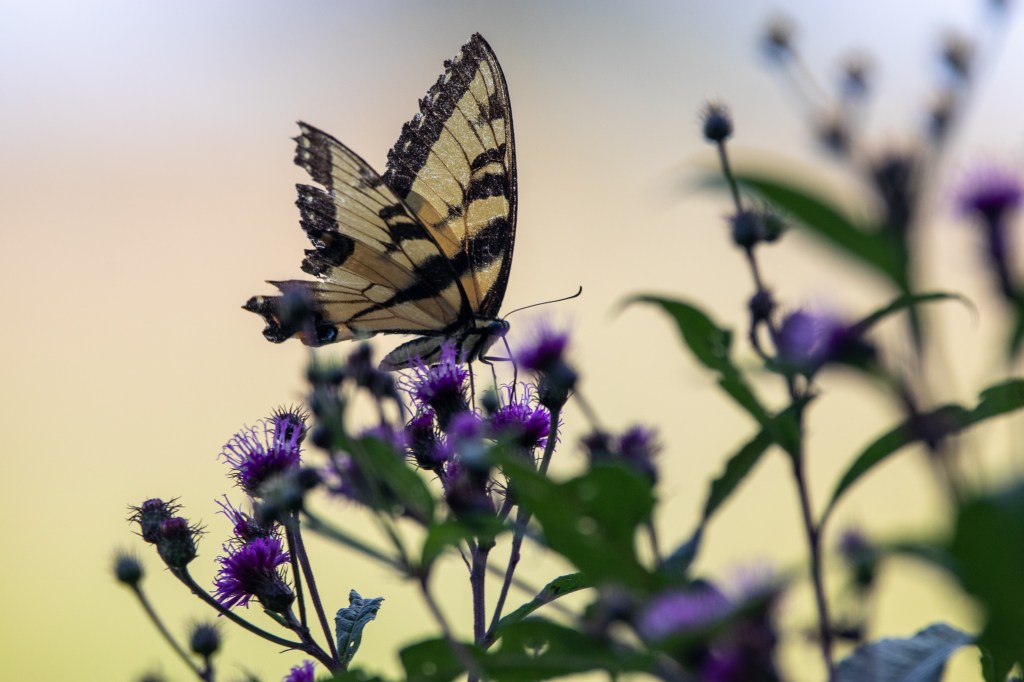
But butterflies do not seem to be deterred by the heat. I was able to capture a few shots of the Eastern swallowtail shown at the top of this post and immediately below.

An Eastern swallowtail lands on a thistle at the Mercer Meadows Pole Farm on Aug. 5, 2022.

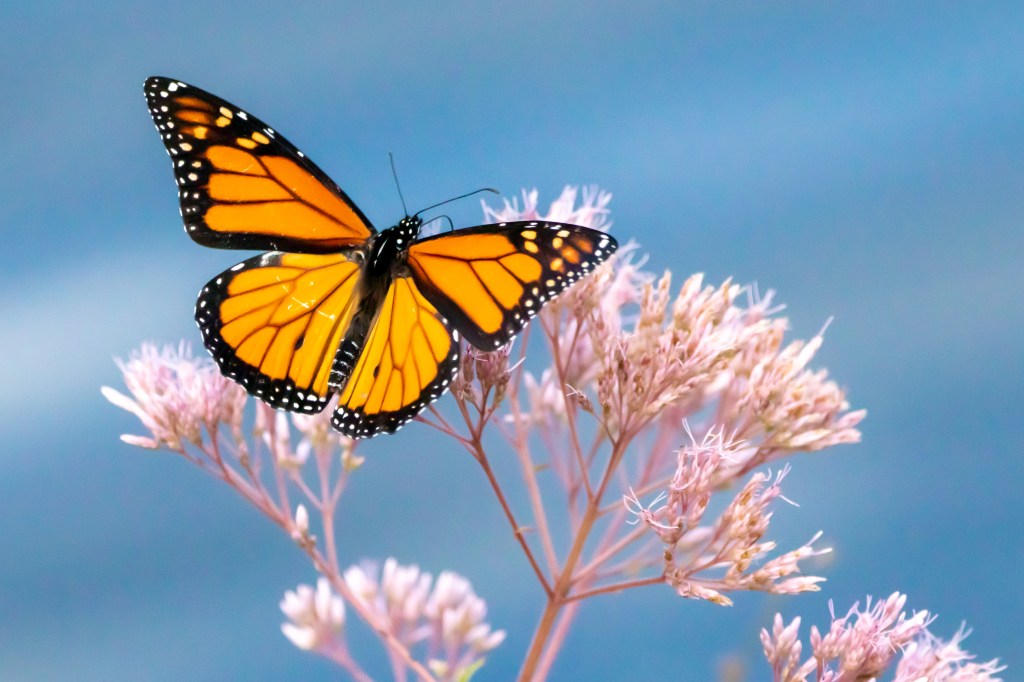
Monarchs are also present in all their orange and black glory. On Thursday afternoon, again in heavy heat, I headed to New Jersey Audubon’s Plainsboro Preserve in nearby Plainsboro. I found few birds to see, let alone shoot. But the preserve’s butterfly game was strong, and I spent some quality time watching two monarchs flitting about at the end of the spit jutting into McCormack Lake.

A monarch butterfly lights on a pink wildflower at the Plainsboro Preserve on Aug. 11, 2022.

Other winged creatures buzz by (and sometimes at) me while I’m on my walks. Skippers, dragonflies, moths (not to mention mosquitoes and flies) abound. Most of them are too swift or small for my camera to capture, so I am particularly grateful to the butterflies that land within range and stay for at least a few moments to give me time to focus.

No matter how you pronounce it, the bobolink is a cool bird

The bobolinks have been hanging around the Mercer Meadows Pole Farm for the last few weeks, and that’s a reason to rejoice. These long-wandering migrants are partial to grasslands, and the Pole Farm has big fields well-suited for them.

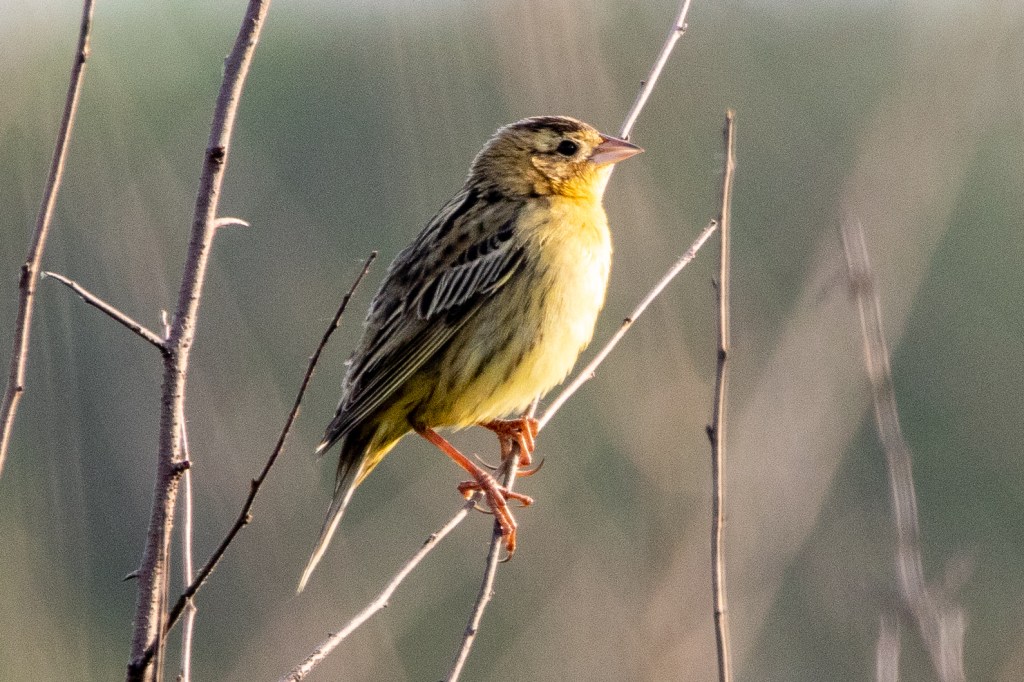
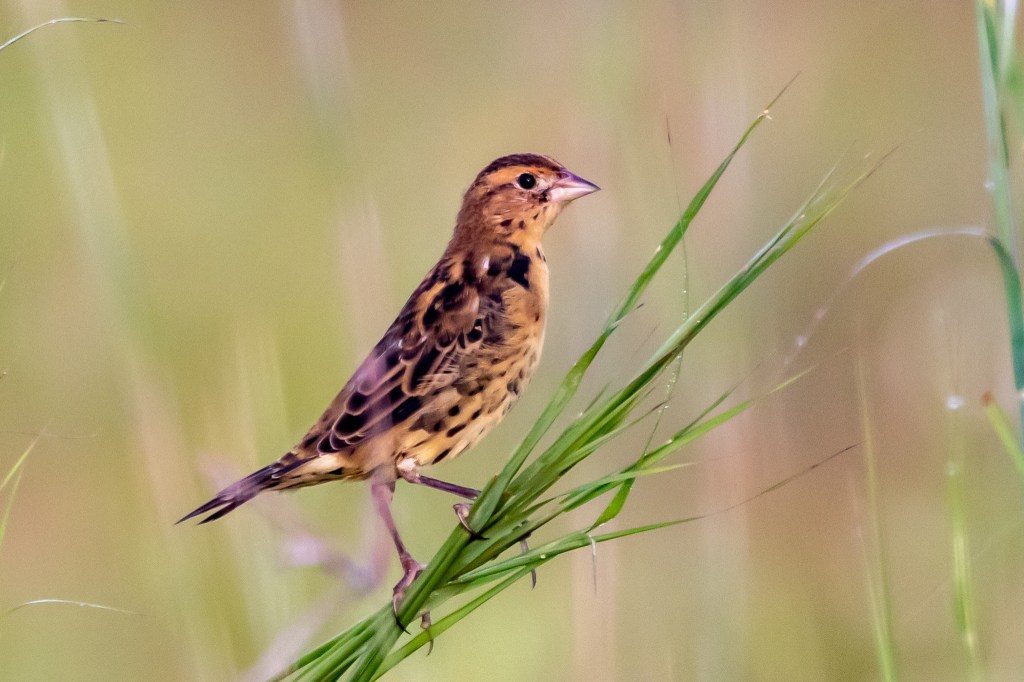
The first bobolink I saw this season came in late May, a female or possibly a non-breeding male that popped into view not far off one of the main trails from the Cold Soil parking lot. I found her yellow and brown plumage striking.

Female bobolink at the Pole Farm, May 25, 2022.

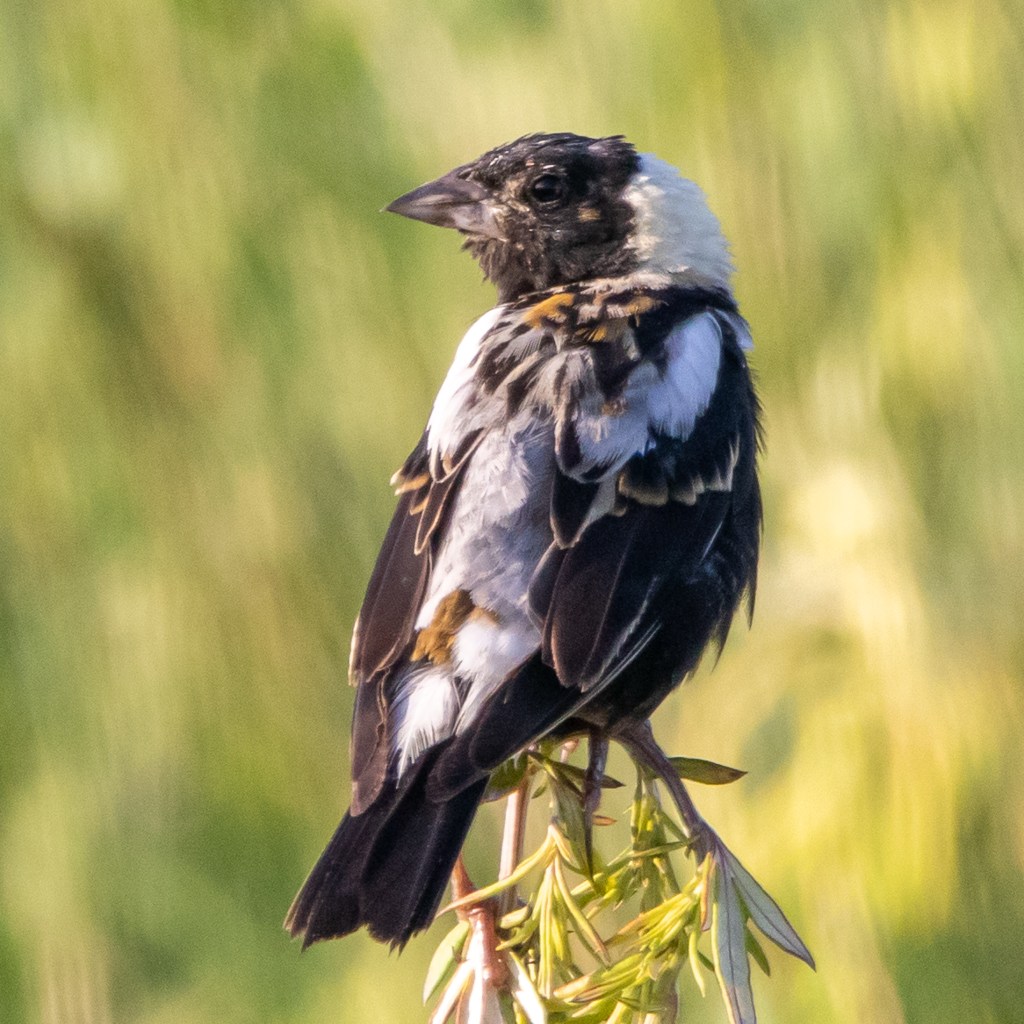
Several weeks passed before I saw a bobolink again, in mid-July. I was able to get several shots of them on both sides of Mercer Meadows, first on the Reed Bryan Farm side and then on the Pole Farm side.

Male bobolink, July 15, 2022

The bobolinks have been accommodating, showing up in large numbers at times, judging by what other birders have reported. The most I counted in one spot was eight one morning. Those with keener eyes than mine have counted more in flocks flying across the fields.

A few people I’ve encountered call them “Boh-boh-links” with a long “o,” but I follow what I’m reasonably sure is the proper pronunciation with short “o’s,” as in “Bob’s your uncle.”

Although we may disagree on pronunciation, we should be able to agree that these seasonal visitors enrich our experiences of nature and that we should protect their habitats to make sure they continue to flourish in perpetuity.

Female bobolink, July 29, 2022.

Hitting 100: My species count climbs at the Pole Farm

For several weeks, my species count at the Mercer Meadows Pole Farm sat at 99, enticingly close to the century mark. What exotic bird would take me into triple digits? Some rare visitor from Central America or the Arctic Circle? Some wayward wanderer from Europe, blown in by a storm?

I pondered that question on my walks through the fields and woods until a few days ago when I spotted a cluster of birds in a tree on the Reed Bryan Farm side of the park. Through the binoculars I could make out swallow-like tails, but not in the mood for thinking too hard, I figured I’d get the ID once I got home and got my from-a-distance photos up on screen.

The birds were purple martins, and I felt I bit sheepish for not having figured that out in the field. I amended my e-Bird record and got to thinking: surely I’ve seen a purple martin at the Pole Farm before. Or have I?

I had not!

I’d hit 100, not on some far-darting stranger but a bird that circulates frequently in these parts, one that I’d seen many times at parks in neighboring towns.

Now that I reached that milestone, I naturally asked, what’s next?

Number 101 turned out to be a doozy: a sedge wren.

Ironically, reports of this unusual visitor showed up on e-Bird yesterday, the one morning when I chose not to go out because of too many pressing pre-work chores around the house.

Off to the Pole Farm I went this morning, and I was not surprised when I pulled into the parking lot to see four birders up the trail, eyes fixed on one of the fields. A few minutes later my friend Laura drove up, bookended by the arrival of Pole Farm regulars Mark and Andy. The four of us walked up the trail and joined the others, who were locked in on the song of the wren 100 yards or so in the distance.

The early birders hoping to catch a better look of the sedge wren stand along the central trail at the Pole Farm.

I heard the bird and caught a few fleeting glimpses of him.

More birders arrived and there were probably a dozen lined up when I had to head home.

I wasn’t able to get the sedge wren in my camera or binoculars, but I’m happy to count such an honored guest as No. 101 on my Pole Farm list.

On to 102!

For birding, it helps to take a 360-degree view

Without a car for a few days recently, I was unable to get to the Mercer Meadows Pole Farm, at least not without some difficulty. So I improvised and headed on foot through the Rider University campus near home to the Loveless Nature Preserve.

The preserve is a mostly wooded area that straddles the old Johnson trolley line that years ago connected Princeton, Lawrenceville and Trenton. From the back end of the Rider campus, you enter the preserve on the trolley path.

Each day, I could hear an indigo bunting chirping away as I entered and exited at that point. My Merlin app lit up, and for the first couple trips, I could not spot the elusive blue beauty.

As I headed into the preserve on what would be the final day of being without wheels, I figured if I was going to spot the bird, the time was now. On previous trips, I kept my eyes locked onto the cluster of trees from which the bird was unquestionably singing.

On this morning, I heard the bird and checked the trees, again to no avail.

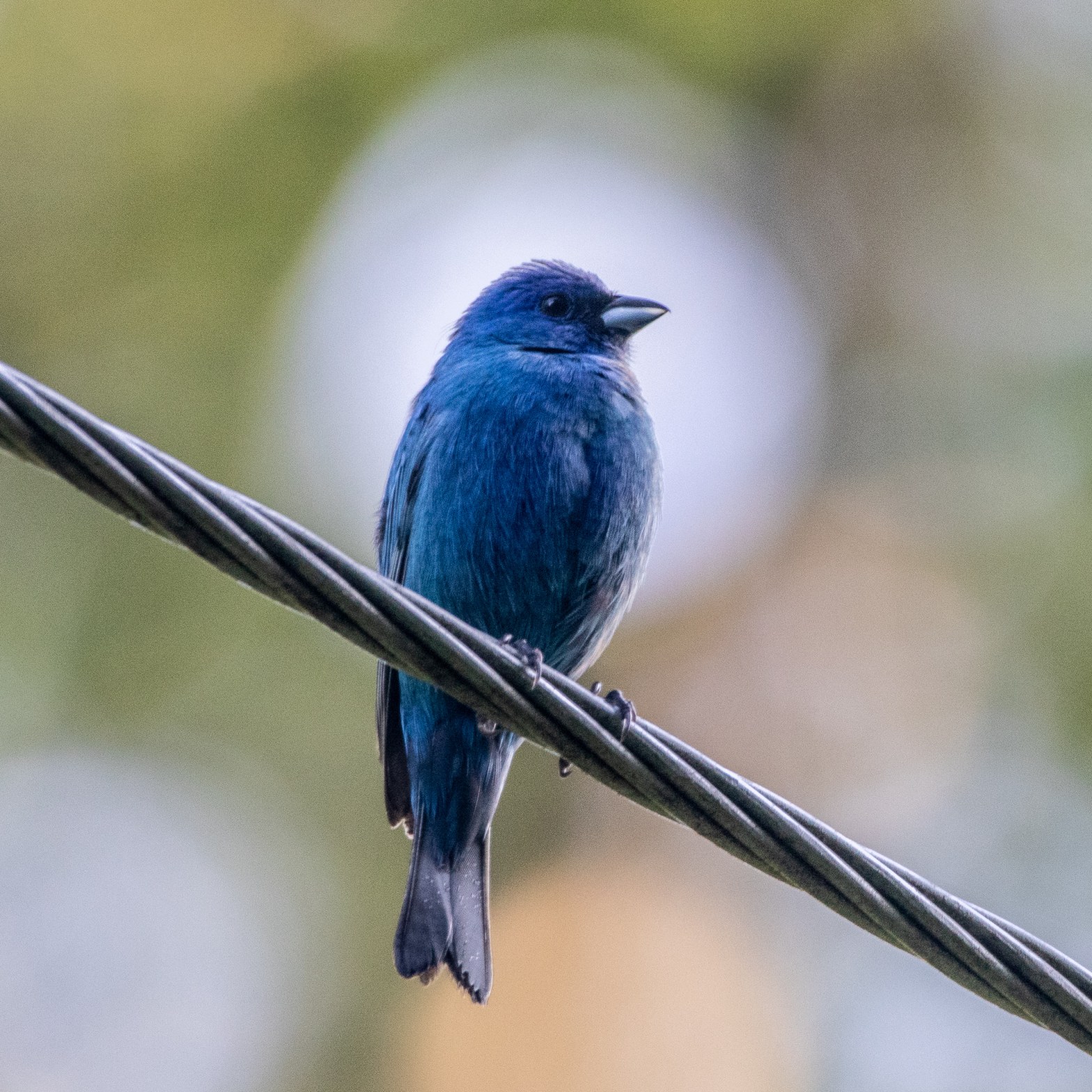
Bird on a wire, of all places.

And then I looked up.

I was startled to see the bunting almost directly overhead, perched on a wire. It was almost as if the bird was saying: “OK, I’ve had my fun toying with you. Now get out your camera, take a few shots, and let’s both get on with the day.”

Grateful that the bird was so obliging, I got a few shots and moved on, reminding myself that looking not just straight ahead but up, down and all around improves one’s world view.

A note on the photos: the bird was so accommodating that after taking a couple of quick shots, I had time to focus again and notice the light behind the bird. I shifted my camera slightly to aim for a halo effect, which is in the featured image at top. The photo in the center of the text was a frame taken before I shifted.