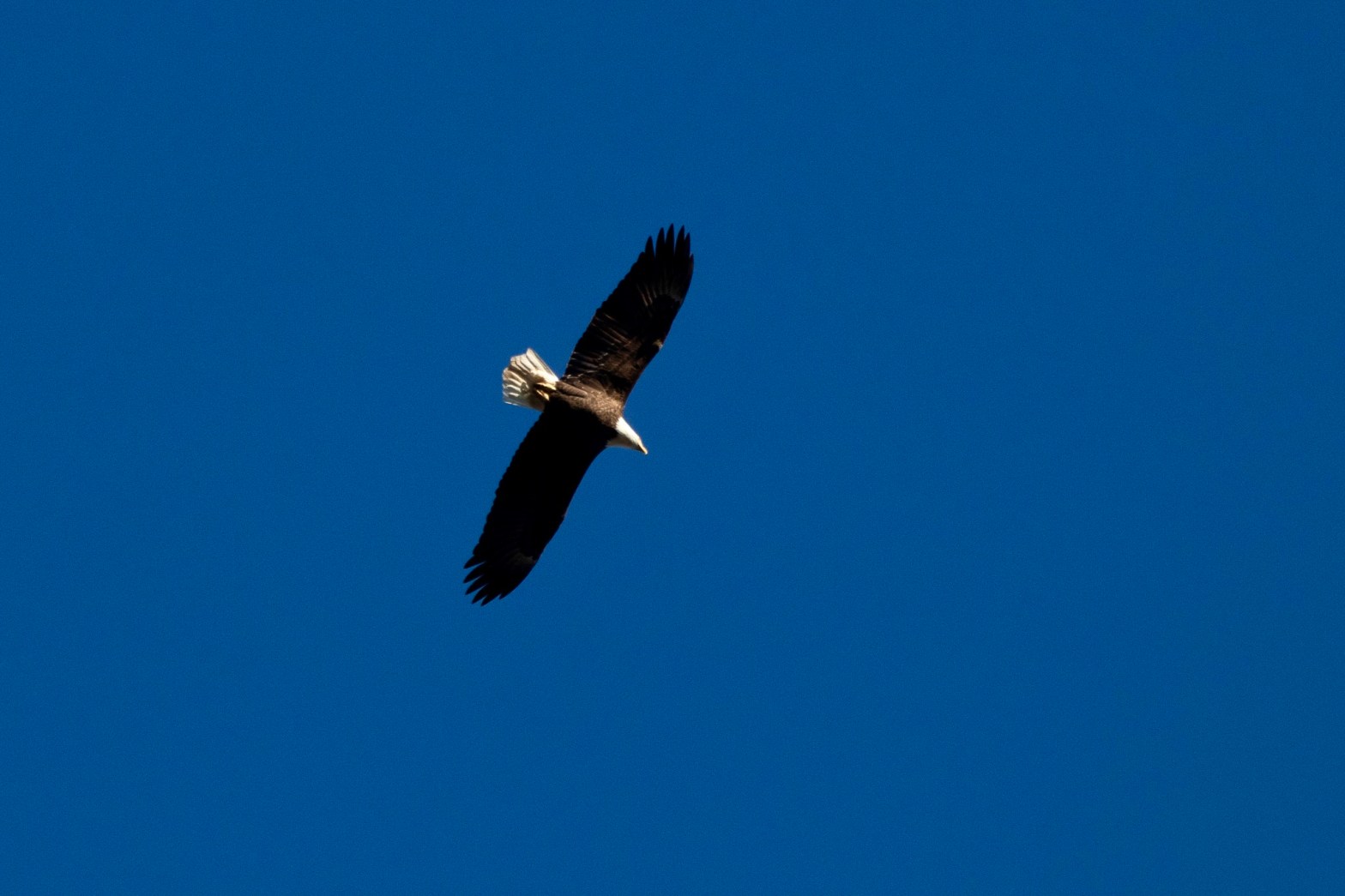
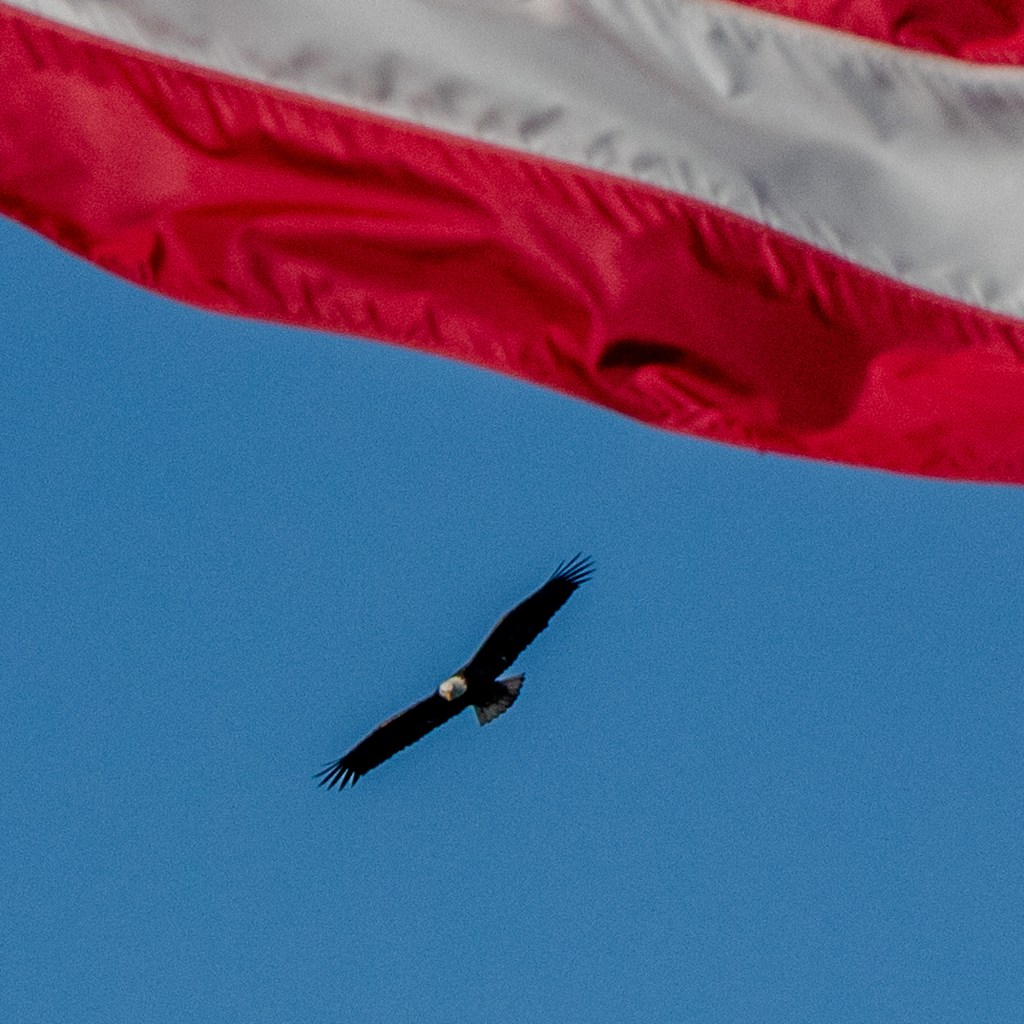
Birds large and small, I like photographing them all

I don’t know what the numbers are, but a high percentage of birders are photographers. And among birding photographers, a certain percentage focus exclusively or primarily on the largest birds, mostly raptors — eagles, hawks and the bigger owls.

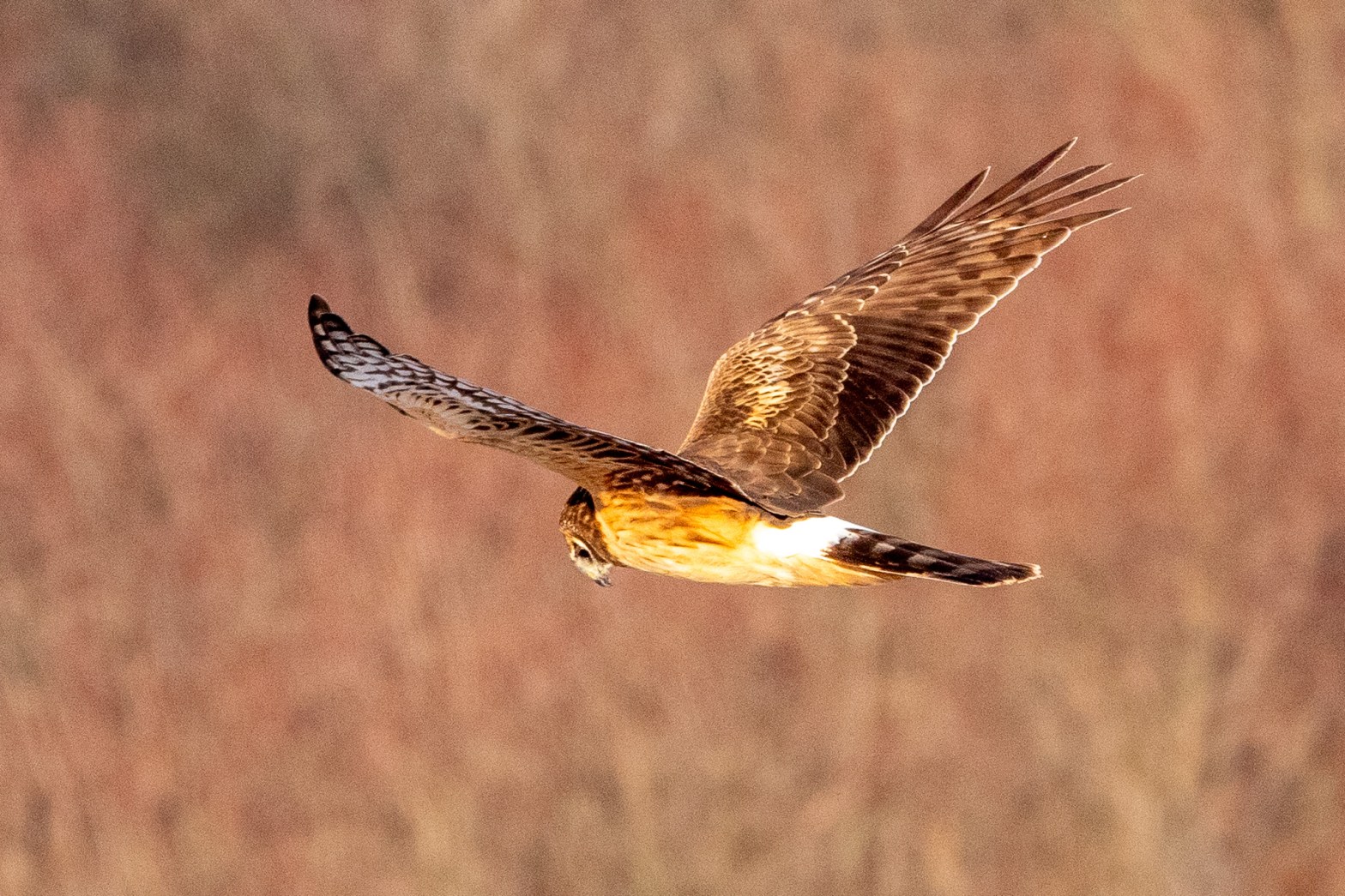
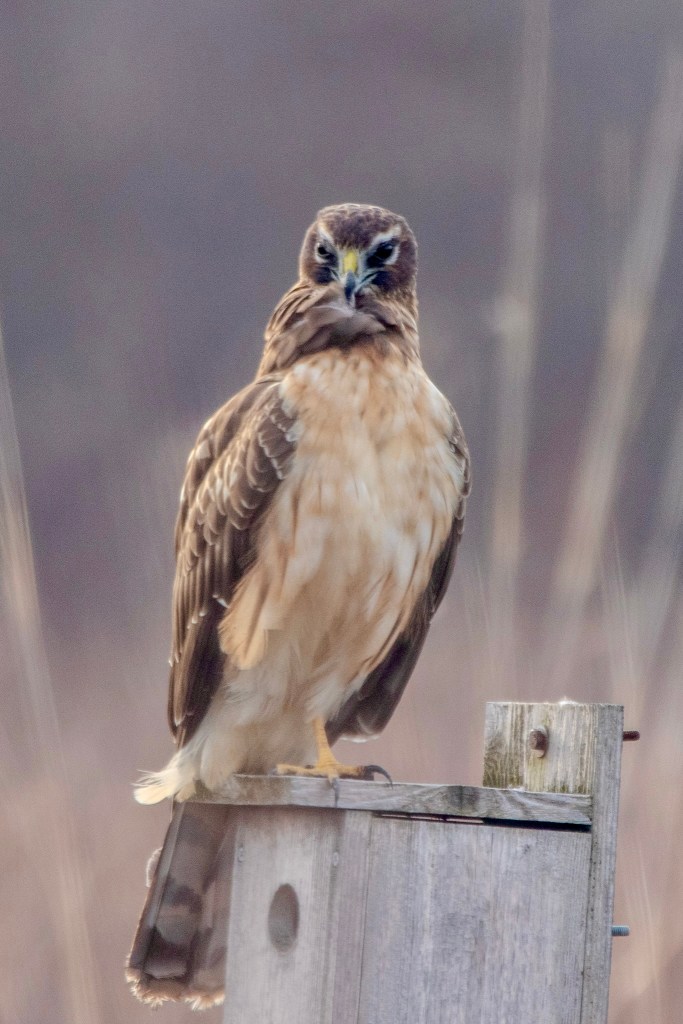
I’ve done field studies of a sort, in that I often talk photography with birders I meet on the trail. Several of them have told me they go for the big birds, like the Northern harrier topping this post that I caught in flight this morning at the Mercer Meadows Pole Farm. Getting a shot of fast-flying raptors is a unique challenge, and I suppose it’s not unlike the challenge that big game animals present hunters.

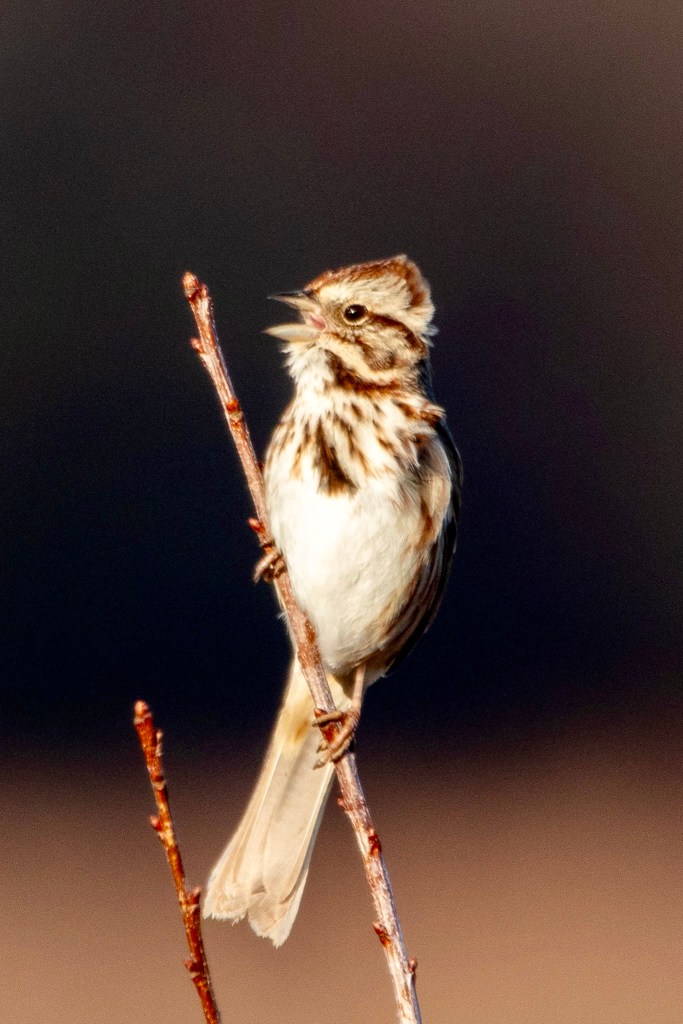
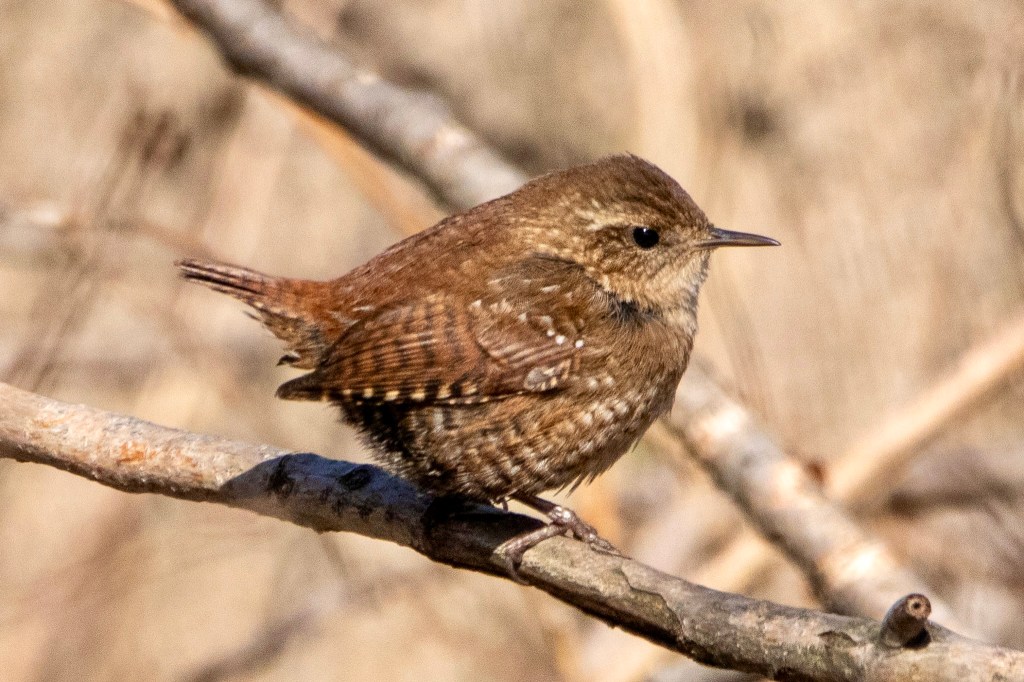
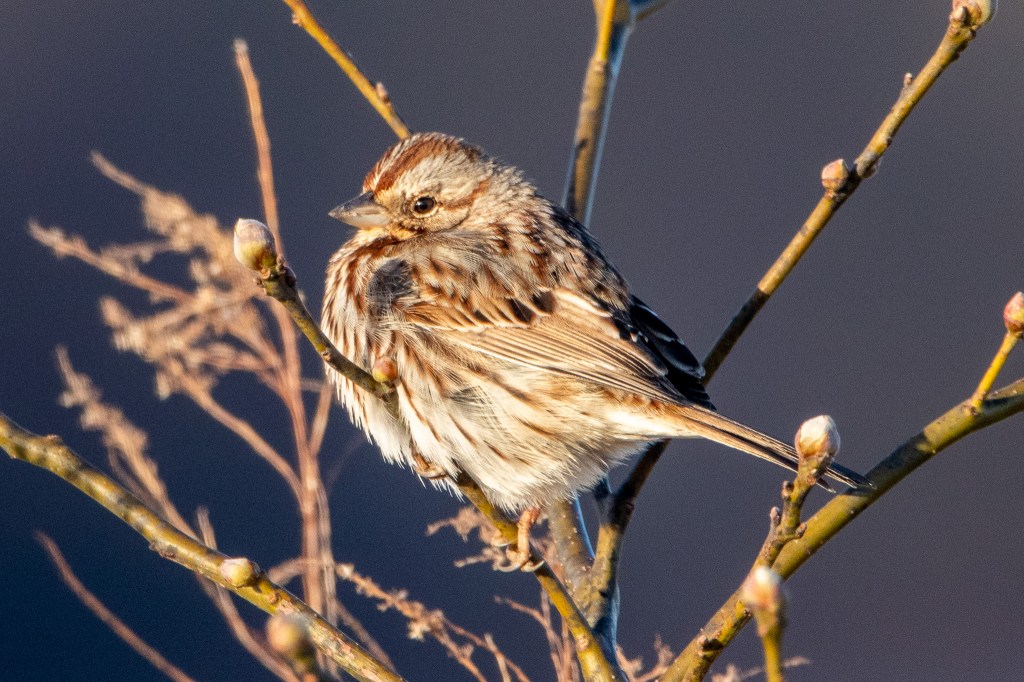
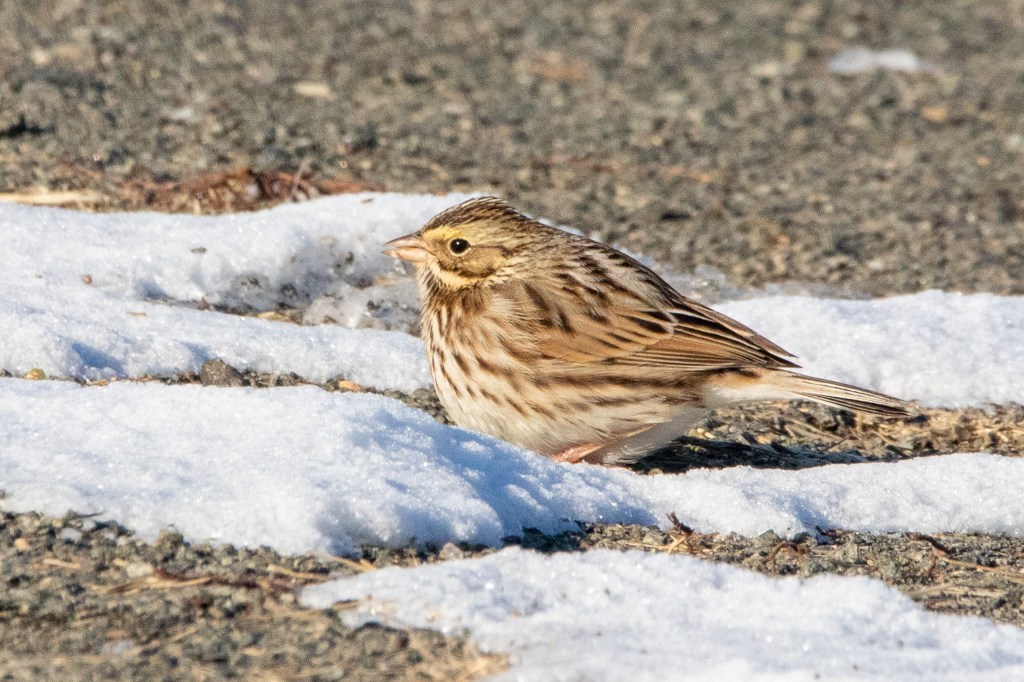
I do enjoy getting photos of the big birds of prey, but I also have a soft spot for getting photos of warblers, sparrows and other “little brown jobs.” Today, I experienced both ends of the bird-size spectrum, getting shots like that of the harrier and one of a savannah sparrow perched in a small tree amid the tall grasses.

Savannah sparrow.

One of the great pleasures of the Pole Farm is that it attracts birds of all sizes. It’s not unusual to see dark-eyed juncos in one area and then see a bald eagle soaring overhead, with many mid-size blue jays and cardinals appearing as well.

The one thing I wish the Pole Farm had was a lake large enough to attract waterbirds. We get flyovers of geese and herons, but if the Pole Farm has a flaw, it’s a lack of a sizeable body of water. A small complaint.

For those you photographers who like the big birds, I say, “Have at it.” For those of us photography “omnivores,” I stand and shoot with you. To each our own!

The irony of wildlife photography

“Don’t look back” may be good psychological advice for putting the past behind you, but for wildlife photographers in the field, it’s advice to be ignored.

Shortly after I arrived at the Mercer Meadows Pole Farm yesterday, I looked ahead and saw a photographer I didn’t recognize pointing a camera with a long, tripod-mounted lens into one of the main fields. He must be looking for Northern harriers, I thought, or maybe a late appearing short-eared owl.

With warm, golden light streaming down not long after dawn, conditions were excellent for catching a photo of a bird flying on the western side of the big fields. But that’s not where the action was.

As I continued up the trail, a deer suddenly poked its way through the brush and crossed the path roughly 10 yards behind the photographer. Not noticing the deer, he kept looking westward. Nor did he notice the five deer that followed, each crossing the paved path into the big field to our left.

Suppressing a chuckle, I snapped a couple of frames, including the one topping this post. The photographer never did turn around and see the deer. He moved off to the right and I headed straight, and we weren’t close enough to exchange even a hello.

That little episode of wildlife irony made me wonder how many times the birds and other critters inhabiting the woods have snuck behind me as I’m fixated on a point ahead. Did they suppress a chuckle at my expense?

This episode is a good reminder for us to look up, down and all around as we make our way through the wilds. It also prompts me to salute the wildlife, whose habitat we have relentlessly trampled, for pulling a clever trick on us camera-wielding humans.

Harlequin romance: a rare visitor on the Delaware River

Rarely has a Jersey girl caused such a fuss. Since she was first spotted in the Delaware River on Thursday, a harlequin duck — believed to be the first ever recorded on e-Bird in Mercer Counry — has had birders flocking to observation points on the river banks in Trenton and Morrisville, Pennsylvania.

While I was out for a solo walk this morning at Reed Bryan Farm, my friend Laura texted, asking if I’d like to chase after the harlequin. Laura and I had gone harlequin-chasing two years ago at Barnegat Lighthouse State Park on the New Jersey shore. This was an unusual opportunity to drive only a few miles to see one.

And see one we did. Following locating tips from other birders, we headed south along New Jersey 29 in Trenton, only to overshoot a construction area pulloff and instead end up on a toll bridge that took us over the river into Pennsylvania. Knowing that other birders had spotted Ms. Harlequin from the Morrisville levee, we headed there and immediately spotted several birders up on its walkway.

The first birder we encountered confirmed that the harlequin was present, and he pointed us down the path toward a couple of other birders who he said were at a better vantage point. A short while later, one of those birders pointed exactly to where the bird was floating and diving. He fixed his scope on her so we could get a better look than what our binoculars could give.

We then discussed with the birder whether it was proper to report the bird from the Morrisville hotspot when the bird was far across the river, much closer to New Jersey than Pennsylvania. Laura and I agreed with him that the report should come from the area where the bird was, not where the observers were.

So we walked back to my car and returned to New Jersey, drove North on highway 29 and turned around to find the construction pulloff on the southbound side. We pulled in, and the bird was practically right in front of us, albeit a couple of hundred yards out in the water.

We could see the bird and her markings clearly through Laura’s scope, and I was able to get a few photos to back up the observation. Although we could see a couple hundred gulls across the river, we saw no other birds near the duck. She was floating solo. A few Canada geese were up the path on our side of the river, so we noted them in what turned out to be a mere 2-species e-Bird report.

We had no complaints.

A trip to Trenton on ‘Black Duck Friday’

While many Americans were hitting the mall this morning, my friend Laura and I drove down to the Tulpehaking Nature Center, one of the gateways to Abbot Marshlands. We joined a group of about 10 birders for a “Black Duck Friday” birding walk.

Peregrine falcon

Gathering in the parking lot, we were treated to a through-the-scope view of a peregrine falcon perched atop a power tower in the distance. That was the first of its kind on my life list, a nice start to the outing.

Group leader Tim took the group down a hill toward the marsh, and we turned onto a path pointing us toward Silver Lake. I often visit the lake from the Sewell Avenue entrance to John A. Roebling Park.

The roughly half-mile walk to the lake was surprisingly devoid of ducks but was highlighted by the singing of a winter wren and sightings of couple of golden-crowned kinglets. Our count built slowly, at last kicking into gear when we reached the outskirts of Silver Spring Lake.

On it, we saw dozens of ring-necked ducks (Laura put the official account at 88) and a couple of distant gadwalls. A belted kingfisher and a pair of yellow-bellied sapsuckers appeared nearby.

The trail brought us to the newly resurfaced (and still closed) Roebling Park parking lot. We paused a while there, the highlight being, weirdly, a house sparrow, one that probably was taking a break from the neighborhood adjacent to the park.

We skirted the lot and walked to the marsh that’s separated from Silver Lake by the path that encircles it. I finally had reason to start shooting some photos as a flock of Northern pintails took flight. Also on the water were mallards, green-winged teals and Northern shovelers.

Keeping an eye on the clock, Laura and I walked up the path with the group for a short while before bidding them adieu to walk back to her car. Another yellow-bellied sapsucker appeared on a nearby tree, and I kept shooting until I got a couple of profile shots of it.

Yellow-bellied sapsucker

On the way back to the parking lot, the section of the marsh that had been bird-barren on our first pass was now teeming with waterfowl. Although I didn’t get any worthwhile photos of them, many American black ducks were plying the waters.

All told, we logged 31 species in the two hours we spent at the marsh — another reason to celebrate on this Thanksgiving weekend.

Happy Thanksgiving to all birders!

It’s Thanksgiving Day here in the United States, and I’m thankful for all the times I get to go birding and for all the other birders I’ve met in the field and those of you have been kind enough to read my site.

I started my day at the Mercer Meadows Pole Farm, and it appears most birds decided to sleep in on such a cold, breezy morning. I took a few distant shots of a Northern harrier that was out by the observation deck.

The harrier perched on a stalk out in the tall grasses, and I watched her from the top deck (see photo above) for a while, hoping in vain she’d take off again. She did not, and I headed back to the car.

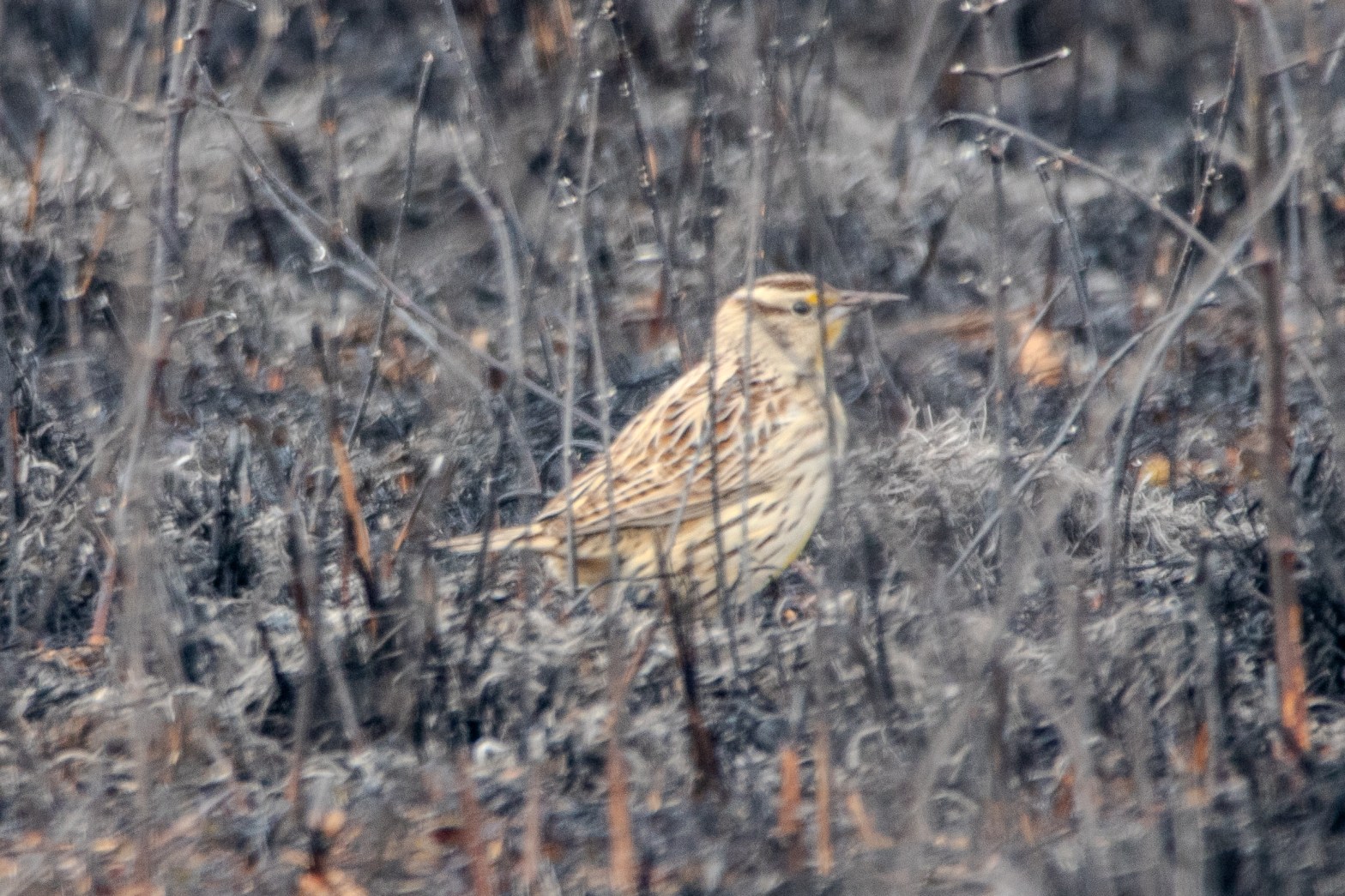
The only bird photo that I saved from the 51-minute outing was of a field sparrow, whom I spotted flitting about in some bushes. I wasn’t sure of the ID until I got the image up on screen at home.

Field sparrow stopping just long enough for me to catch a shot.

So another day, another surprise, compliments of Mother Nature.

My Thanksgiving Day was a good one, and I’m looking forward to tomorrow: It’s Black Duck Friday, as a group outing planned in Trenton is being called.

I hope all have had a splendid day and can reflect thankfully on all we are given in life.

A wonderful morning at the Pole Farm, harrier hotspot

I wrote recently about days when photo opportunities are few. As if to restore balance to the universe, Mother Nature smiled on me today with good morning light and encounters with a couple of photogenic birds.

Red-shouldered hawk.

Knowing that time was limited “because work,” I took the quickest route to the closest place, the Mercer Meadows Pole Farm. As I approached the drive to the parking lot, I spotted a large bird landing on some of the overhead wires that run parallel to Keefe Road. It was a red-shouldered hawk, almost certainly the same one I’d seen near that spot a few days ago.

I stopped the car, hopped out, grabbed my camera and braced myself on the roof rack of my Subaru. The bird was initially facing away from me into what little sun there was, then did a 180-degree turn in my direction. That afforded me a chance to get a few profile shots.

And away she goes: the harrier flies up the path.

I got back in the car, parked in the lot and began making my way up the central path. I’d gone maybe 1/5th of a mile, logging the hawk and a few crows in my e-Bird app. I looked up from my iPhone and was surprised to see a Northern harrier on the path about 30 yards ahead of me. As soon as I went for my camera, the bird took off and flew ahead.

That may have been my best shot at a shot of the bird, I thought, but I got lucky. The sun shone more brightly, and I walked farther up the path, spotting the harrier on the right edge. As I advanced, she took off once more and landed even farther up the trail.

Ring-necked pheasant, the first I’ve seen in maybe a year.

I took a look through my binoculars at the dark blob by the edge of the grass and was startled to see a white ring around the bird’s neck. It wasn’t the harrier, which was a little way away, but a ring-necked pheasant. That was the day’s bonus bird, which soon disappeared into the grass.

Creeping up slowly, I got a few shots of the harrier sitting on the ground. She would only tolerate my presence for a short while and took off again to fly over the fields. To my delight, she flew back closer to me, enabling me to get a few more shots, and I have to say I am happy with them.

On so many days, I see harriers at the Pole Farm or on the Reed-Bryan Farm side of Mercer Meadows, but they typically stay out of range of my camera or the light is poor. While in the field, I’m never sure how sharp and clear the images are, but once I loaded the card on my laptop at home, I knew I’d had a pretty good day. I’m happy to share these images with you.

Bluebirds bring happiness

The sun came out in full force this Sunday morning, and the temperature was a brisk 28 degrees Fahrenheit as I headed to the Mercer Meadows Pole Farm.

The park’s paths offer a few turning points, and the first one to confront is just up from the Cold Soil Road parking lot: either go up the central path through the main fields, or turn left down the alley of trees that lead toward the observation deck.

I was planning to go straight, but then I spotted two warbler-like birds heading off to the left and perching atop a couple of the trees along the alley. What the heck — I’ll go down the alley, I decided.

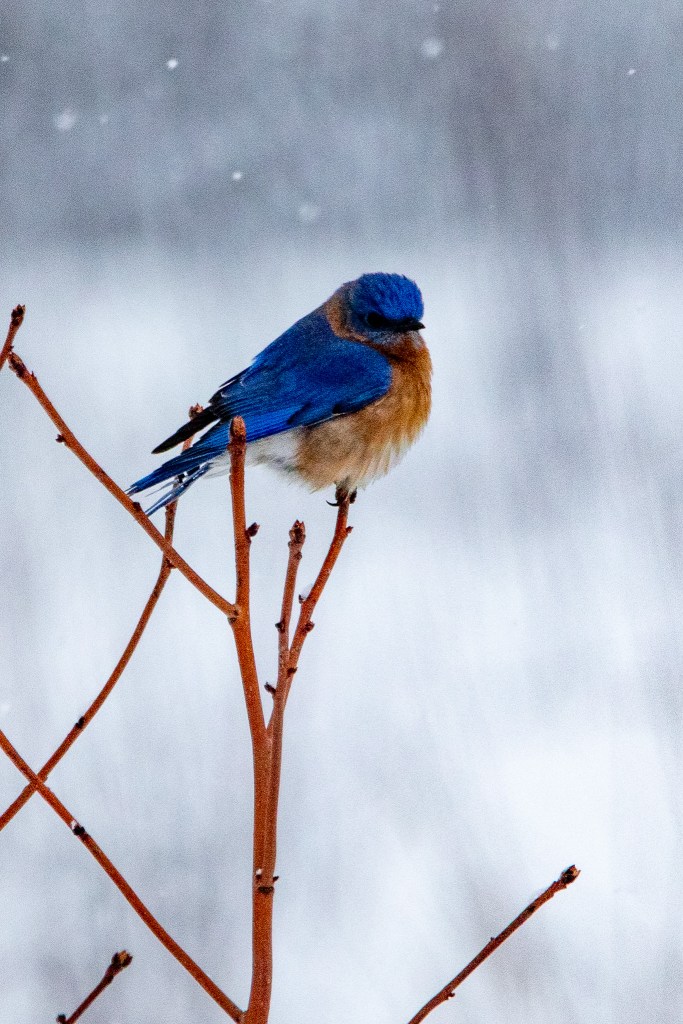
It turned out to be a fortuitous choice. As I emerged from the alley and approached the observation deck, I spotted the Eastern bluebirds topping this post at their own post, the one holding what presumably is their bird-box home.

Other bluebirds were perching on the observation deck, only to be flushed by a jogger who climbed to the top platform. I walked past the deck, eventually to return and get a chance for several shots of more bluebirds posing on the crossbeams.

Even more bluebirds greeted me as I returned to my car.

One can’t help but smile at seeing bluebirds. They always bring joy.

An Eastern bluebird soaks up the sun atop the observation deck at the Mercer Meadows Pole Farm on Nov,. 19, 2023.

Some days birding, starlings are the best you get

A small percentage of my birding excursions give me a goose egg: no birds spotted whatsoever. Such outings are rare, and I can almost predict when I’ll get that result.

Time of day is the most reliable predictor. On off-work days either my wife will shoo me out of the house or I’ll head out of my own volition. But when I get to the Mercer Meadows Pole Farm at 2 in the afternoon, I know that birds will be scarce. They are most active in the morning and some emerge an hour or so before sundown. But when it’s mid-afternoon, most birds there are hunkered down.

Earlier this month, I arrived at the Pole Farm at 2:20 p.m. one day to get some air, and that’s about all I got. I spotted six turkey vultures overhead and heard two blue jays in just under half an hour, when I decided to call it a day.

Some mornings can make for slim pickings, too, such as one early this week. As I drove in to the Pole Farm, I did my usual scan to see if anything was flying. All I could spot were 15 starlings lining the roof of the red barn by the Cold Soil Road parking lot.

Only 10 minutes after sunrise, the temperature was around freezing, and there was a breeze, which I recognized as not an ideal combination for birding success. My hunch was right.

In the 30 minutes I spent there, the only other birds I logged on e-Bird were two Canada geese that flew overhead. As I got back to the parking lot, I spotted a hawk in a big tree to the right of the park entrance and walked over that way. It was a red-shouldered hawk, probably the same bird I’ve seen in that tree many times in the past. It stated squawking and eventually flew off after I’d only had a chance to get a couple of branch-obscured photos of it.

Back to the car I went, and I saw three starlings high up in a tree just off the main path. I snapped a couple of frames of them, and one tops this post. That was as good as it got photographically that day.

This morning, I spent about half an hour at the Charles Rogers Preserve in Princeton, and it was quiet again. I spotted a great blue heron far across the central marsh and snapped a couple frames, more so to check the camera than to get a good shot. I was disappointed not to see any ducks, wood or otherwise, that are often present in the marsh much of the year.

I didn’t lift my camera the remainder of my half-hour walk, as birds were seemingly in hiding. But I did luck out — I had heard the cry of what I thought might be a pileated woodpecker as I headed toward the red trail, and as I was on my way back I spotted one checking out some of the trees.

The bird was fairly small for a pileated, but there was no mistaking its magnificent crest through my binoculars. The bird popped from tree to tree, circling around the back of each. Even if it had stayed on my side, I wouldn’t have been able to get a clear shot through the tangle of branches between us.

Thus ended another outing with no useable photos, a mild disappointment vastly painted over by the thrill of spotting the pileated woodpecker, the first I’ve seen in several months.

Even if I don’t see or hear any birds on an outing, it’s still worth getting outside for a little exercise and communing with nature. And I can always check the action at my feeders when I get home. A downy woodpecker is hacking away at our suet feeder as I write this sentence.

Happy birding, everyone!

Kaboom! Birding while hunters overrun the area

My birding buddy Laura and I headed to the Assunpink Wildlife Management Area on Saturday, hoping to explore the expanses of the lake and it surrounding woods.

As we drove along Imlaystown-Hightstown Road, we knew something was not quite right. Everywhere we looked were pickup trucks and SUVs disgorging hunters in blaze orange and camo garb, shotguns crooked over their shoulders.

Unwittingly, we’d stumbled into hunting season.

We drove into the boat launch area at Assunpink Lake, gazing out onto flocks of ruddy ducks plying the waters. But every few minutes, we’d hear the crack of shotgun fire in the middle distance.

One of the scores of ruddy ducks at Assunpink Lake.

Another friendly birder, bedecked in orange vest, recommended that we avoid the eastern end of the lake as it was it was overrun by hunters seeking to bag pheasants.

Laura and I wanted no part of the hunters’ gathering, so we drove to the west edge of the lake, where there’s a wide open parking area. We stuck around to find more ruddy ducks and a few other birds before decamping for nearby Stone Tavern Lake.

Stone Tavern Lake was even more densely packed with hunters, and we watched cringingly as one hunter’s dog paddled after a wounded duck on a back channel. We drove off before watching the inevitable conclusion.

From there, we headed to our second planned destination, Mercer Corporate Park in Robbinsville, with its two small lakes that can be magnets for waterfowl. We saw scores of Canada geese, sweeping our field of vision in vain for cackling geese that surely must be floating among their larger cousins. It was to no avail, but we did spot an immature bald eagle flying high overhead, reasonable consolation for our continued futile search for the cacklers.

Immature bald eagle soaring above Mercer Corporate Park.

Asssunpink Lake has provided some thrills in the past, but I’m not going back until after hunting season. I don’t begrudge the hunters the pheasants, ducks and geese they bag, but I’d rather shoot birds with my camera.

Courage or stupidity: mockingbird v. hawk

After taking a walk at the Reed Bryan Farm side of Mercer Meadows today, I was reminded of the time when my father and I played golf with two Jesuit priests from my high school. To my great surprise, one of the priests became greatly agitated at the other, who as I recall stepped into the line of the other’s putt on one of the greens.

In today’s episode that triggered this memory, a Northern mockingbird set about harassing what appeared to be a fairly young red-tailed hawk perched on a tree branch. I spotted the hawk from behind a line of trees and then crossed over a footbridge to get a better look.

I was surprised to see a mockinbird darting about the branches of the same tree (see lead photo), only a foot or two away from the hawk, which was at least four times the mockingbird’s size. At one point, the mockingbird darted at the hawk and pecked its wing. The hawk seem unfazed, keeping its cool, unlike the Jesuit who balked when the other crossed his putt path.

Fool or hero? This mockingbird didn’t budge the hawk.

I have to hand it to the mockingbird: he had cojones grandes. Courage or stupidity? I can’t say. But the hawk, seemingly nonplussed, continued its evening observations, and the mockingbird eventually moved on. So did I.

The red-tailed hawk, unperturbed and unmoving.