Birds bathing in high heat and humidity

The day dawned hot, muggy and foggy. After a strong overnight thunderstorm, the windows in our house were so steamed up that I could not see the closest feeder that’s barely 10 feet away outside. As the sun started to burn through the haze, I drove to Veteran’s Park in Hamilton, in hopes of finding a few birds that I hadn’t seen this June.

The park usually has some sea gulls flying around, but not today, and my June count thus has none of them. The first birds I saw were a pair of great blue herons slinking along the shore of the lake that covers a good stretch of the park. I pulled up my camera but couldn’t see anything but gray through the lens, which I assumed had fogged.

It turned out, what was fogged was my brain.

I used my T-shirt to wipe the viewfinder glass clean, then pointed my camera. The red focus point came on but the camera wouldn’t fire, despite repeated attempts. I used my shirt to wipe the lens, which, oddly, didn’t look fogged, and the shutter still wouldn’t click.

At that point, I decided to keep walking, hoping that the camera — which had been in my air-conditioned car on the 20-minute drive to the park — would clear up after adjusting to the changed environment. No dice.

Only after I got home did I discover that a switch on the lens had somehow tripped over to a setting that limits the focusing distance to 10 meters. Once again, operator error was the cause of the malfunction, and I scolded myself for not checking my settings when I started the day.

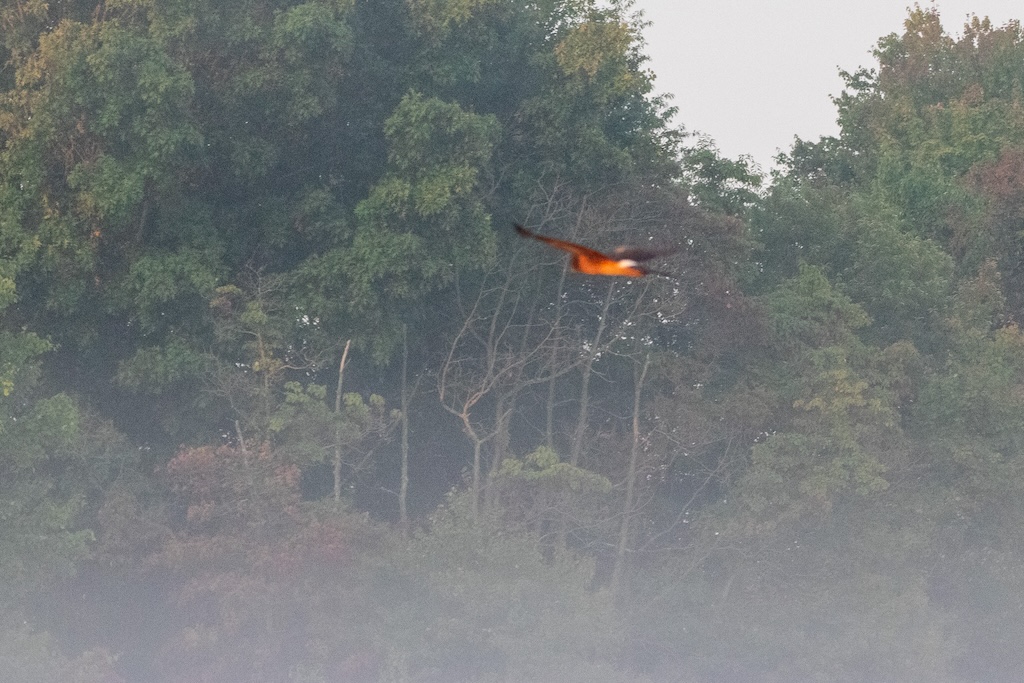
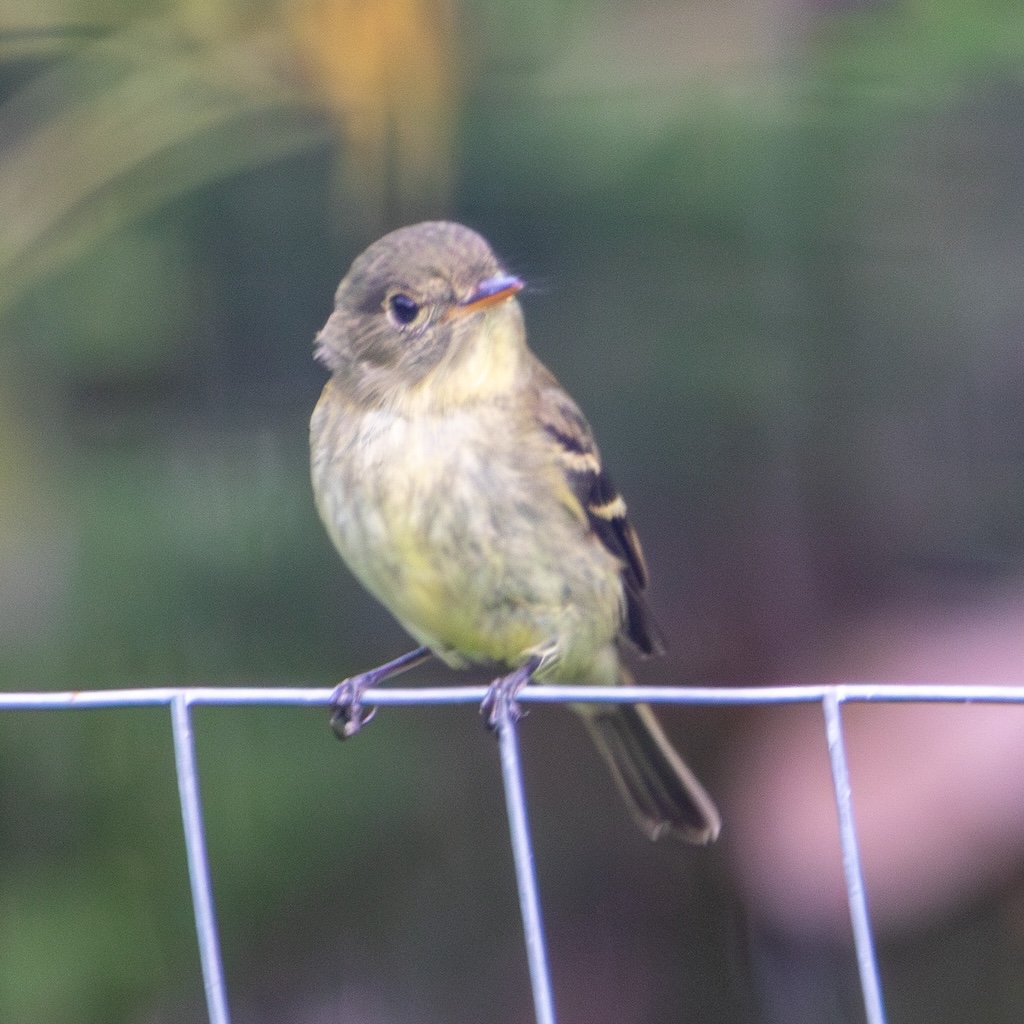
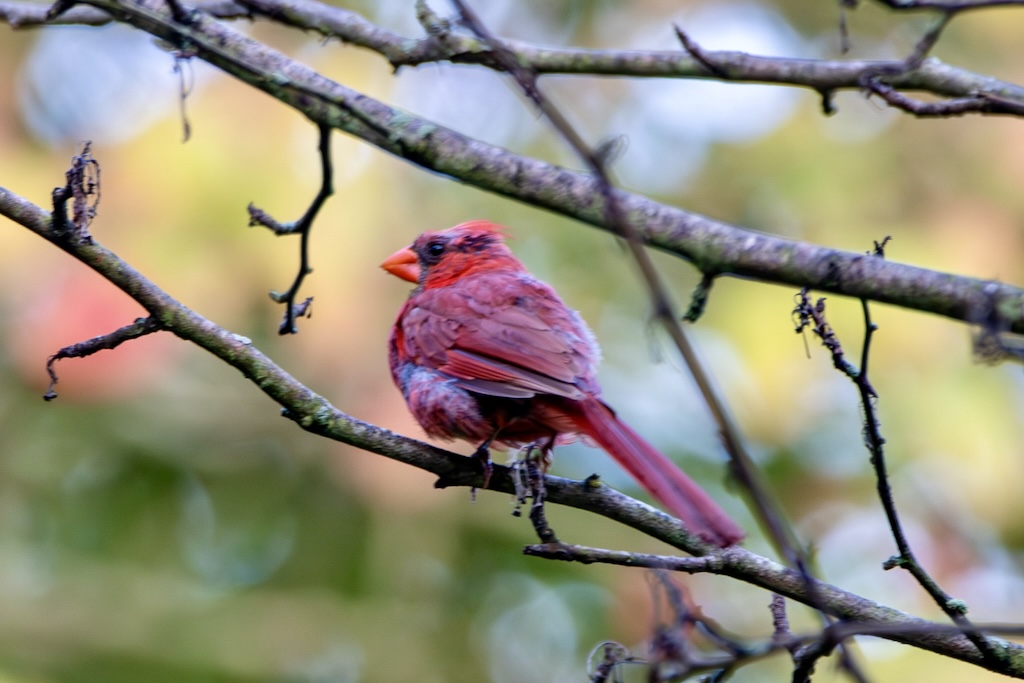
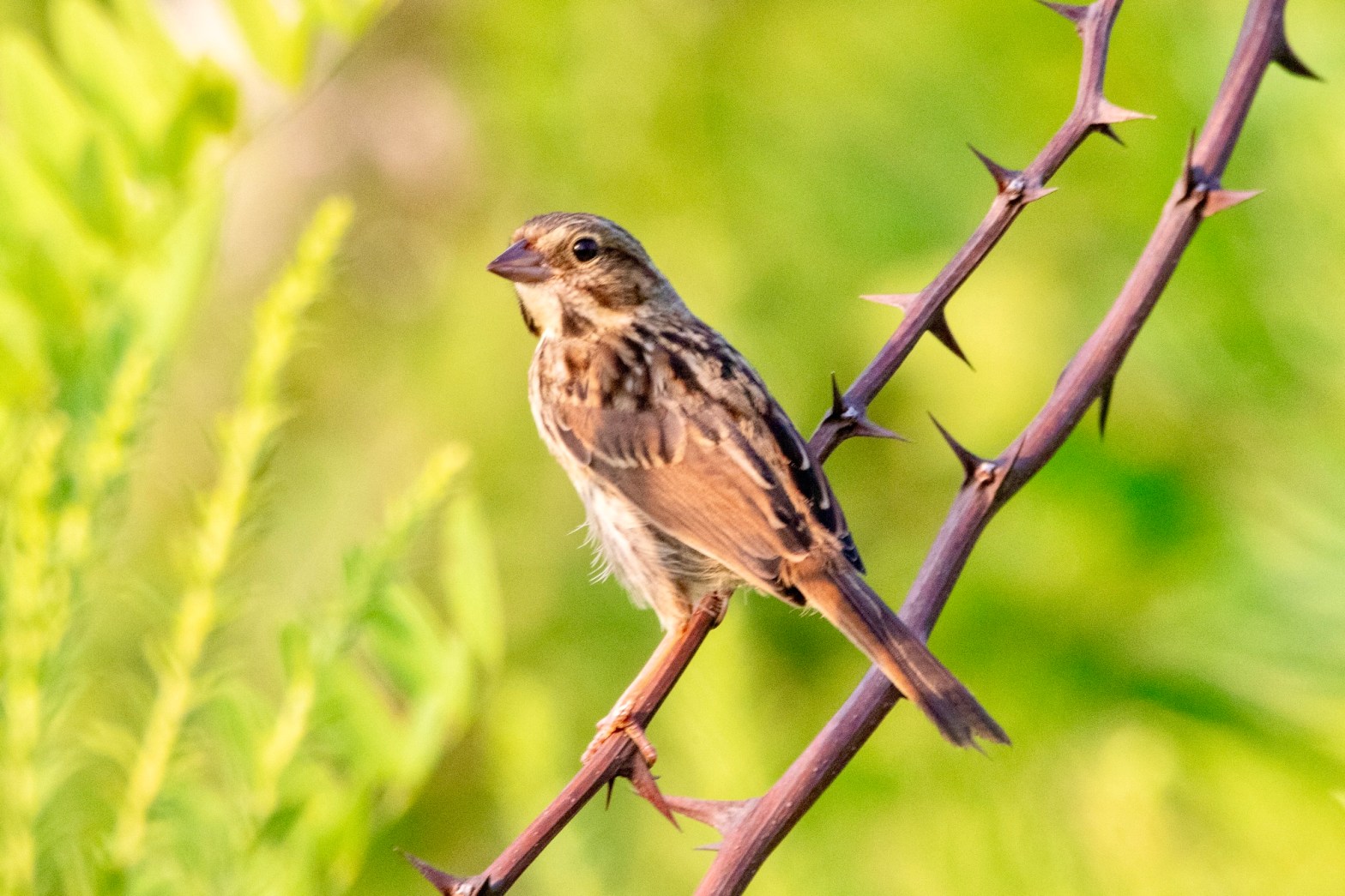
The switch reset to infinity, I ventured out to the Pole Farm this afternoon, and the camera worked fine. The temperature and the humidity were both in the high 80s, and the birds surely were as hot and sticky as I was. On the way out the trail, I spotted the catbird depicted above having a good splash in a big puddle. As I headed back to my car, more birds — a female cardinal, a song sparrow and another catbird — were taking a dunk in the puddle.

I wish I could have joined them.

Time for me to fledge: The Pole Farm kestrels

We regular birders at the Mercer Meadows Pole Farm have been delighting in our daily observations of the pair of American kestrels who have nested in the the barn beside the main parking lot at Cold Soil and Keefe roads.

Virtually every morning for the past several weeks, we’ve seen at least one and sometimes two kestrels zipping in and out of the barn and perching on nearby trees. We were reasonably certain that babies had hatched inside.

Now we have proof, and it seems likely that however many nestlings are inside, they will soon fledge.

This morning, one of the little ones was perched in the hole while its parents periodically went in and out to fetch food.

I’ll be smarter on my next visit and switch to a faster shutter speed to catch the action. The photo at top shows one of the parents flying off while the little one stays inside.

These next several days should be even more exciting.

Blue grosbeaks and brown thrashers rule the day

We’re in a hot spell in much of the Eastern half of the country, with temperatures pushing into the high 90s here in central New Jersey. As a result, more birders than usual were out at the Pole Farm in the 7 o’clock hour this morning to beat the heat, as the temperature was only in the 70s.

A male blue grosbeak perched on a green stalk in a field of green plants.
A male blue grosbeak perches on a plant.

We were treated to some nifty aerial maneuvers by three blue grosbeaks swooping about one of the main fields just beyond the rest rooms and the picnic tables’ shelter by the AT&T historical exhibit. As I walked up from the parking lot I spotted three birders with their lenses pointing out into the field, and every minute or so a pair of the grosbeaks flew up, darted at one another and came down for landings within reach of our long lenses.

At one point, one of the males and one of the females were aligned for a photo, but they were a bit too far for me to get a crisp shot. Instead, I’ve posted the best of the lot of the males.

Another highlight was seeing the brown thrashers that have taken up residence in a clump of trees just up from the Cold Soil Road parking lot. My best shot of the day tops this post. If you look closesly, you can see that the thrasher has crushed an insect in its beak.

A couple of us staked out some berry bushes, hoping to frame a nice shot of the thrasher amid the berries. The bird was teasingly close to the berries but flew off before I got the shot I was hoping for.

Finally, as we were heading back to our cars, we looked up and spotted a trio of birds atop one of the big trees. An American kestrel was on one branch and a red-winged blackbird flew in a branch or two away. Farther to the right was a brown thrasher. The photo below, though not great, will give you an idea of the scene. It illustrates the wonder of the Pole Farm, with such a variety of birds in close proximity.

While the birds stayed in place for a minute or two, eventually the blackbird rose up and dived at the kestrel. A short chase ensued as the kestrel headed toward her nest in the maintenance barn by the parking lot.

I hope the kestrels and all the birds are finding their own ways to beat the heat, not to mention us birders!

Kestrel, blackbird and thrasher arrayed across the top of a tree.
A red-winged blackbird lands close to an American kestrel at top left, with a brown thrasher perched a little lower down at right.

It’s not all birds at the Pole Farm

While birds are my primary photographic target on my outings, I also get to encounter other forms of wildlife, most often white-tailed deer. The fact is, I see deer almost every day, and sadly most of them lay mangled and dead on the side of many of the roads and freeways in my part of the world.

A buck grazes on the Reed-Bryan Farm side of Mercer Meadows.

While my wife is at war with the deer that munch the flowers in our yard, I’m happy to see them popping in and out of the trees and fields at the Mercer Meadows Pole Farm. Often, I’ll spot the flick of an ear across a meadow and initially think it’s a bird before wising up.

Of all my deer photos, my favorite is the one atop this post. I shot it near the Pole Farm observation deck on April 4. I must have spooked her, and I was quick enough to capture her bounding away.

Mercer County does a deer cull every fall into winter, and I always tell the deer I see on the trails to be alert for the hunters. When the cull is over, I congratulate those who made it through safely — and remind them to stay off the roads. 🦅

Seemingly oblivious to the birders strolling a few yards away, a doe feeds not far from the edge of a trail at the Pole Farm.

American kestrels are settling in nicely at the Pole Farm

The American kestrel is a threatened species, particularly in the Northeastern United States. But we have encouraging news from the Mercer Meadows Pole Farm. Breeding pairs are making the park their home, and we have more kestrels today than we did in previous years.

When they’re not hovering over the meadows, looking for prey, the kestrels can often be spotted sitting atop bird boxes in the middle of the fields, far back from the trails we humans tread. There were enough kestrels living at the park last summer that Mercer County naturalists came to band several of them. Friends have heard from rangers that we have five breeding pairs in residence now. UPDATE: The county says there are at least seven kestrel nests in the park!

Kestrel perched in a tree, looking down toward photographer.
Kestrel in

One of the pairs has taken up residence in the maintenance barn beside the primary parking lot for the park, where Cold Soil Road dead-ends into Keefe Road. For the last few weeks in the hour or two after sunrise, at lease one of the kestrels has perched on the big tree to the right as you exit the lot and start up the paved trail.

My birding buddies and I have staked out spots between the barn and the tree. We’ve watched the kestrels fly to and from not only the one tree and another tall one across the path, but they’ve also flown in and out of a hole in the barn wall, just beneath the peak on the side facing the parking lot.

Judging by the frequency of the flights, we’re convinced the couple have chicks inside and are feeding them seemingly continuously. It won’t be long before the young ones fledge.

If you’d like to see the kestrels, I recommend that you arrive at the Cold Soil lot around 7 a.m. As you pull into the park, look up toward the big tree just right of the paved path. Odds are decent that you’ll spot one of the kestrels perched on a bare branch at about 2 o’clock on the clock face mapped onto the tree.

Park and step out onto the paved path. Check the hole in the barn to see if one of the birds is perched there. My friend Andy got a photo of two birds in the hole the other day.

American kestrel perched on the edge of a hole in the wall of a red barn.
Kestrel perched on the edge of the hole in the barn.

The birds stay fairly high up and don’t seem to get spooked by people pointing binoculars or cameras at them, so it’s possible you can get a good look. But they are wild creatures and will take off in the blink of an eye or the moment you turn your head.

I’m rooting for these magnificent birds to be fruitful and multiply. 🦅

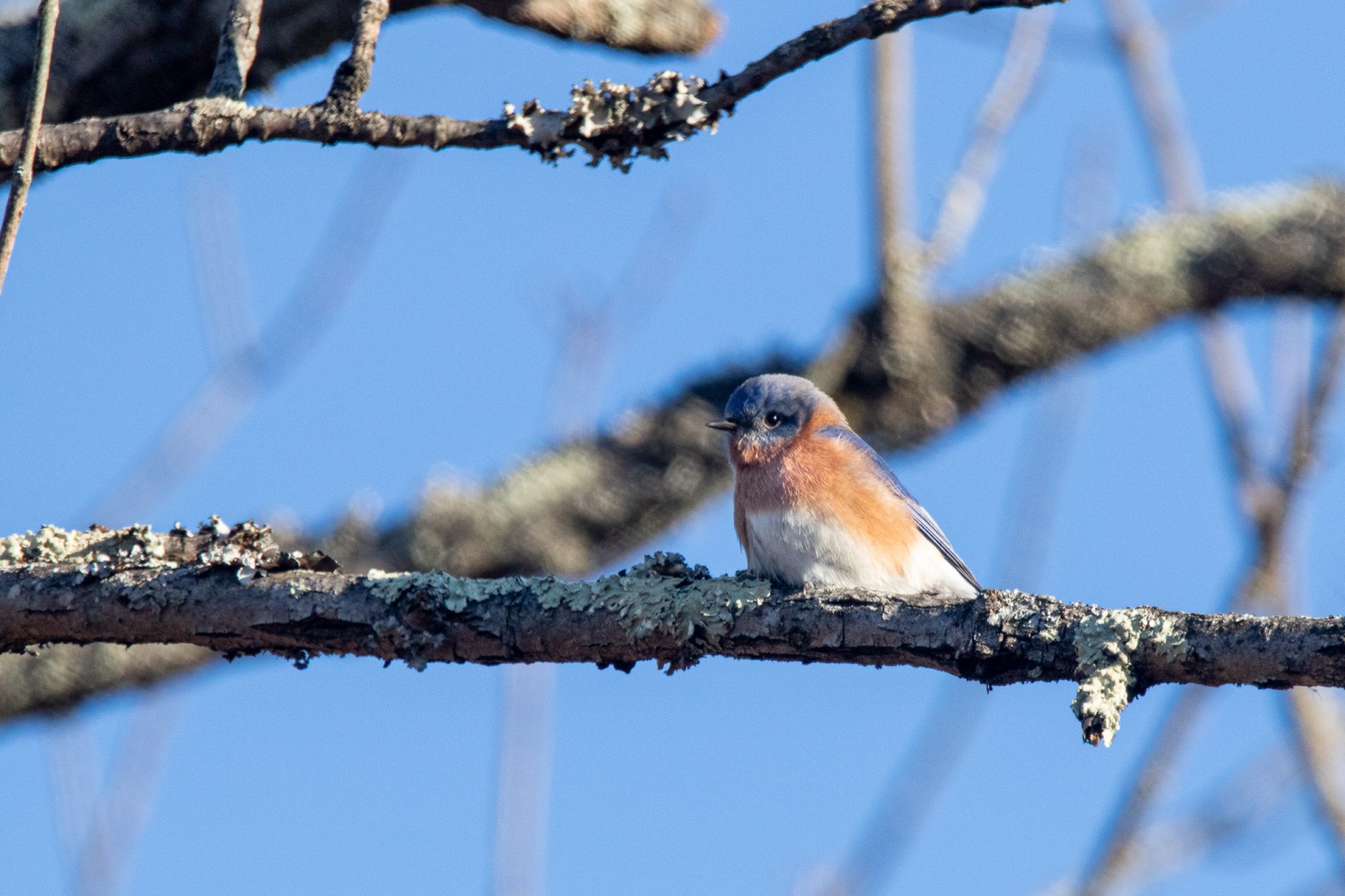
Baby bluebirds!

My friend Andy and I took our usual route at the Mercer Meadows Pole farm this morning. Piercing the gloom of the heavy overcast conditions was this pair of fledgling Eastern bluebirds huddled on the ground.

It’s great to see these and other newly hatched birds, reminding us that avian life is perpetuating itself. We’ve heard there are five breeding pairs of American kestrels in the park, another welcome sign of renewal.

No mistake: a great birding preserve in Cleveland

Returning to the city of my birth for a weekend visit, I decided to check out the Cleveland Lakefront Nature Preserve and do a bit of birding. It was a great choice.

As luck would have it on this beautiful, sunny Saturday morning, the park was full of birds. I had barely walked out of the parking lot when I heard yellow warblers and immediately spotted two of them in a nearby tree.

Yellow warbler, one of several I heard during my 1 hour, 20 minute ramble.

The park is a small peninsula jutting out into Lake Erie a few miles east of downtown Cleveland. The park was built on sediment dredged from the lake in a spot near two old freighters that were junked offshore to serve as a wave break. We passed those old freighters many times when I was a kid, watching them slowly recede below the water over the years.

The park has a loop trail just under 3 miles long that traces the perimeter along the lake. I walked about half of it, going counterclockwise from the trailhead. Just under a mile out, I reached a good spot to take a few photos of downtown, then cut over on the Monarch Trail to save some time and steps.

Tree swallow atop one of the trail markers.

The path almost all of the way was flat and easy to travel, most of it with grass and clover underfoot and gravel in a few sections. Posts every tenth of a mile let you know where you were in relation to the overall trail system, and I appreciated the benches that were placed at many of the markers. Several faced the lake, on which I only spotted a few gulls and Canada geese plus a pair of mallards.

But the trees and gullies along the trails were teeming with birds. I also saw a couple of squirrels and two deer.

Cleveland was sarcastically called “the mistake on the lake” for many years from the late 1960s onward, a reputation it received for urban decay and an environmental atmosphere so lousy that the polluted Cuyahoga River caught fire several times.

Cleveland has done a great job turning things around in many ways, and I was greatly impressed by the preserve — which I hope helps restore my hometown to the slogan used in the 1970s to counter its poor reputation: “the best things in life are here.”

A female redwing blackbird perches in a tree.

At last, a yellow warbler comes into view

My outings have been limited of late, so I’ve been a bit behind my warbler counts of previous years. I had been hearing yellow warblers singing in some of the usual spots where they congregate at the Mercer Meadows Pole Farm, but until yesterday I had not put my eyes on one.

As luck would have it, late in my walk I heard one singing and spotted it high up in a tree, with a fair amount of sun shining on it. The bird was turned slightly to the side and it stayed in place long enough for me to get a few shots and walk back to my car with a smile on my face.

Taking a flyer with a few extra photos

Before switching to digital cameras, I spent decades parsimoniously snapping shots on 24- or 36-shot rolls of film, not wanting to waste anything. But digital cameras have freed us from such restraints, which has been a particular boon to us photographers who delight in photographing swift-winged birds.

As I walked at the Mercer Meadows Pole Farm this morning, I kept getting hits from Merlin on grasshopper sparrows in a section where the central dirt path bisecting two big fields approaches the woods. As usual, I swept the fields, straining to find one of these uncommon sparrows without luck, although I did hear their buzzy calls a couple of times.

At one point, I spotted a sparrow sitting on a stalk a good way off the path. I couldn’t make it out and figured it was another of the many song sparrows and field sparrows whose melodies routinely fill the fields. I took a couple of shots anyway, then trudged on for what would be a two-mile circuit that I’ve made many times before.

Grasshopper sparrow perched on a v-shaped branch.
The grasshopper sparrow. Note the wing pattern and pale, mostly plain breast.

When I got home and pulled the images up on screen, I found two frames of the sparrow and was initially puzzled. The bird’s breast and head were relatively plain, and the wings had a tiered look about them. That’s when I realized it was almost certainly a grasshopper sparrow, which Merlin confirmed.

I’ve taken better grasshopper shots from closer up, but I got a small birder’s high on realizing that I’d captured a couple of frames of a bird I occasionally hear and infrequently see, let alone photograph. And I didn’t burn any film in doing so!

Coming face to face with a Swainson’s thrush

My pledge to finish my goal of visiting the remaining New Jersey counties where I have not gone birding had stagnated, as I had made no progress whatsoever this year. When I discovered early Sunday that I had reason to go to Passaic County to watch a baseball game, I couldn’t pass up the chance to tack on a birding stop.

The ballgame was a Princeton-Penn Ivy League playoff at Yogi Berra Stadium in Little Falls on the campus of Montclair State University. I Googled birding hotspots nearby. Rifle Camp Park was the closest for which e-Bird showed substantial sightings, so I headed there in the afternoon.

After a false start on one trail, I drove to a parking lot designated as “Pond Area” and headed uphill onto what turned out to be the red trail. Quickly I spotted a bird on a branch ahead of me and raised my binoculars. The robin-sized bird was looking straight at me, and my first thought was “veery.”

By the time I raised my camera, the bird had flitted to a couple of other branches and I was able to get a few shots. The bird flew off and I reversed course to follow, and I got a couple more shots. I wandered downhill to the pond, where the only birds I spotted were two Canada geese floating. But there were bullfrogs calling, so I got a photo of one of them.

Bullfrog on a tree branch at the edge of a pond.
American bullfrog croaking at the edge of the pond.

I walked back uphill to my car without encountering any other birds, and I was pleased to think that I’d spotted my first veery in New Jersey (I had seen one in the Philadelphia area previously). I completed my e-Bird checklist listing “veery,” and I’d have to wait several hours before I could confirm it from my photos via the Merlin app.

As it turns out, I did not see a veery but a Swainson’s thrush. Although the birds are somewhat similar, the thrush has a much darker back than a veery, and this bird (shown in the photo atop this post) definitely fit the Swainson’s description. Although I’d seen Swainson’s thrushes before, I’d never gotten a close look, let alone a photo of one. I’m quite happy with the shots I got.

Meantime, I still have nine counties to go before I fill in the map.

Addendum: I also filed an incidental report to e-Bird from the ballpark, which I discovered is in Essex County. To my surprise, I thus actually added two counties from yesterday’s jaunt.

Map of New Jersey counties.
Passaic County is at the top, the middle of the three counties bordering New York.