It’s a rare occasion when my work life and birding hobby converge, but that’s what happened last month when I covered a group of Princeton University students competing in New Jersey Audubon’sWorld Series of Birding.
I had met two of the members of the team on a bird walk they had arranged through the student birding club, and I learned then that they were going to participate in the World Series on May 14.
That was too good of a story to pass up, so I volunteered to write one and take photographs as well. The story is on the university’s website, proudly touting that the five undergraduates and one graduate student of the Princeton Tiger Shrikes won the competition.
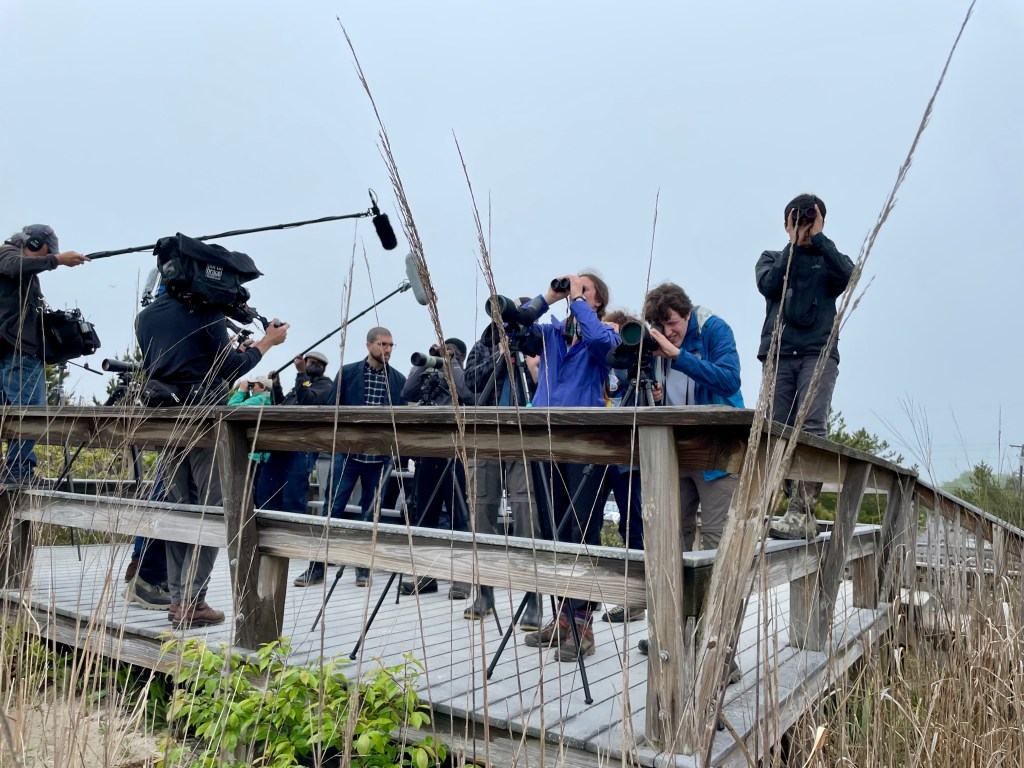
The Tiger Shrikes in action at Coral Avenue Beach, Cape May. The cameras and microphones are from a film crew doing a documentary on the World Series of Birding for HBO.
If I were much younger, I might have ridden along with the team during their 24-hour, marathon birding session. But instead I chose to meet them in one spot, at the Coral Avenue Beach at the southern tip of Cape May. The students were there for 15 minutes, enough time for me to take some photos and a little video of them birding from the observation platform. I caught up with the students later by phone and text after they learned the next day that they’d won the competition.
The students on the Tiger Shrikes are remarkable young people who care not only for birds, but also for the greater natural world. I’m glad to know that they and others like them will be heading out into the world, making it a better place for all of us.
The Princeton Tiger Shrikes look for birds at Coral Avenue Beach, Cape May.
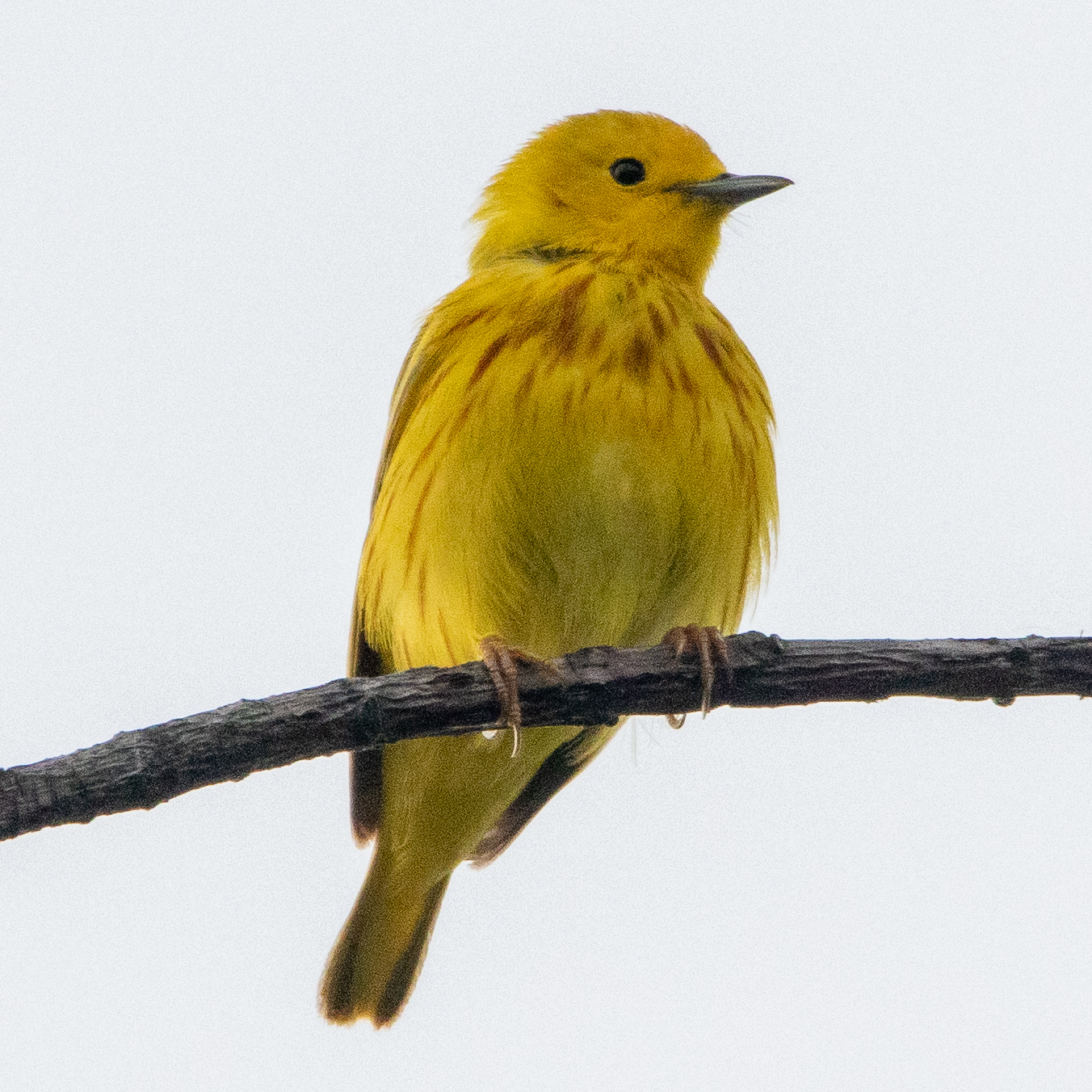
For the last three weeks or so, every time I set foot on a particular trail at the Mercer Meadows Pole Farm, I’ve heard a yellow warbler. And I do mean heard, not seen.
This bird, and I suspect it is just the one, has continually frustrated me because I have not been able to see it. Most of the trees along the trail, which branches off the paved path that begins at the lot where I park, have fully leafed out, providing lots of green cover for the yellow warbler.
No matter that I’ve seen black-and-white warblers, a brown thrasher and countless catbirds in this same cluster of trees, the yellow warbler has taunted me with its song, which sometimes seemed to be coming from directly above my head.
Yesterday in the same area, I spotted a willow flycatcher accommodatingly perched on a nearly bare branch, in easy range for my camera.
Finally this morning, the yellow fellow emerged, temporarily positioning itself on on a branch high up on one of the trees. I got a few shots there and a better one as it dropped down to a another branch.
I’ve learned and grown to appreciate that birding is equal parts visual and audio observation. My listening skills have improved, but I still enjoy my avian encounters most when I see what I’m hearing.
The yellow warbler atop a tree. The lighting in this shot differs from the banner image due to my changing positions on the trail, with the sun thus highlighting the bird differently.
Because of work commitments, my time in the woods and fields has been limited of late, so I’m extra appreciative when new birds come into view.
I spotted my first blue grosbeak on May 17 at the Mercer Meadows Pole Farm, and the bird seems to be hanging around as fellow birders spotted it this morning in the same area. That’s just off the Cold Soil Road parking lot, at the turnoff to the alley of trees that’s part of the Lawrence Hopewell Trail.
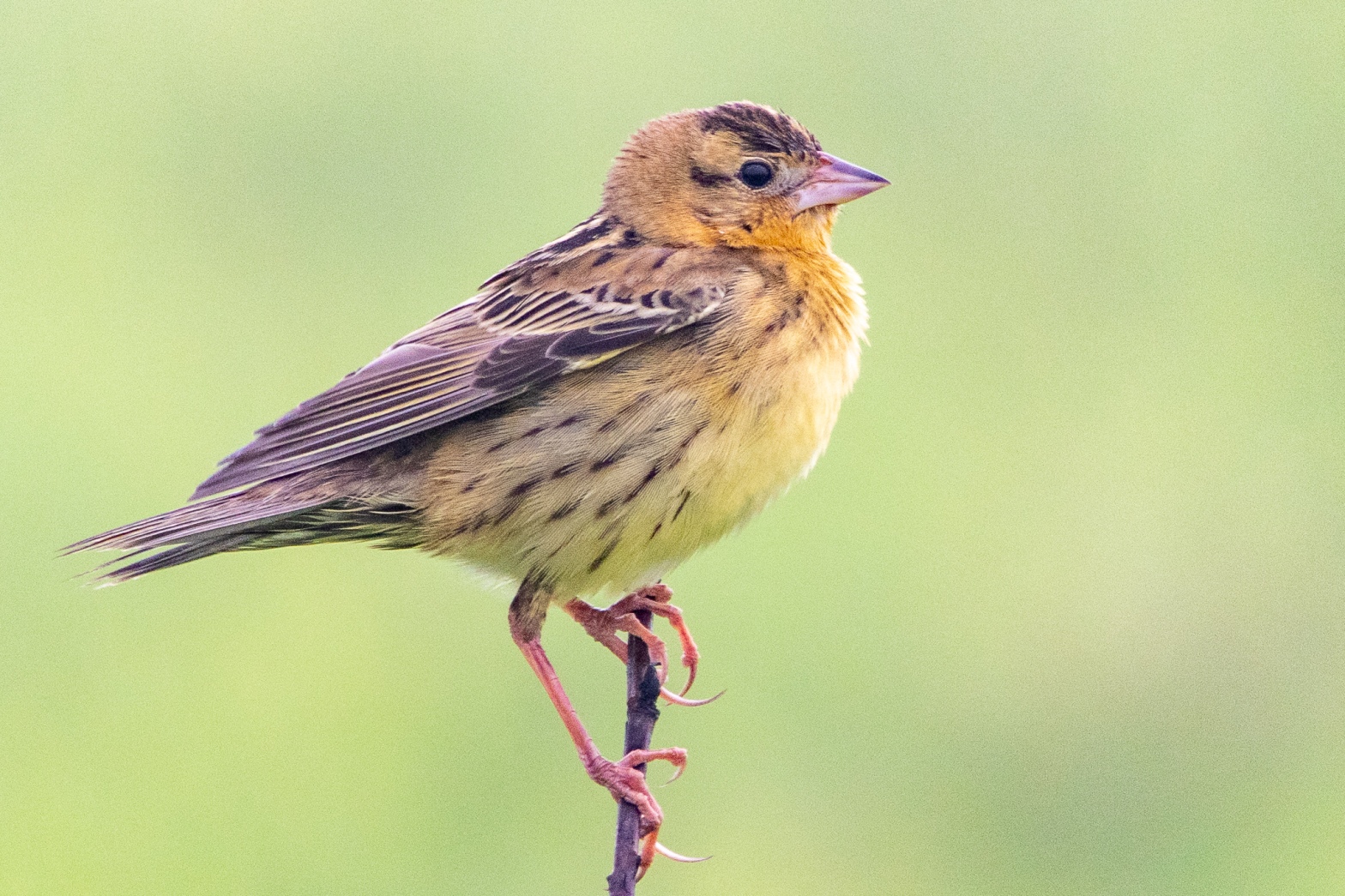
The blue grosbeak was too far away for me to get a good photo, although my fuzzy frames were sufficient to confirm the identity. I had better luck yesterday, Saturday, May 21, when I spotted just off the trail back to the lot a mid-size brown and yellow bird perched on a stalk of grass.
I didn’t recognize the bird, so I went to my camera first and snapped a few frames. I fumbled with my iPhone to open the Merlin sound app, then took a few more shots. Merlin confirmed a bobolink, which gave me great joy.
Last fall I had spotted a couple of male bobolinks in the same area, identifiable through binoculars but too far out of range for my camera. The bird I spotted yesterday presumably was a female. She’s a beauty, as you can see from the image topping this post.
My friend Laura had alerted me that chimney swifts have been zipping above the historic parts of the Princeton University campus, and I happened to catch a few above Prospect House and the art museum construction site 10 days ago.
Whether I’m seeing a species for the first time, or for the first time in a new setting, it’s always a treat. That bobolink brought me to 100 species spotted in Mercer County this year, and I can’t wait to discover what (f)lies ahead.
This was my first year of formal birding on Global Big Day, and I’m pleased to report that I logged 45 species at five locations and added four birds to my life list.
I started the day at my favorite spot, the Mercer Meadows Pole Farm near home. I counted 28 species on a gray morning memorable more for what I didn’t see than what I did. My Merlin Sound app heard a few warblers I never did see, so I did not include them in my count.
Wood thrushes were in full voice at the Pole Farm on May 14, 2022. This is one of the several I heard in the woods.
The most exciting, and ultimately disappointing, part of the walk was having Merlin key in on a black-billed cuckoo, followed shortly by my taking a photo nearby of what I was pretty sure was the one. Even fellow birder Andy figured it was a cuckoo when he looked at the fuzzy image on my camera back. Alas, upon further review on the home computer, my cuckoo was actually a brown-headed cowbird stretching out for a morsel off a treetop.
But the day would bring rewards.
After some observations at home, I drove two hours to the southern tip of New Jersey at Cape May. On Global Big Day each year, Cape May is the epicenter of East Coast bird migration. This has not been a strong May for migration in the Garden State, and the day on the cape dawned heavily with fog and rain. The rain cleared when I arrived at mid-afternoon but the fog had barely lifted.
The trip to Cape May was principally for work, as I would connect there with a group of Princeton University students taking part in the World Series of Birding, sponsored by the New Jersey Audubon Society. The students were in and out of our shoreline rendezvous in about 15 minutes, and I’ll write more about that later.
Three least terns turn their attention to the shoreline at Coral Avenue beach in Cape May.
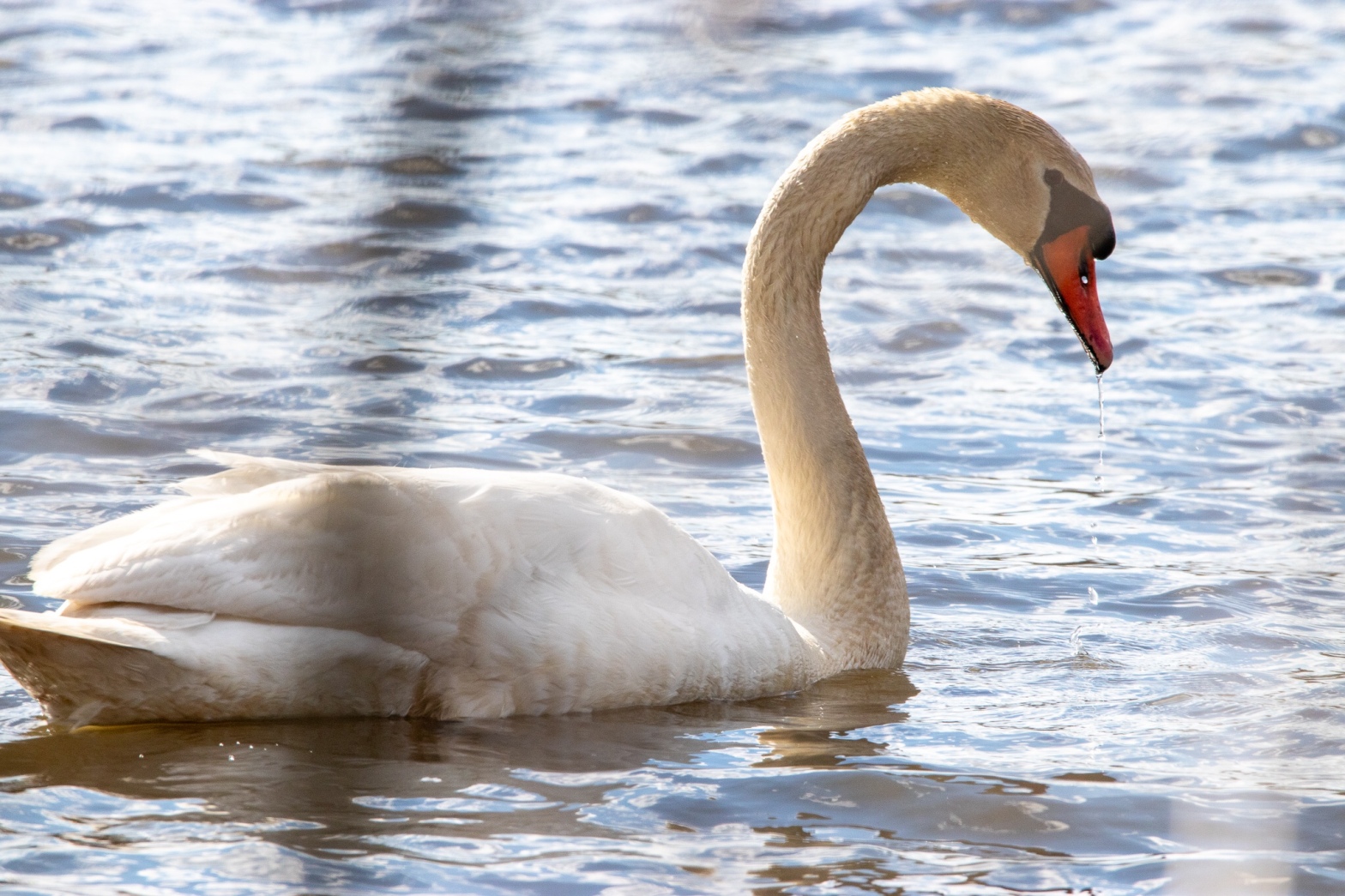
Few birds were at the rendezvous point, but I was able to log sanderlings (banner photo) and least terns as lifers. Afterward, I stopped at Lake Lily, where a pair of mute swans were close to the edge on their nest, caring for an adorable cygnet.
The fluffy mute swan cygnet sits on the nest at Lily Lake.
As I was heading out of town, I pulled over late in the afternoon at the Nature Conservancy’s South Cape May Meadows preserve. I only walked a third of a mile into the preserve before turning around to head home, and I added short-billed dowitchers and Forster’s terns to my life list.
I only scratched the sand, so to speak, in Cape May County, and I aim to return someday soon.
One of the joys of my first year of the COVID epidemic was discovering a pair of killdeers that nested in a creek a short walk from my back door. It was a joy again a few days ago to see that another killdeer couple has set up housekeeping in the same area, along the 12th-hole fairway of the golf course that our modest property adjoins.
I was on a late-afternoon walk, returning home, when I spotted movement in the rocky creek bed, just to the side of a culvert connecting to a retention pond. I pulled up my binoculars and made a solid ID on a killdeer.
Momma killdeer gives me the eye as I approach her nest hidden among the rocks of Cobblestone Creek, April 22, 2022.
The bird soon turned away from me, fanning out its tail feathers. I thought — mistakenly, I would learn — it must be some sort of courtship maneuver. But no other bird was nearby.
Knowing that killdeer make their nests on the ground, I always keep a fair distance when I see them in the creek. I moved in slightly closer to snap a few photos but quickly moved on.
Before I reached home, curiosity got the better of me. I did a Google search from my iPhone on why a killdeer would fan its tail feathers. The answer came up quickly on the website of Northern Woodlands magazine: killdeer fan their feathers as a diversion to keep predators away. The article, from 2016, is a great read on the protective measures many bird species take. “If they gave out Academy Awards for bird performances,” the article says, “the killdeer would win for over-acting.”
Having been profiled as a predator, I’ll be sure to keep a good distance from killdeer from now on. I saw enough bird twerking that day to last me a good while.
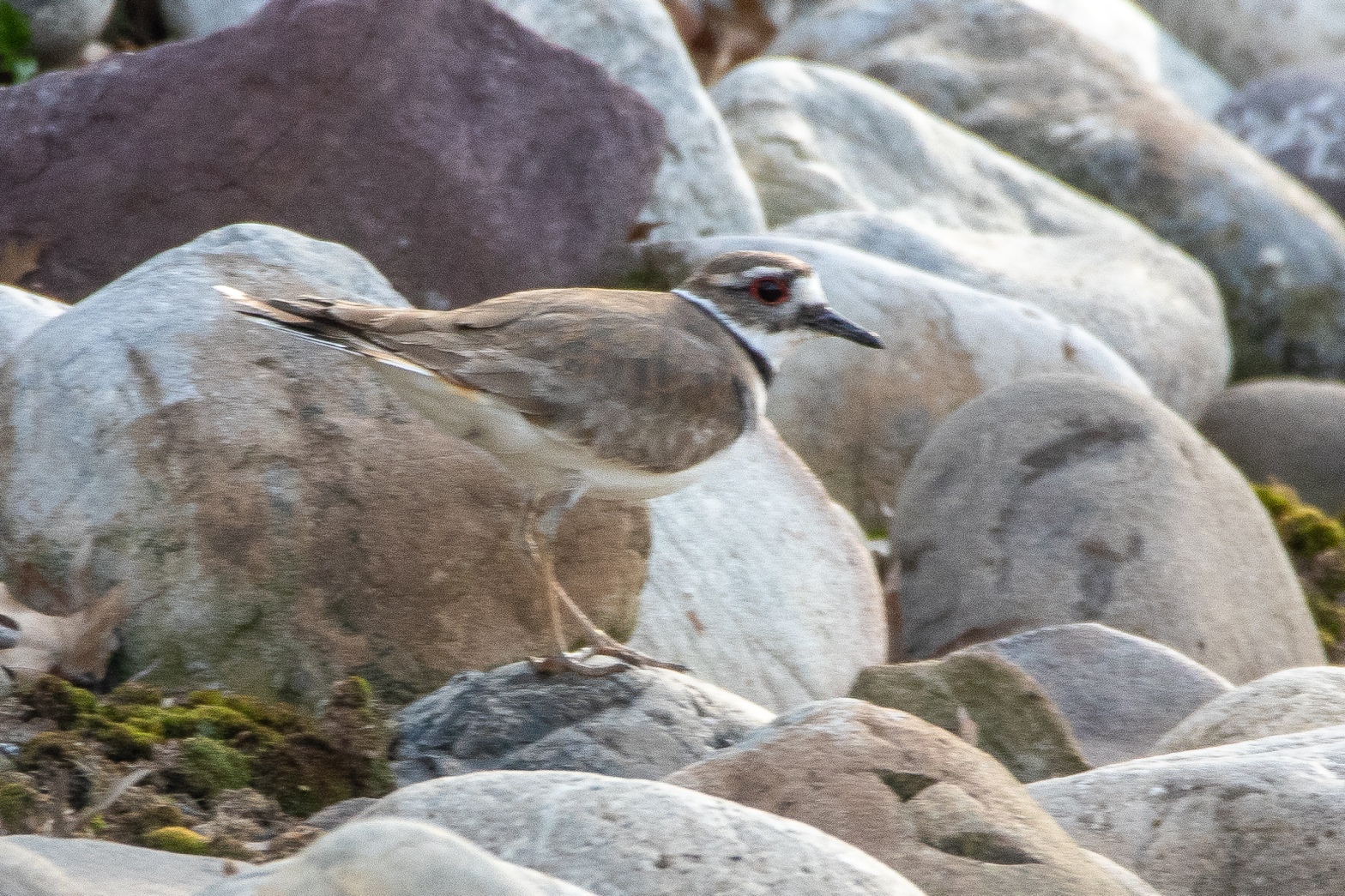
A killdeer walks along the edge of the retention pond on the golf course near my home May 4, 2022. The retention pond is across the fairway from the culvert where the killdeer nest is.
April was the coolest month. Knowing that I had a trip to Texas scheduled and that a few warblers might eventually come my way at home, I set out on a “big month” quest to spot as many species as possible. I set 60 as my target, a reasonable expectation but not a certainty.
I’m happy to report that my total flew well past that, topping out at 83. To put that in perspective, that number is well above the 70 species I recorded in my first year of progressively serious birding, 2020, and the total isn’t far off the 102 species I logged in 2021.
From April 1 on, many of the birds I first spotted showed up at home. This chipping sparrow is Exhibit A.
The first-of-the-year chipping sparrow who showed up on my backyard feeder on April 1 was a good omen. I recorded 17 species that day, a fast but expected start that reminded me that I don’t have to head deep into the woods to find nature. I’m fortunate that it comes calling on my own half acre.
I filed 50 checklists in April from four states, the majority in New Jersey, a week’s worth in Texas and single reports from New York and Pennsylvania. I had one walk in Central Park in New York City early in the month, and I was happy to record the first pigeons of the month there. I’d also see a few at the Mercer Meadows Pole Farm later on.
The Pennsylvania stop was on the last day of the month at the Morrisville levee, just across the “Trenton Makes, The World Takes” bridge over the Delaware River. I spotted a female common merganser in the river, and I also saw a sharp-shinned hawk swoop in and out of the park at the foot of the levee.
The first surprise of the month came on April 5 on the Reed-Bryan Farm side of Mercer Meadows park: an American kestrel perched on a lone tree off the main path. I would see another kestrel (maybe the same one?) a few days later on the Pole Farm side.
Purple finch at the Pole Farm
Another early surprise came April 8, when high up in a tree at the Pole Farm I captured in my camera what turned out to be an immature purple finch.
At College Station, Texas, I added a white-winged dove and a spotted sandpiper to my life list. Returning home, I wondered when I’d log my first white-breasted nuthatch, and one finally appeared on April 17.
I hit my goal of 60 on April 19 when I heard the first house wrens of the year at Drexel Woods, a small park near home.
Big surprises awaited me in the waning days of the month. I spotted a pair of orchard orioles in a tree at the Pole Farm on April 27, and the following day would hold even more wonders.
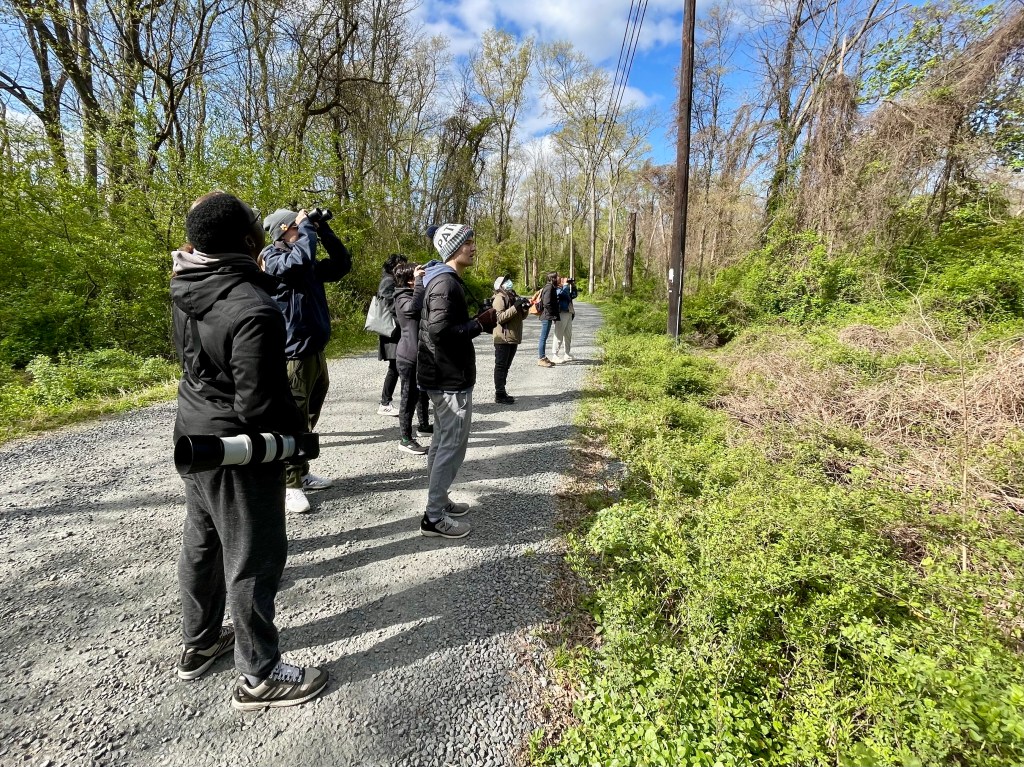
That morning I met up with the Princeton Birding Society, a student group at Princeton University. They were on a birding walk through the Charles H. Rogers Preserve. The day set off with a bang when a flock of laughing gulls flew overhead, and shortly thereafter I spotted a bald eagle soaring on thermals high overhead.
On the trail at the Rogers Preserve with the Princeton Birding Society.
We heard a Virginia rail from the observation deck over a marsh; the calls were confirmed by the experienced birding group leaders and Jim Parrish, one of the top birders in these parts who happened to be on the deck when we arrived. He said there were two rails and he had seen one of them. I heard a rail again the next morning but never did see it.
The students also spotted a blue-winged warbler and a palm warbler, both in the bushes in front of me. I didn’t see them but am comfortable counting them; I’d see my own palm warbler two days later. The students also ID’d a warbling vireo, and I spent some quality time with one at the preserve the next morning. The bird would not sit still for photos, and I came home with five lovely frames of the tree branches it had vacated.
On the final day, I started with a visit to the Pole Farm and was overjoyed to spot at prairie warbler (another lifer) high up in a tree.
Prairie warbler at the Pole Farm
Next, I headed to the Rogers preserve and connected with my friends Mark and Laura and their great black lab, Iko. We were thrilled to get a good look at a beautiful Baltimore oriole. Laura had taken me several weeks ago to see my first Harlequin ducks, and I got to return the favor as she saw her first wood ducks, which I’d added to my life list the morning before.
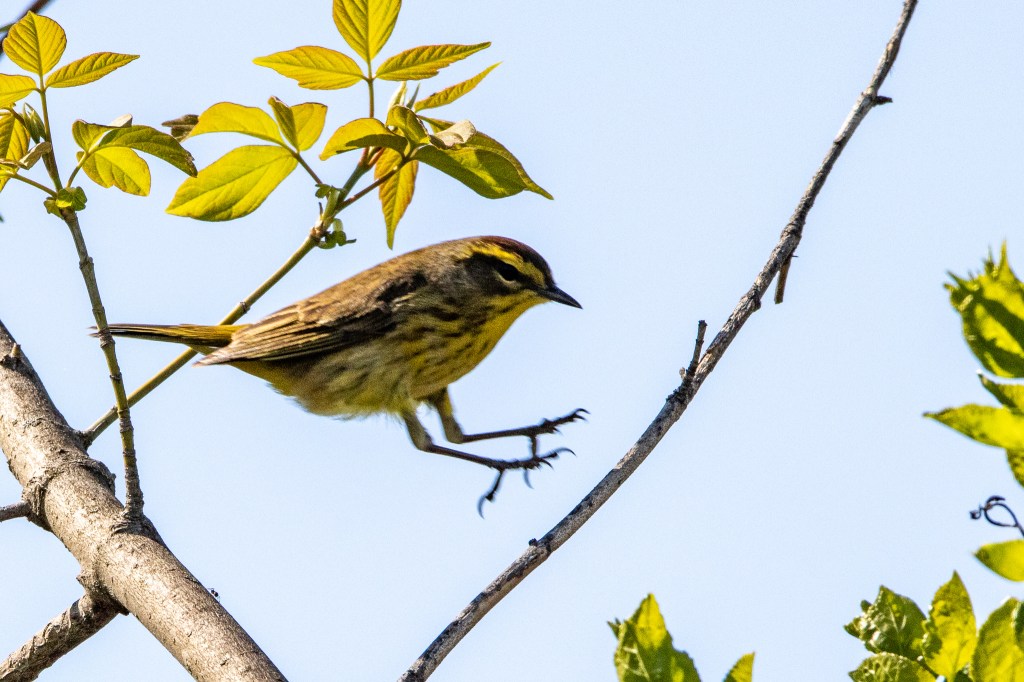
In the afternoon, I stopped at the levee in Morrisville, then headed to Abbott Marshlands back on the Trenton side of the river. There, I was treated to some in-the-leaves antics by a palm warbler, a fantastic way to close out the month.
Palm warbler coming in for a landing at Abbott Marshlands, Trenton.
I’ll admit to feeling a slight bit of relief on finishing. I birded every day, heading out on most of them. On a few days, I was limited to from-the-windows observations at home due to weather and other circumstances.
What did I learn over the course of the month?
I learned that while racking up numbers was a good challenge, it’s not really what drives me.
At one point out at the Pole Farm, I spotted a Savannah sparrow and heard myself say internally, “who cares; I’ve already logged them for the month.” Immediately, I chided myself. Seeing that sparrow was a joy just as great as seeing the first ones I’d checked off on a list a few days earlier.
So what drives me as a birder?
It’s is the pleasure of seeing birds as they are, wonderful friends and neighbors, in great varieties of shapes, sizes, colors and behaviors, inhabiting and enriching our world.
And if they hang around just a few more seconds to let me photograph them, that’s even better.
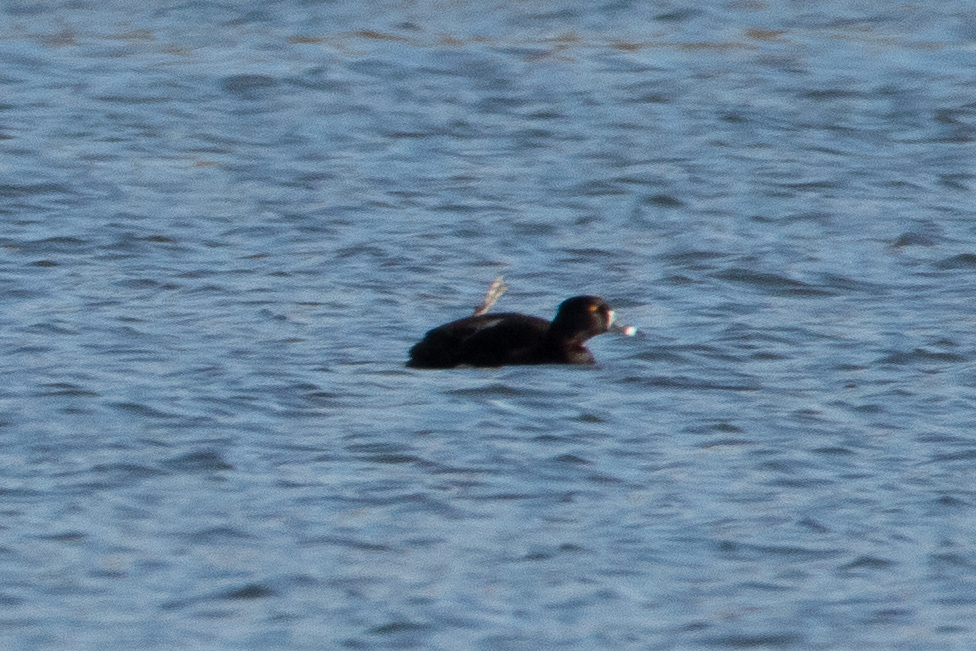
One of the big surprises for the month was this ring-necked duck and its mate, floating on Spring Lake at the Abbott Marshlands.
While I didn’t add a huge number of birds to my “Big Month” count, my trip to Texas did net me four lifers, two that I had seen before but never recorded and two that truly were new sightings for me.
I racked up a modest 21 species in College Station during the six days I was in the Lone Star state, adding six species to my count for the month.
The true lifers were a white-winged dove and a spotted sandpiper. I saw both at Gabbard Park, a small but delightful city park with a pond in the middle.
Northern mockingbirds were plentiful in Texas, including this one perched on a fence near my daughter’s home in College Station.
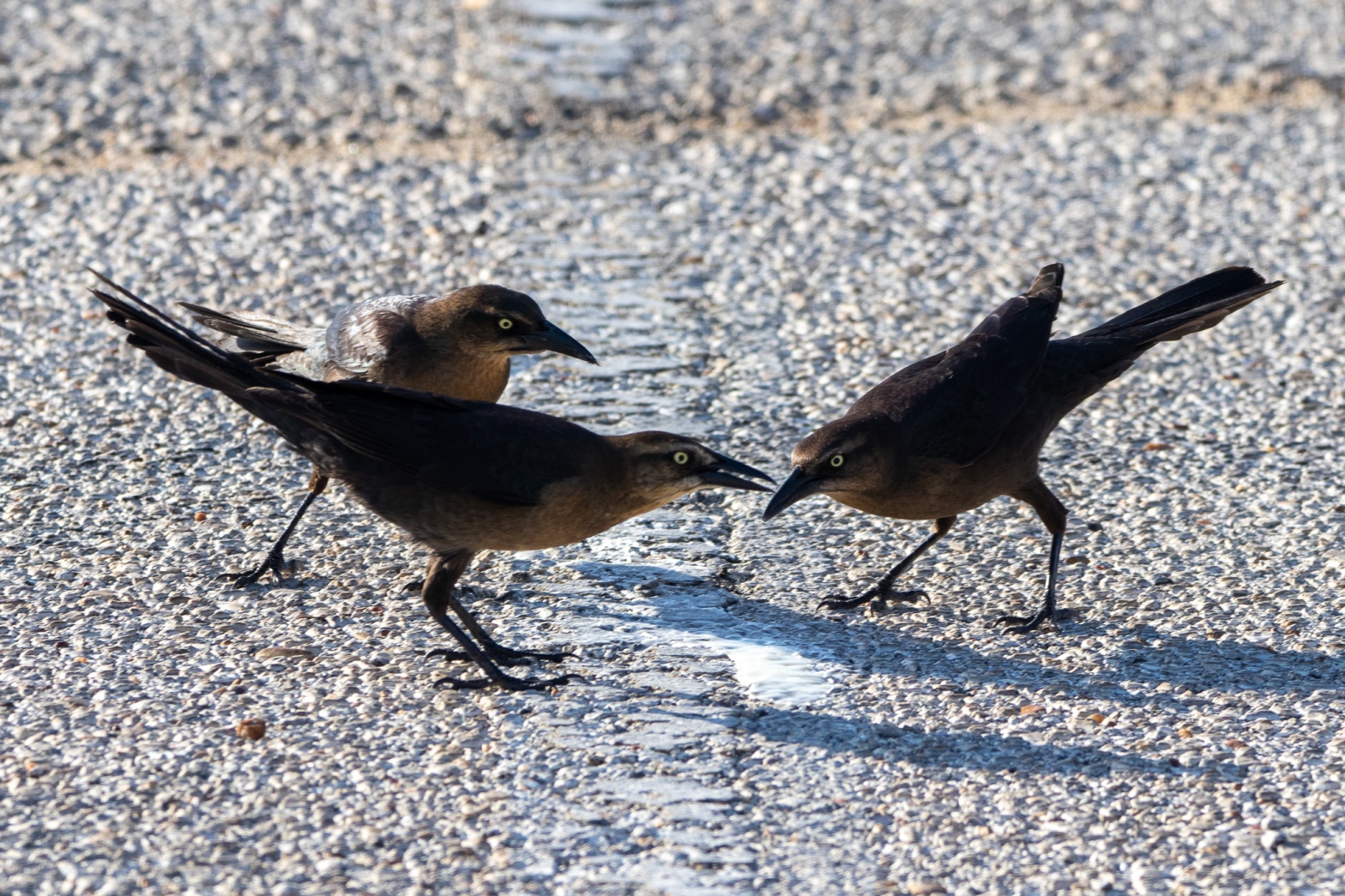
I also logged lots of barn swallows and great-tailed grackles, both of which I had seen before, the former many times many years ago and the latter on several visits to Houston. I never did get a photo of the males, who have more pronounced “great tails” than the more slender, brownish females. Fittingly, I got photos of the females on a “ladies night out” in the parking lot of Chuy’s, a popular Tex-Mex restaurant, at the Post Oak Mall.
My other additions to my “Big Month” list were white-eyed vireos and blue-gray gnatcatchers.
Having flown home to Newark Liberty Airport last night, I could not resist the call of the wild when I woke up this morning. I headed to my happy place, the Pole Farm, and saw my first-of-the-year ruby-crowned kinglet. It was tucked away in a thicket in the woods, and I was only able manage a fuzzy frame with my camera that wasn’t worth sharing.
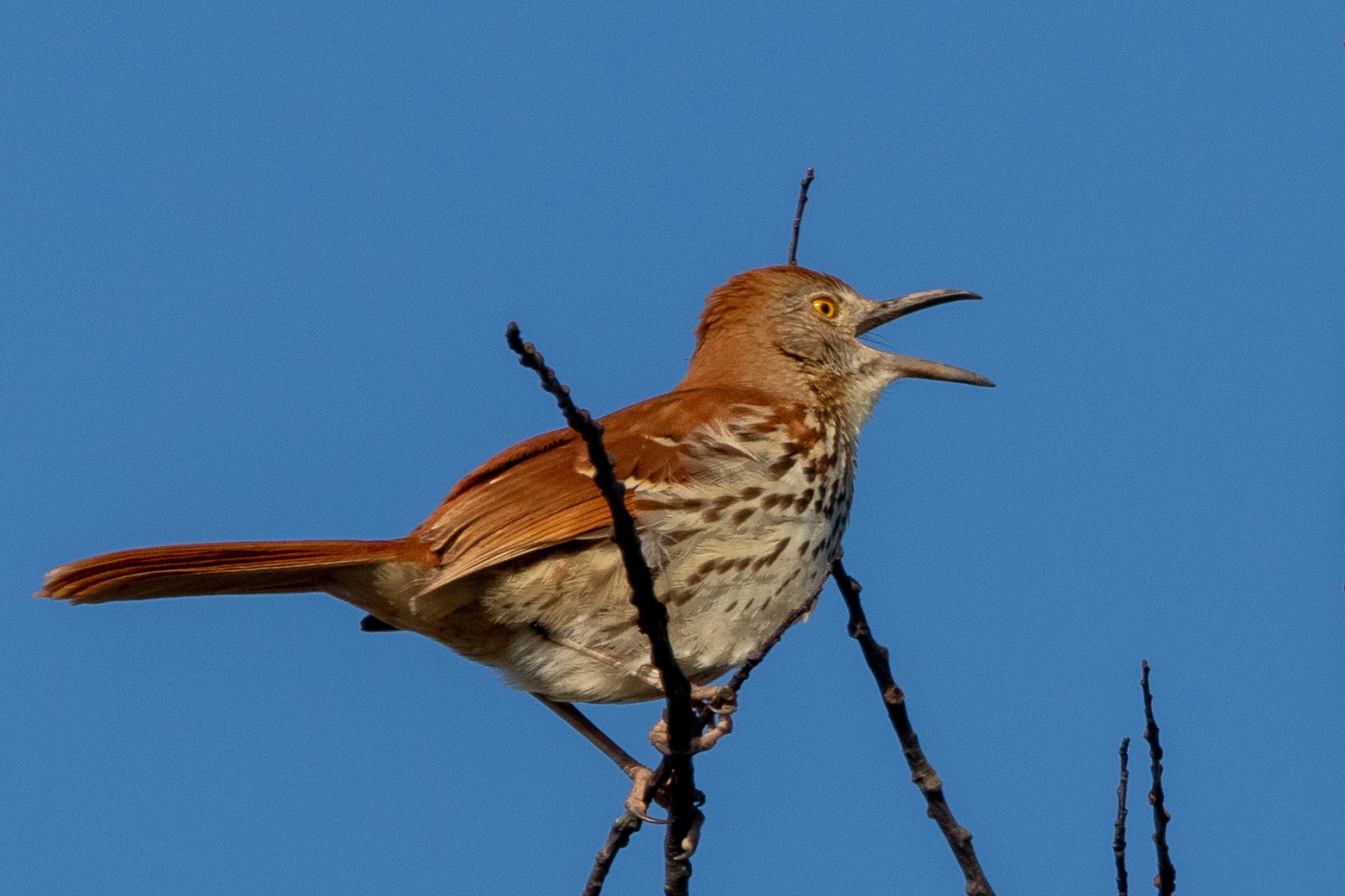
I had heard a brown thrasher at Lick Creek Park in College Station one morning but never did see it. That made things extra special this morning when I spotted one high up in a tree. My photos turned out better than expected, and I’m sharing one here.
Also today, I finally saw a white-breasted nuthatch at our backyard feeder. The bird was a long time in coming, and it brought my count for the month up to 58. I’m closing in on my goal of 60. I have two weeks to go to reach it, and the warbler migration is just beginning.
I’m counting on this week bringing more surprises and even more joy.
A brown thrasher makes his presence known high up in a tree at the Pole Farm side of Mercer Meadows park.
The great-tailed grackles are out in force here in the Brazos Valley of Texas, and it almost seems as if they outnumber the bluebonnets and other wildflowers blooming in spectacular clusters along the highways I drove from Houston airport to College Station.
What starlings are to many areas of the country, the great-tails are to this part of East-Central Texas. Quiscalus mexicanus is passim, that is, everywhere : strutting on street corners, chattering from the trees by strip malls, darting in and out of city parks. As I stepped out of my car at a Whataburger for an after-school milkshake break with our granddaughter, a female long-tail was in the grass about 10 feet from me while three males were jabbering in a tree nearby.
Having seen them in Houston a few years ago without realizing what they were, I knew this time I would see great-tailed grackles and add them to my life list. From scouting e-Bird listings for Brazos County and the Bryan-College Station metro area, I figured I’d also have a good shot at seeing barn swallows.
A barn swallow, on my daughter’s lawn in College Station, Texas, April 11, 2022.
I had no idea how easy it would be. As I stepped out of the front door of my daughter’s home this afternoon, two barn swallows were poking around her front lawn. As quickly and quietly as I could, I pulled my camera out of the trunk of our rental car and was able to snap a few frames while others winged their way up and down the block.
White-winged dove, College Station.
Today’s other highlight was my first white-winged dove, which my wife and I spotted early in a short walk around delightful Gabbard Park, not far from the Texas A&M University campus. (I’ve had that Stevie Nicks song “Edge of Seventeen” — “just like the white-winged dove” — stuck in my head all day.)
Although the grackles eluded my lens all day (too fast, they, and too impatient, I), I was able to get a few decent shots of mallards at Gabbard Park.
Mallard mates in the grass at Gabbard Park, College Station.
I was puzzled to note that the heads of the two of the males were purple, not the usual green. I found one seemingly definitive report earlier today on the web (no pun intended!) that it’s breeding plumage for male mallards, but I can’t seem to finding anything conclusive as I write this post. More research needed!
One-third of the way through my “Big Month,” it’s time to assess my progress. Having set 60 as a “reach” goal, I find I have a legitimate shot.
Yesterday was a particularly encouraging day. I headed out to the Pole Farm, hoping to find one of the “should have” birds, the common grackle. I was just about finished with my route, maybe 200 yards from my car, when I spotted a black bird land in a field to my left. Was that a flash of iridescence?
It was. A common grackle for sure, one glimpse in the binoculars confirmed. Another grackle landed on a small tree, and a few more may have lurked farther back.
The biggest surprise was yet to come.
Late in the afternoon, I headed to the Abbott Marshlands at Trenton, a good spot to see waterfowl. Almost immediately after getting out of the car, I spotted three mute swans on Spring Lake to one side, and another in the nearby marsh sitting on what appeared to be a nest. I’d see two more on the day, and I was happy, satisfied to add a new bird for the month but hoping to see a bald eagle. I’d seen one the last time I was at the marsh.
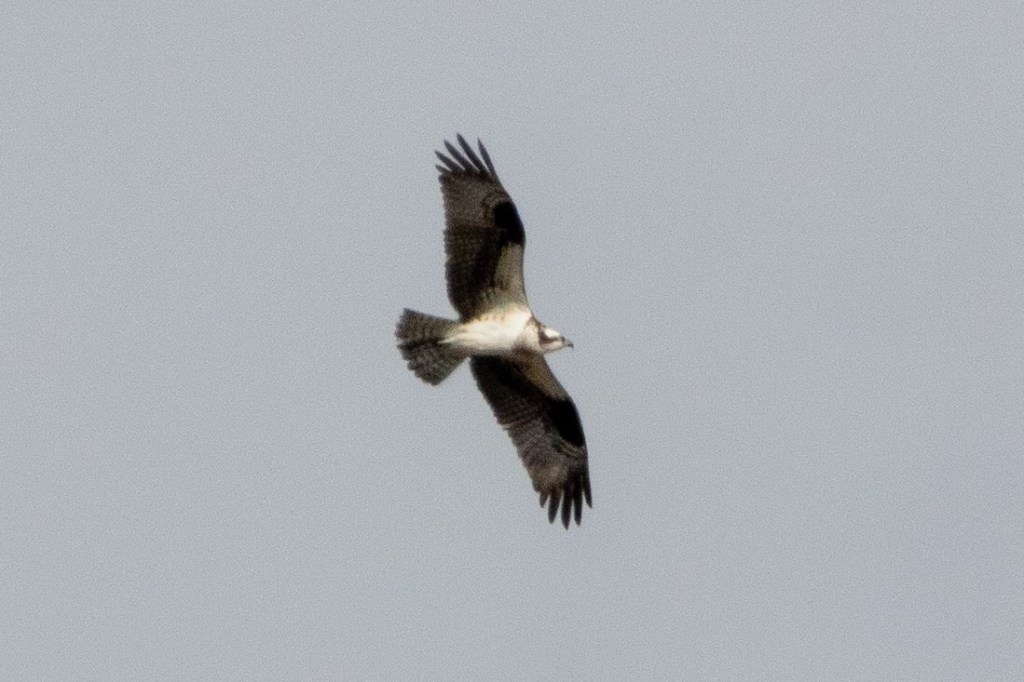
Heading up the trail, I noticed a large bird high up in the distance. An eagle, I wondered, my pulse quickening.
Way up there over Spring Lake, an osprey, April 9, 2002.
No — osprey. No doubt about it. I thought I had already seen one this month, but a check of my logs would show that was in March when I last saw one.
One more bit of luck lay ahead. I decided to walk around the lake to get a better shot at the swans. That was not to be, but I spotted two duck-like birds swimming away from me. I got a fleeting glimpse of one of their bills, and I saw white. A coot or scaup, maybe. I would need to get a look from another angle.
A few minutes later and a few hundred yards down the trail, through my binoculars I could see a male to the right and what surely was its mate to the right. She was brown, he was black with white sides, and his bill had some white.
I pulled up my camera, zoomed all the way in and snapped a couple of frames. I then pulled up the image and zoomed in — a ring-necked duck! Another lifer for me.
Last night I finished reading the “Big Year” book on which the movie of the same title was based. I’m comfortable in reporting that I am not quite as obsessively crazed as the three competitors on whom the story is based who each sighted more than 700 species of birds in 1998.
It was on Day Two of my self-declared “Big Month” quest that I realized my birding habit is not primarily about checking off another species on my life list. Yes, I’d like to claim more birds, ideally seeing several new “lifers” over the 30 days of April 2022. But that’s not what drives me.
Ring-necked pheasants on parade at the Pole Farm on April 4, 2022.
My epiphany came at the Pole Farm on Saturday. I had just strolled along the main path out of the parking lot with Old Sam Peabody and Blonde-Crested Warbler for a good half hour and turned back toward my car. I thought momentarily that I don’t care if I don’t see any Savannah sparrows that morning because I’d already logged them the day before.
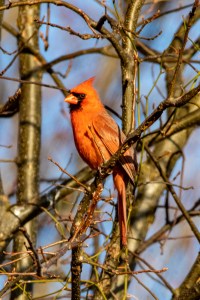
Northern cardinal at the Pole Farm on April 4, 2022.
Immediately, I thought that was wrong. I want to revel daily in every species I see, either for the first or 400th time. That Northern cardinal chirruping in the tree over yonder deserves as much respect as the ones I saw in my yard as a kid in Cleveland decades ago.
So far, in just five days, I’ve managed to log 42 species in April, which, as my college pals from Massachusetts would say, is off to a “wicked fast” start (kindly drop the “r” as you say “start” aloud).
Some of the highlights include my first-of-the-year chipping sparrows, fish crows today and on Saturday, and white-throated sparrows at home, at the Pole Farm and — to my extra delight — in a construction zone on the Princeton University campus this afternoon.
In a break between raindrops in New York City on Sunday, I spotted some sort of warbler in Central Park that I could not identify. Today’s camera-confirmed sighting of an American kestrel was ample compensation.
I have yet to log a lifer this month, and I’m hoping I’ll score several in Texas next week. Meanwhile, I’m waiting for an overdue white-breasted nuthatch to show up at the backyard feeder, and I’m wondering how I’ll sneak in some sightings on what promises to be a rainy day tomorrow.
Again, numbers matter, but the satisfaction of seeing the diversity of the birds around me matters more.
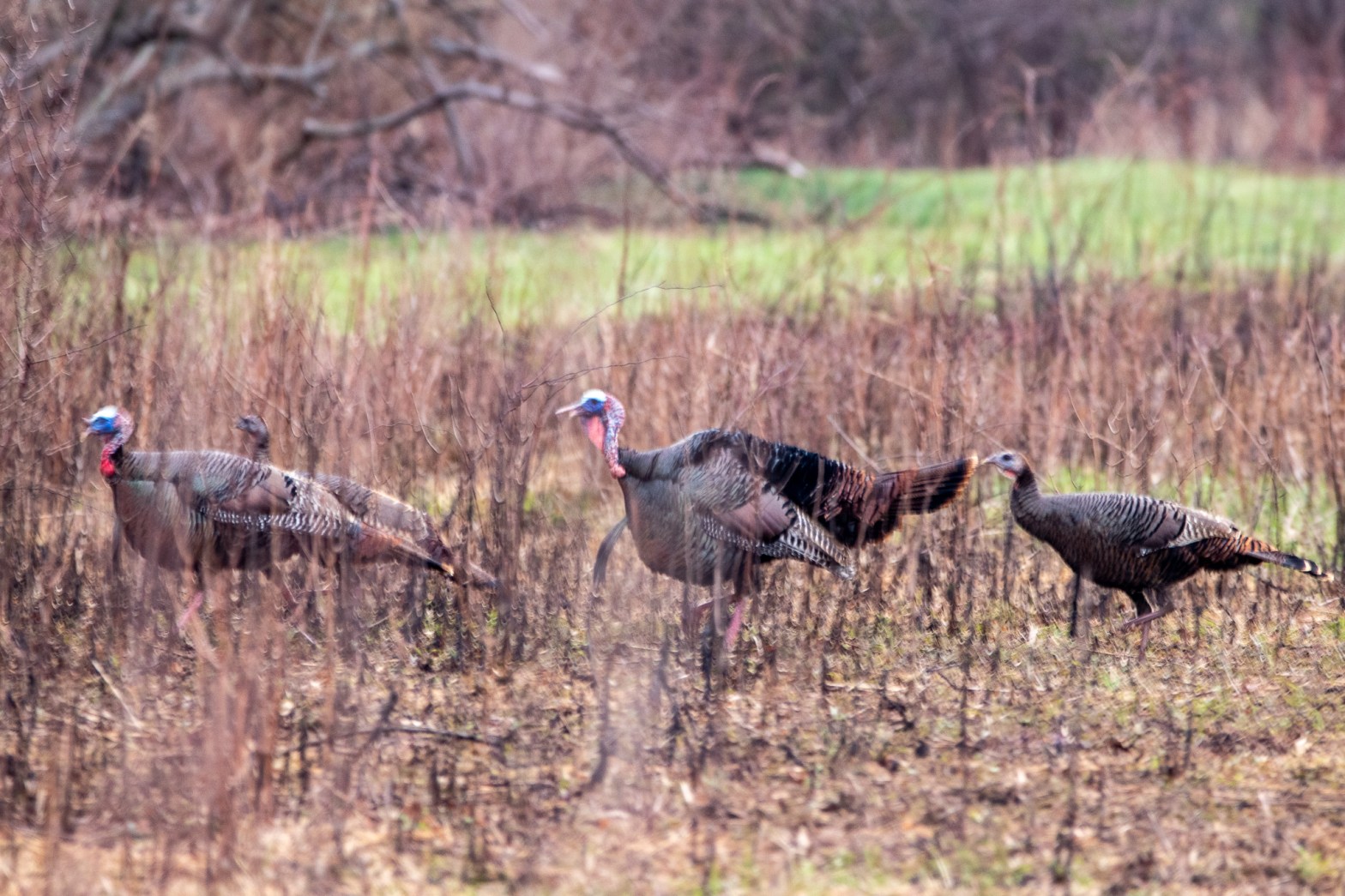
Some of the 15 wild turkeys I spotted at the Reed Bryan side of Mercer Meadows park on April 5, 2022.














 The Jersey Birder