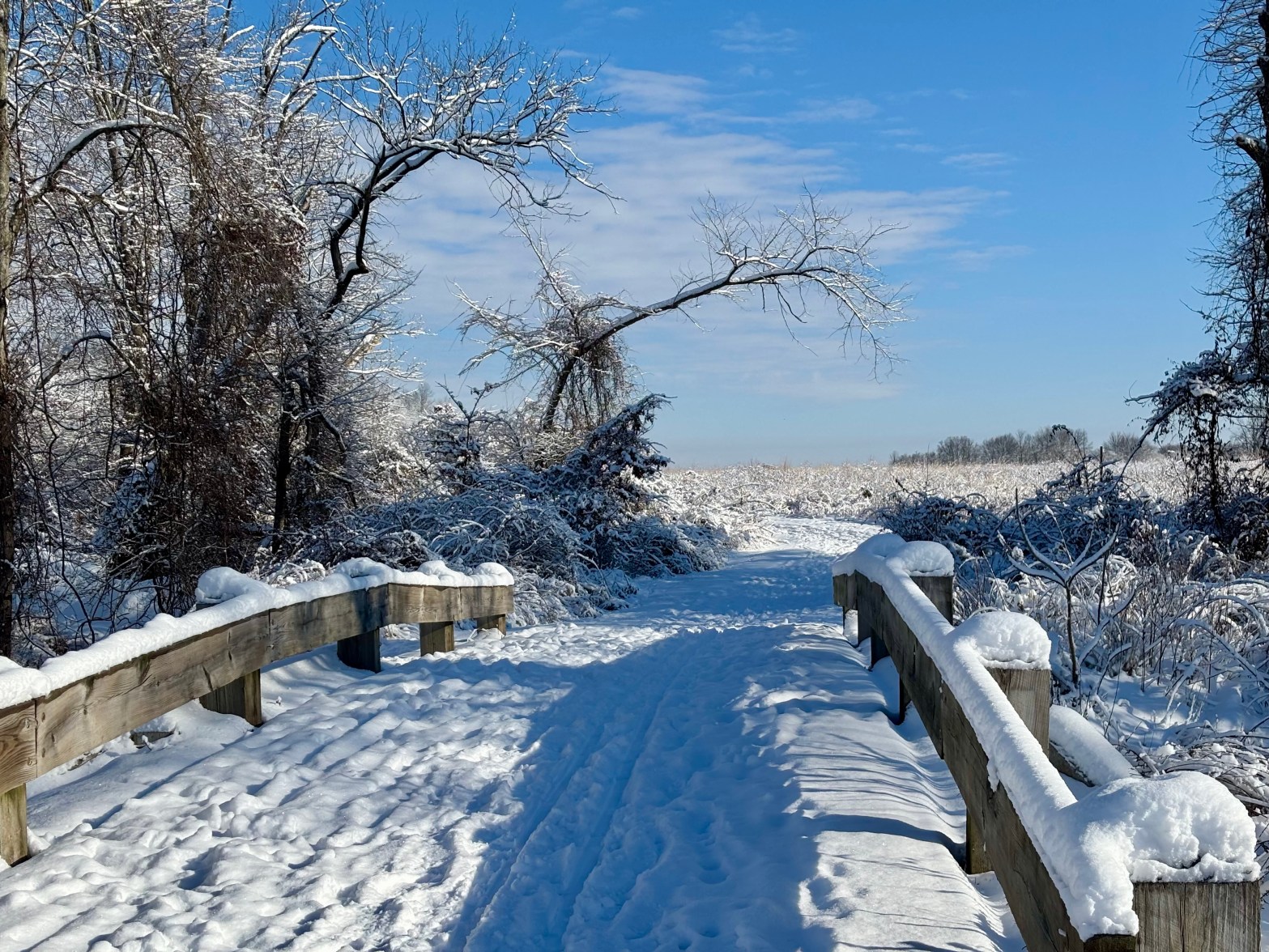
The Mercer Meadows Pole Farm is a beautiful place in all kinds of weather, but I find it extra special after a decent snowfall. We had back-to-back days of snow over the holiday weekend, and I was able to get to the park Monday.
Annoyingly, the gates at the Cold Soil Road parking lot were closed, as always seems to be the case whenever we get more than a dusting of the white stuff. With at least four inches of snow on the ground, I drove over to the ungated lot on Keefe Road and started my walk from there.
The park looked spectacular. From a clear blue sky, the sun shone brightly on the snow-covered branches of the trees. The sun was so bright that the Transition lenses on my glasses darkened so deeply that I couldn’t see through the viewfinder of the camera. [I later figured out my glasses weren’t the problem.]
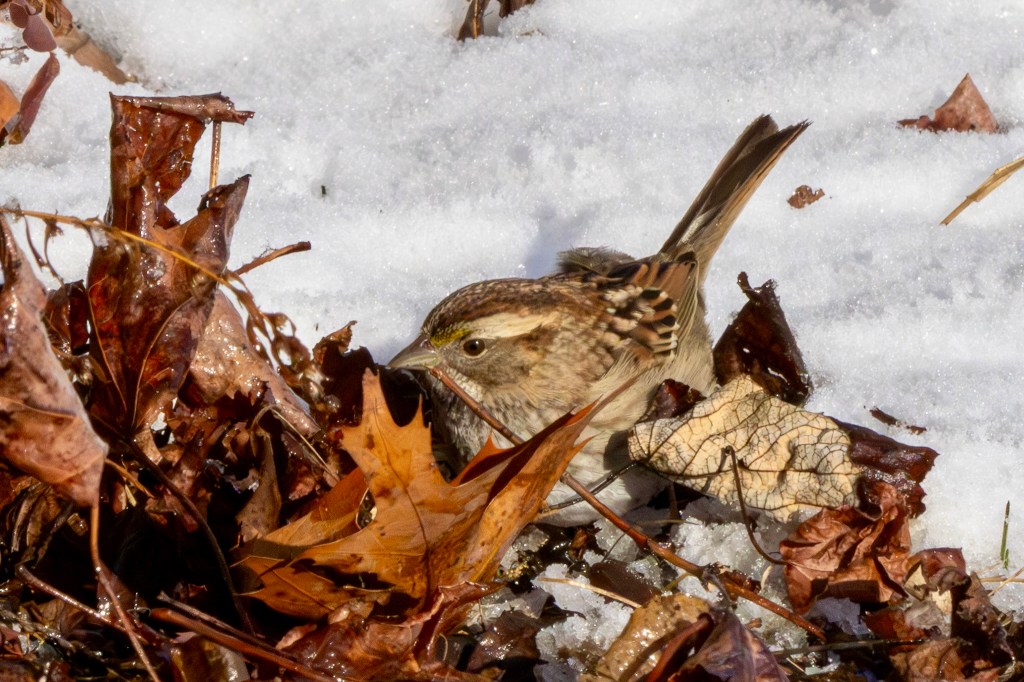
A song sparrow foraging. Thank goodness for auto-focus, as I had taken off my glasses and aimed the best I could.
Sans glasses, I took several wing-and-a-prayer shots. Relatively few birds were making their presence known, but I did get one surprise. An Eastern towhee, usually a Spring arrival, was calling “twee!” from the woods along the trail. I couldn’t find the bird and turned back toward my car.
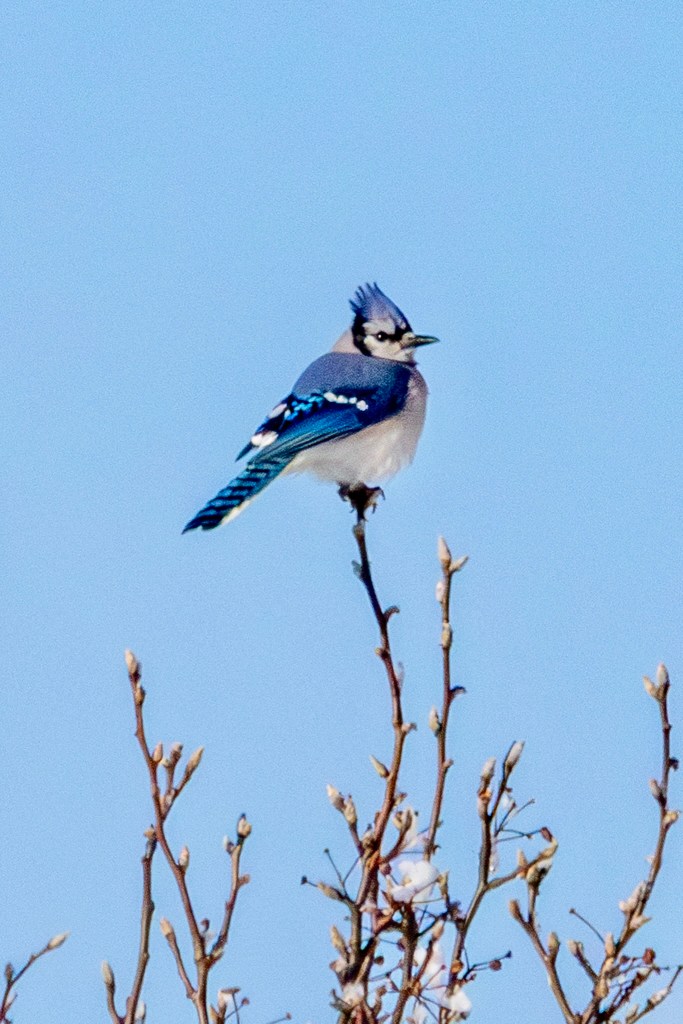
Throughout, I never got a clear shot of a bird amid the snowy branches. My favorite shot was of a blue jay, a long way off, on a tree top. 🦅
Unexpectedly, I had a transformative experience while birding in the woods today. I had intended to drive to Trenton marsh but mistakenly took an early exit off Interstate 295 and decided to drive to Veterans Park in Hamilton.
Once there, I skirted Martin’s Lake and headed onto the trail that runs along the lake’s south end. I spotted plenty of Canada geese and a dozen common mergansers on the water, but nothing special appeared. I followed my usual path on the lake’s edge and crossed over a cement bridge at which I usually turn to the right and head back on a paved path that connects with the levee path on which I entered the park from the western entrance parking lot.
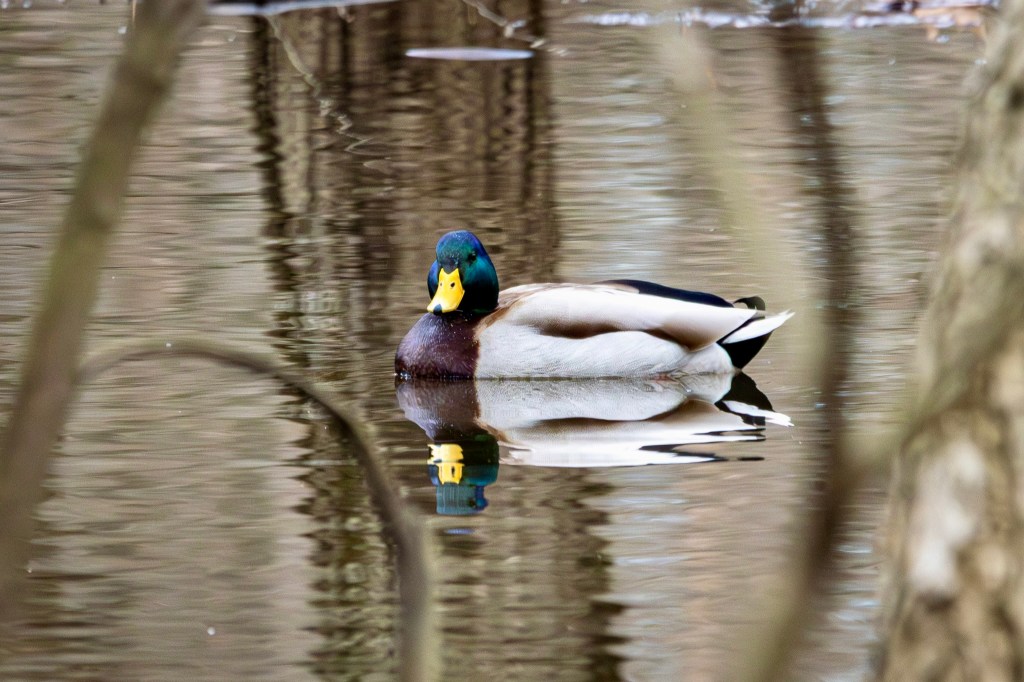
I noticed a slender path beyond the bridge that I’d never taken before and decided to follow it. What a good decision that was. I didn’t realize how far back into the woods the trail would take me, and once I passed the lake I was walking along Pond Run. Several mallards were plying the waters, and although I spooked a few I managed to grab a few shots.
Mallard and its shadow on the backwaters of Pond Run.
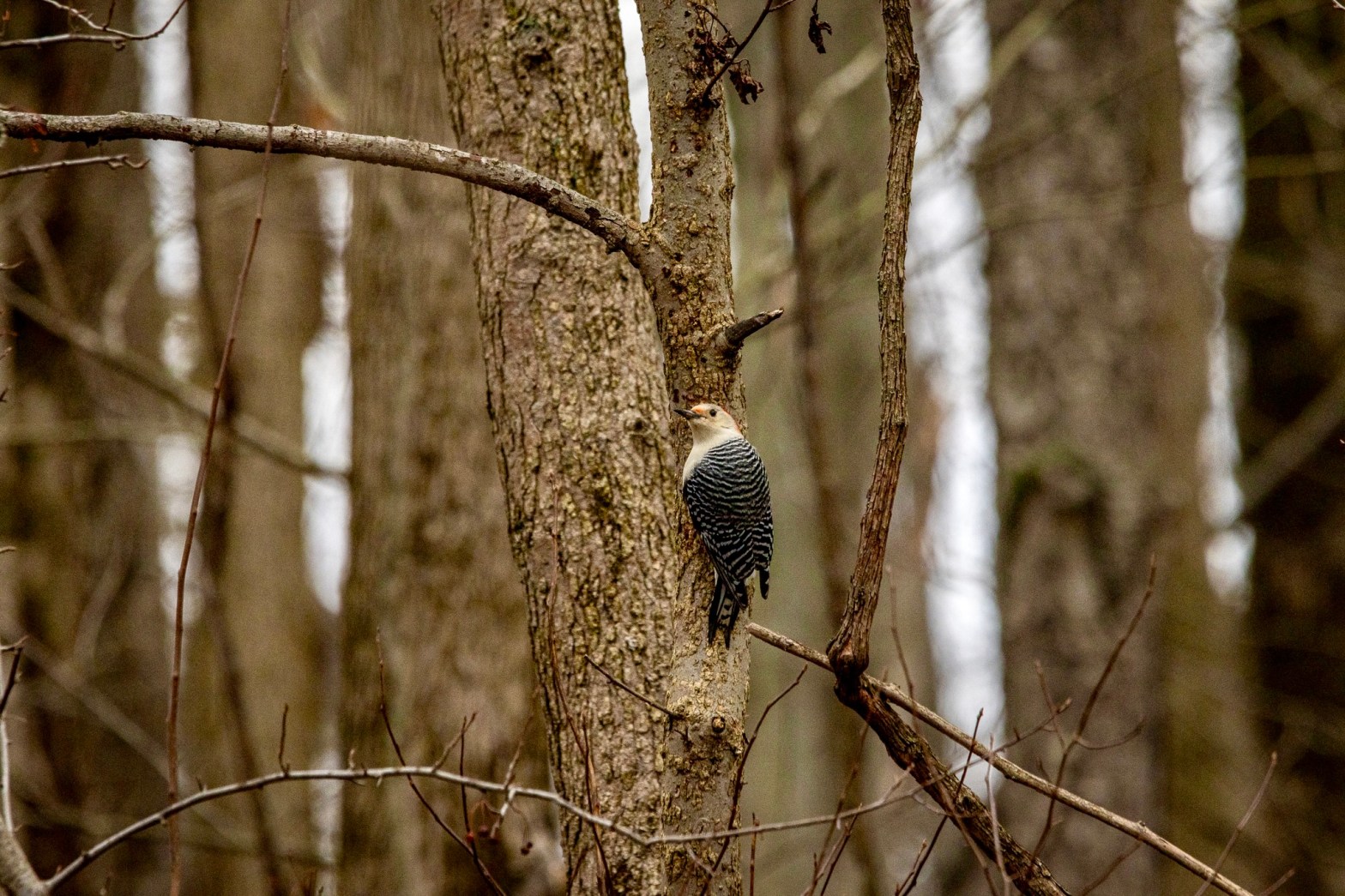
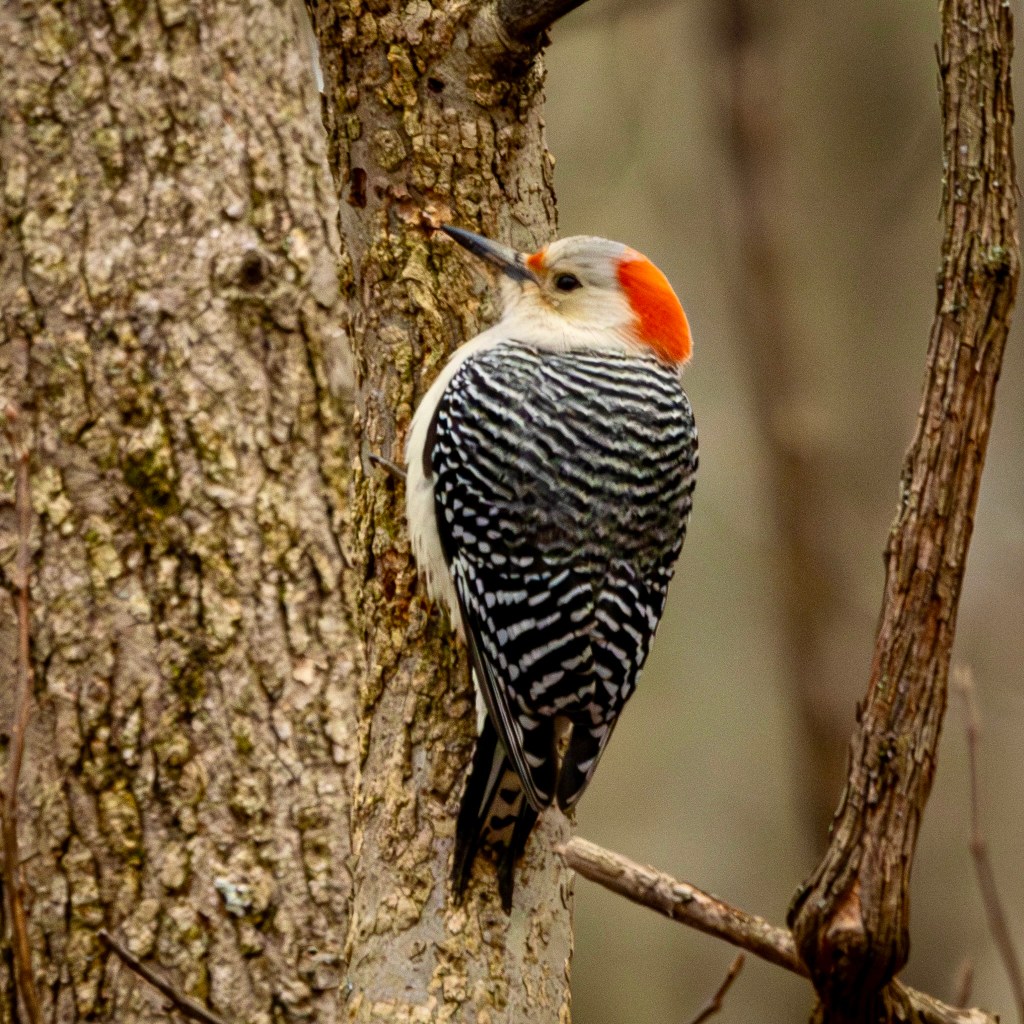
After a short while along the trail, I came to a clearing. I spotted a large number of birds flitting about the trees and foraging on the ground. A red-bellied woodpecker (depicted in the setting atop this post) drew my interest, flying from tree to tree.
Red-bellied woodpecker
In short order I spotted a yellow-rumped warbler, a white-throated sparrow and a couple of chickadees. There were also several tufted titmice, flitting about the smaller trees and foraging on the ground.
As common as tufted titmice are in central New Jersey, it’s rare for me to spot more than one or two in an area. But there were at least five and probably more at this spot in the woods.
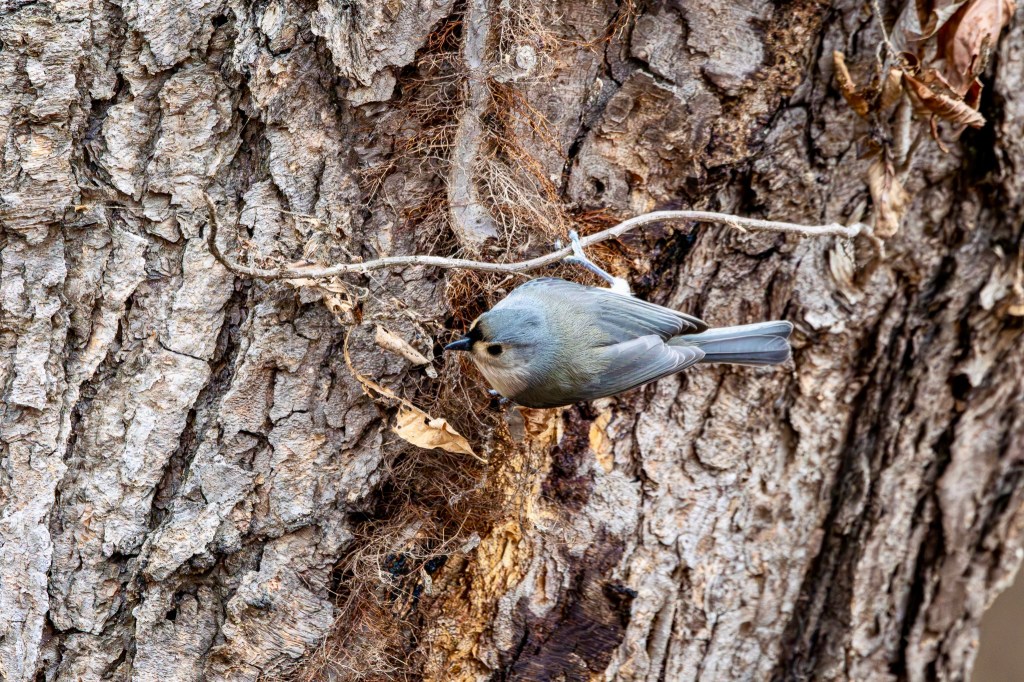
I took several shots but only a few would be in focus as the birds were moving rapidly, in the air, in the trees and amid the leaves and logs on the ground. At one point, I trained my camera on a pair of titmice that flew into one of the larger trees about 50 feet away. One of the birds cooperatively came to my side of the tree at eye level, giving me my favorite shot of the day.
The tufted titmouse, clinging to the side of the tree.
The photo almost seems like an overhead shot, but it was straight on. The bird tilted its head so I could pinpoint focus on its left eye, and I’m happy with the image.
American robins also flew into view, and as I walked a little farther on the trail I spotted several dark-eyed juncos. I turned around and went back to the clearing where I’d seen the titmice and decided it was time to head home.
As I returned to the lake, I checked my iPhone and realized I’d lost track of time. I’d been in the clearing probably 20 minutes, with my thoughts immersed in the presence of the birds.
I had lost all sense of the usual thoughts running through my head — work obligations, how my new knee is holding up, stuff to do at home. It all disappeared as I inhabited the birds’ space as a quiet interloper. What a treat that was. 🦅
I’ve had a lot of fun reviewing the bird photos I took in 2025, and it took me several passes to sort out the top 10. Weirdly, on my first ranking, I discovered that a few of the birds that made my 2024 top 10 were included in my ’25 list.
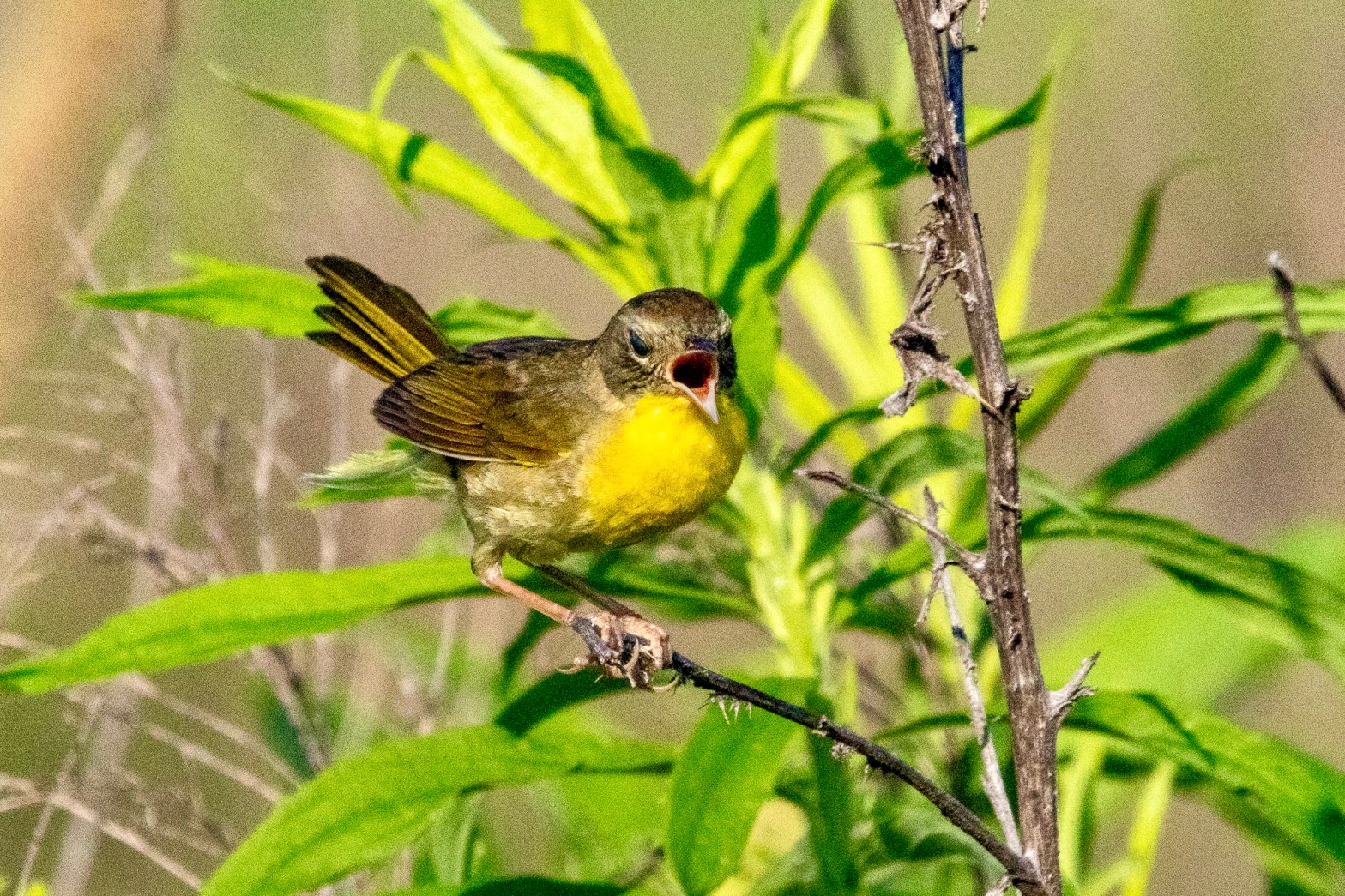
Was I playing favorites with Eastern meadowlarks, common mergansers and great blue herons? Not so, but I reconsidered. At the top of the list I chose the one above showing a female common yellowthroat in full-throated exclamation. It’s one I hadn’t posted here previously. I took it June 21 at Mercer Meadows, although I can’t recall precisely where.
I admit freely that common yellowthroats are among my favorite birds. I have plenty of shots of them, mostly males, in profile or three-quarter views with their beaks open in song. Looking at the female, I can’t help but interpret the bird’s seeming rage as a metaphor for the divisive political climate of the United States. I shall make no further comment on that and leave us all to the beauty, joy and occasional humor that birds bring us.
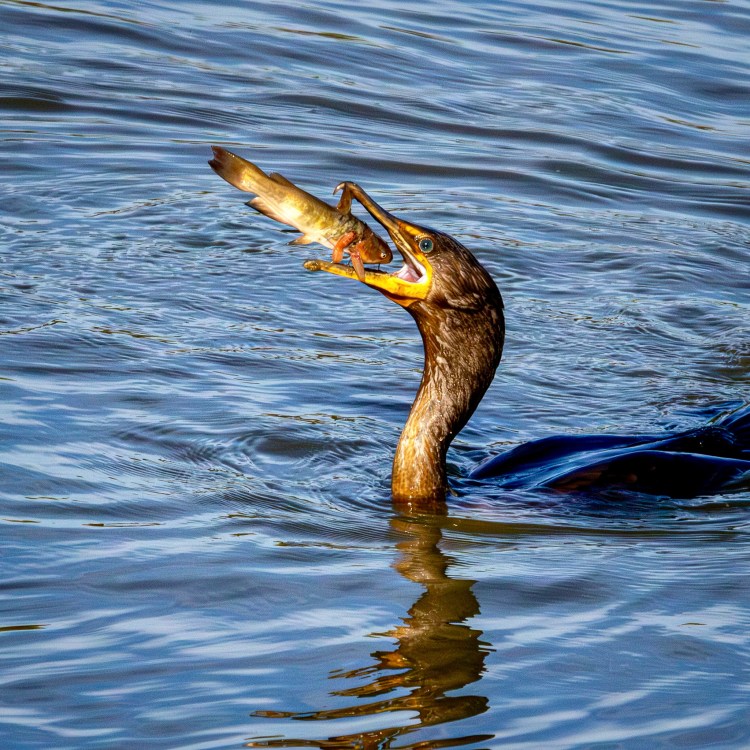
For my second choice, I’m going with a double-crested cormorant just about to ingest a fish on Oct. 4 at Veterans Park in Hamilton. This may be my best image of the year, and — not unlike the fish depicted — I flipped and flopped over whether to designate it No. 1. It is the most dramatic and wild image I took.
2. Down the hatch!
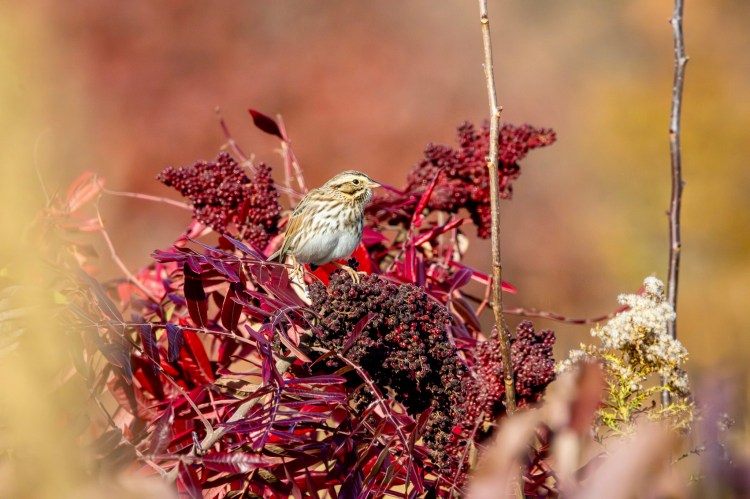
While No. 2 shows the harsher side of nature, my third choice brings out its beauty. This Savannah sparrow was perched atop a plant with wine-red berries at the Mercer Meadows Pole Farm, and the light was warm. When color and light converge, the odds of a memorable image increase.
3. Savannah sparrow on red berries.
I know you’re here for the images, so I’m going to ease off on the narrative and let the photos and captions carry you the rest of the way.
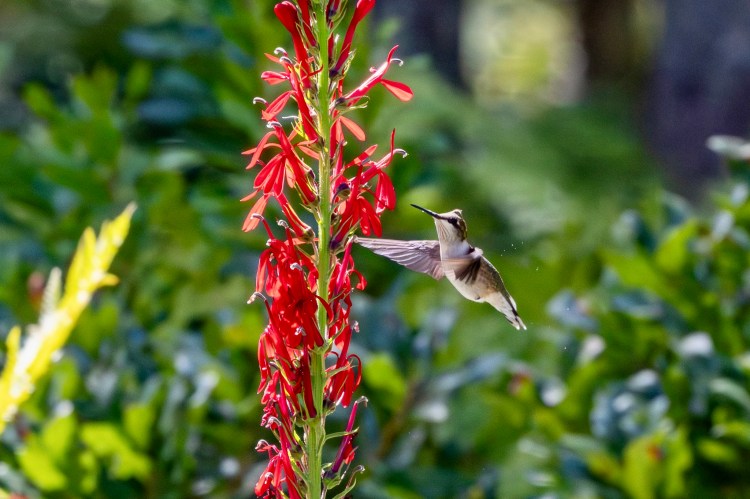
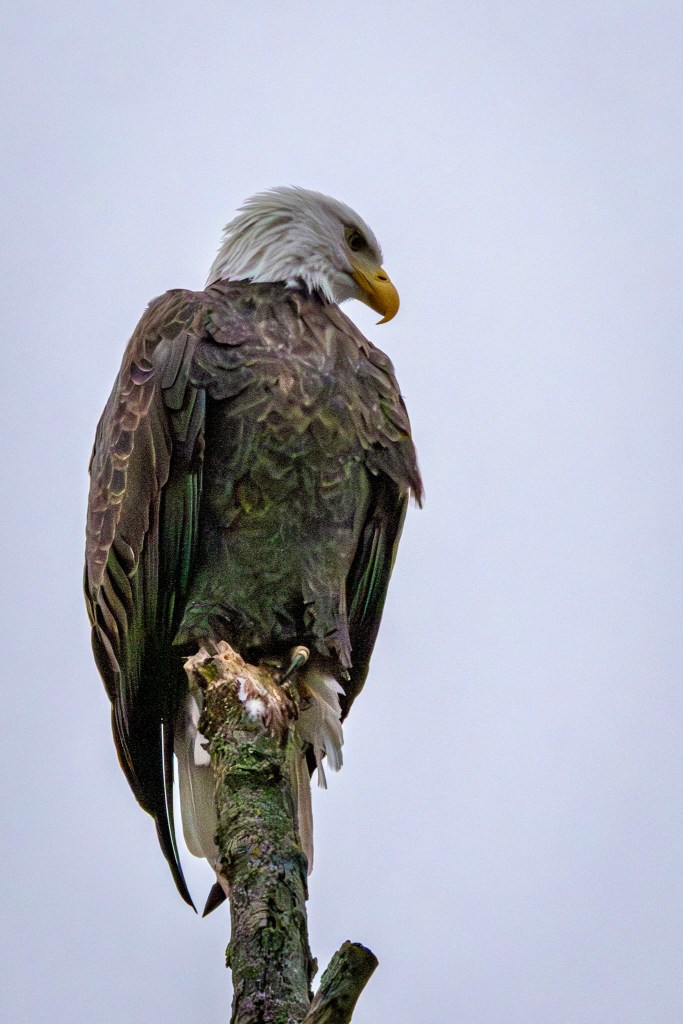
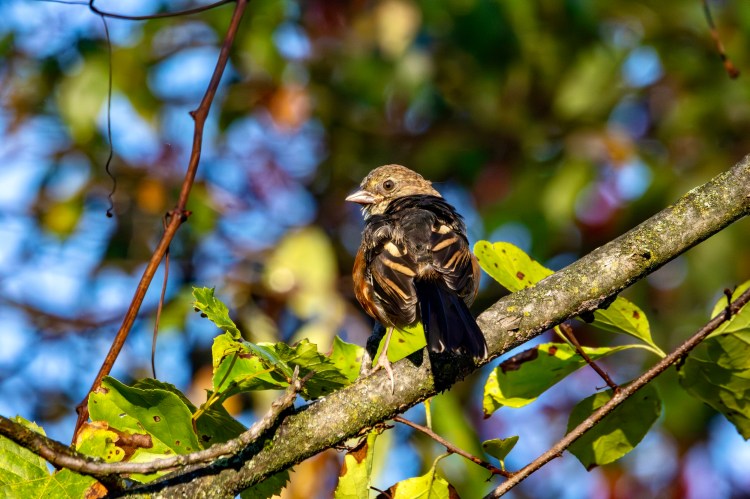
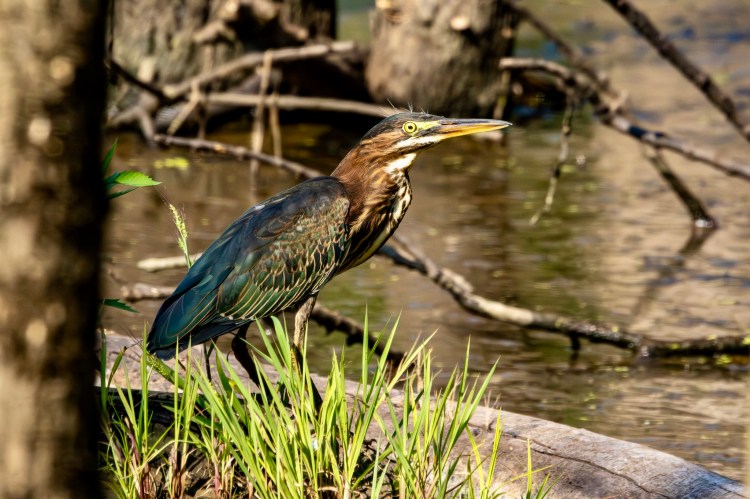
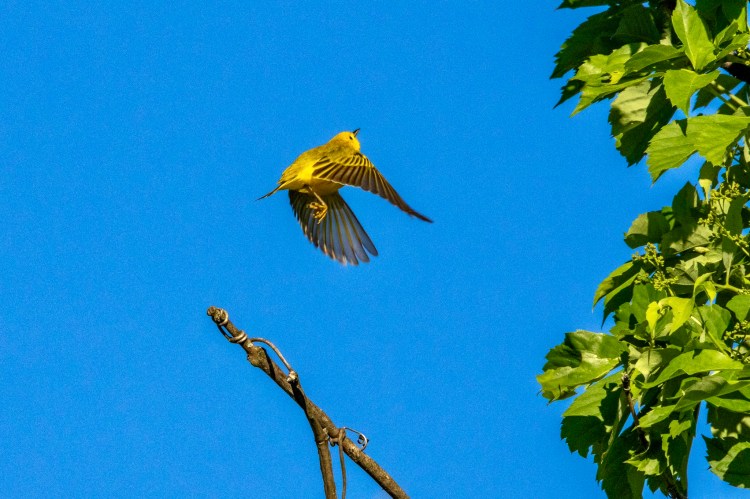
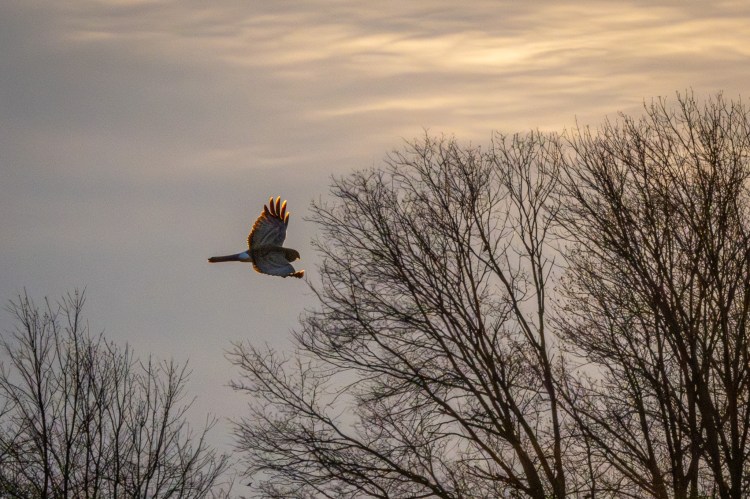
4. A ruby-throated hummingbird floats by a red plant at Acadia National Park in Maine. Flecks of nectar can been seen by the bird’s back.5. A bald eagle surveying the land from a tree top.6. An Eastern towhee stands in the sun.A green heron perches on a log at the Dyson Tract swamp near the Delaware and Raritan Canal.8. A yellow-warbler takes flight at the Dyson Tract.9. An upside-down blue-gray gnatcatcher snips at a tree branch.10. Northern harrier flying at sunset at the Pole Farm.
Thanks for following my blog, and I hope you enjoyed seeing these photos. (The gnatcatcher shot is also first published here.) 2026 is underway, and I’m looking forward to sharing more of my birding adventures in the months ahead. 🦅
I wasn’t able to leave home today to go birding, which makes what transpired this afternoon all the more remarkable. Early in the afternoon, just before my wife and I sat down for lunch, I looked out the dining room window and was astonished to see a hawk in the laurel tree that marks the border with our neighbors’ yard.
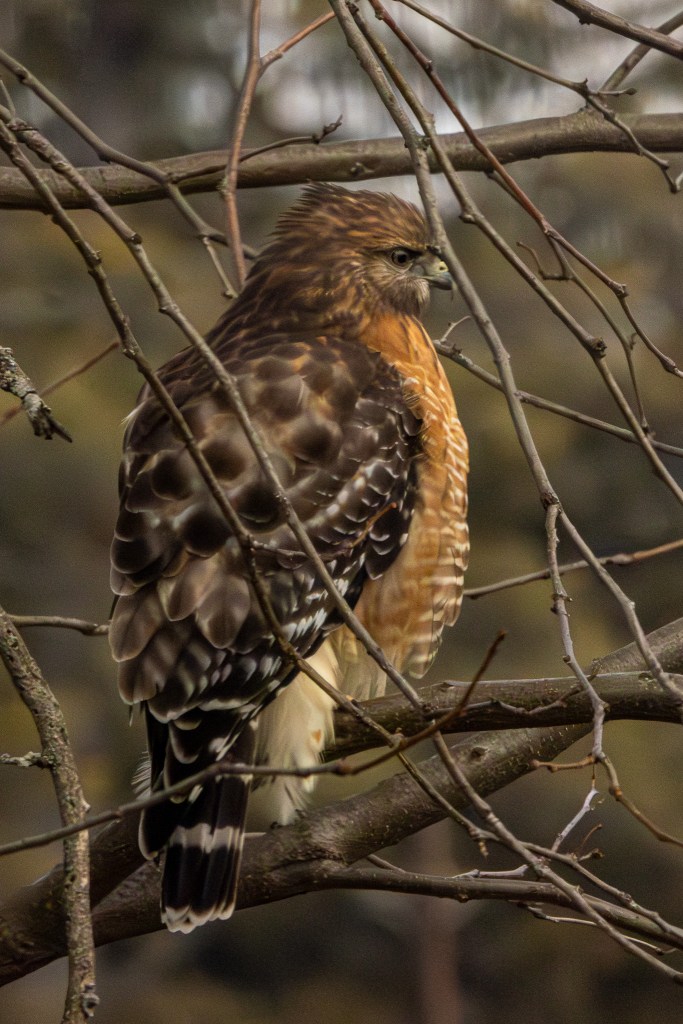
Even more surprising, it was a red-shouldered hawk — one I had never spotted on our lot before. I was able to grab my camera and take several shots. The bird was mostly in the clear, although its beak was slightly obscured by a small branch. This shot was best of the lot.
Red-shouldered hawk.
I moved a few steps around our Christmas tree to try to get a shot straighter on from a window on the side of the house, but by then the bird had disappeared. I reckon that a house sparrow that had been perched stock still in one of the bushes by the house was breathing easier after that.
After lunch, I went back into the dining room and glanced onto the golf course beyond our property line. To my amazement, a mature bald eagle was sitting on the side of the 11th hole.
Bald eagle sitting in grass on the edge of the 11th hole.
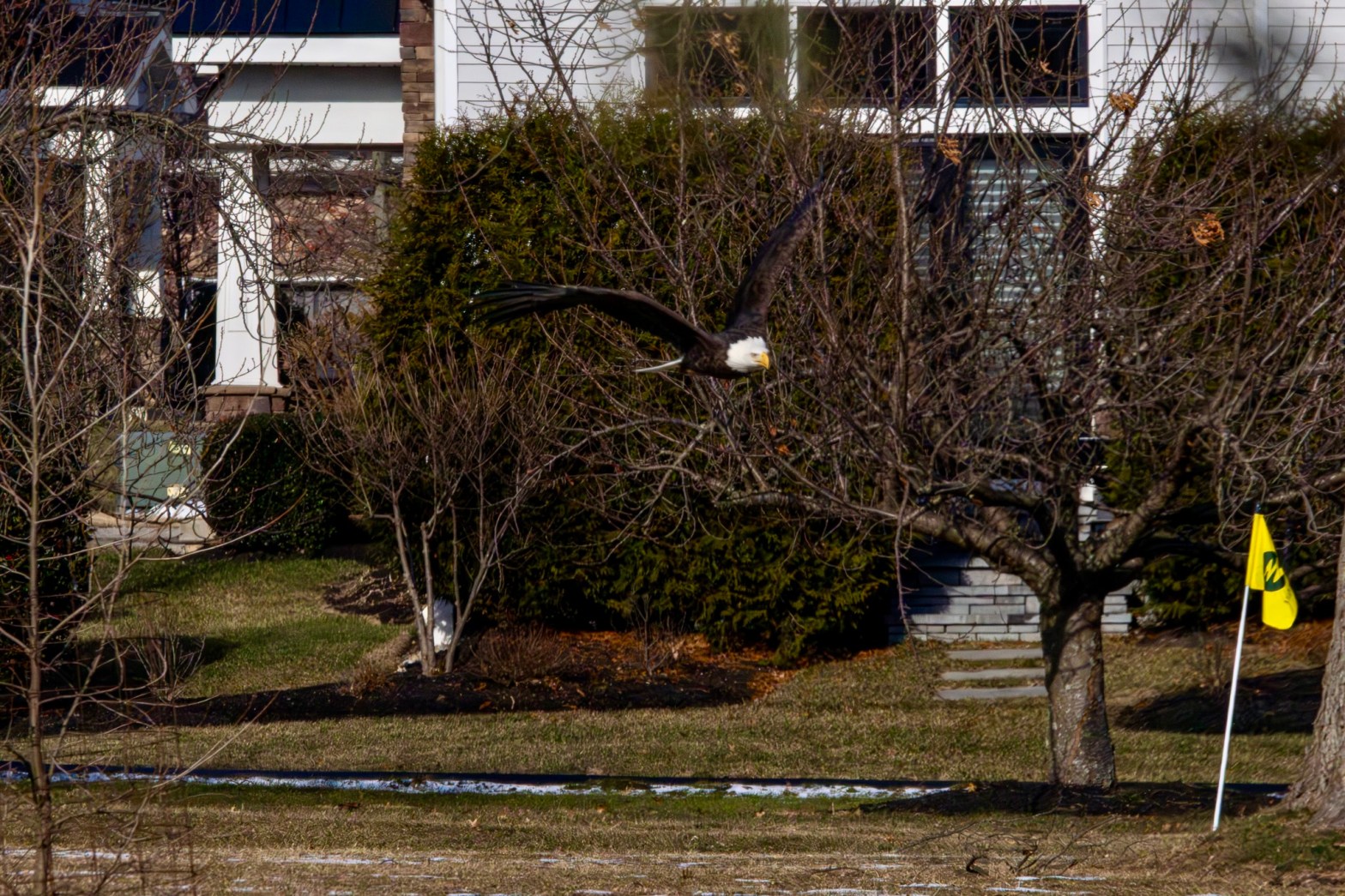
I picked up the camera and shot a few frames through a window, then opened the sliding back door. The eagle either saw me move or heard the shutter click, and it took off to fly a loop close to the condominiums that parallel the 10th fairway.
I looked through the trees and picked up the bird for a few seconds, trusting autofocus and motor drive to do their duty.
The eagle starts turning toward me.
The camera did a decent job on a few frames, and if I had better Lightroom skills I might have offered a couple of other photos of the bird flying toward me. It eventually went between our house and the neighbors’ place and out of sight.
This wasn’t our first eagle spotting at home. Last February, a bald eagle flew a similar loop over the golf course on Super Bowl Sunday. There have been other sightings over our 10 years here.
No matter where I see a bald eagle, it’s a thrill. Seeing one so close to me on a day when a red-shouldered hawk also appeared is an experience I won’t forget. 🦅
I can’t not get out and go birding on New Year’s Day. So with a bitter wind blowing in my face, I headed up the trail at the Mercer Meadows Pole Farm, quickly realizing that underneath the half inch of snow that had fallen overnight lay a slippery layer of ice.
With that gusty wind blowing, I wasn’t able to spot a single bird in the fields. But as I reached the edge of the woods, robins started appearing. And appearing. And reappearing.
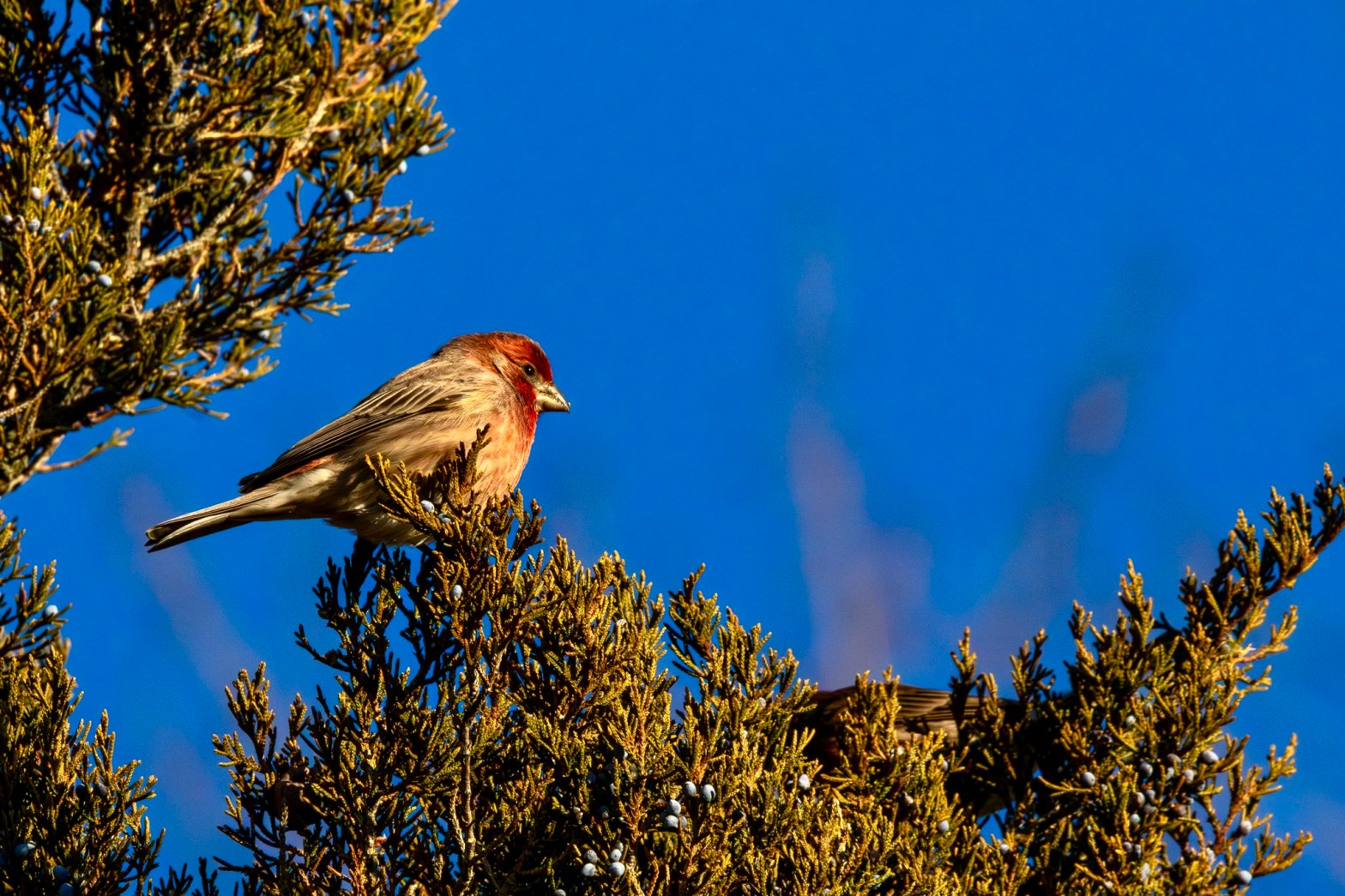
Few other birds were about, but as I reversed course and exited the woods, I spotted several house finches in the cedars at the edge of the fields. One of the males tops this post.
Seeing a report of bald eagles at Mercer County Park, at mid-morning I drove over there. The big group of eagles had skedaddled, but I did spot one swooping over the lake. I wasn’t quick enough to catch a photo of it worth saving.
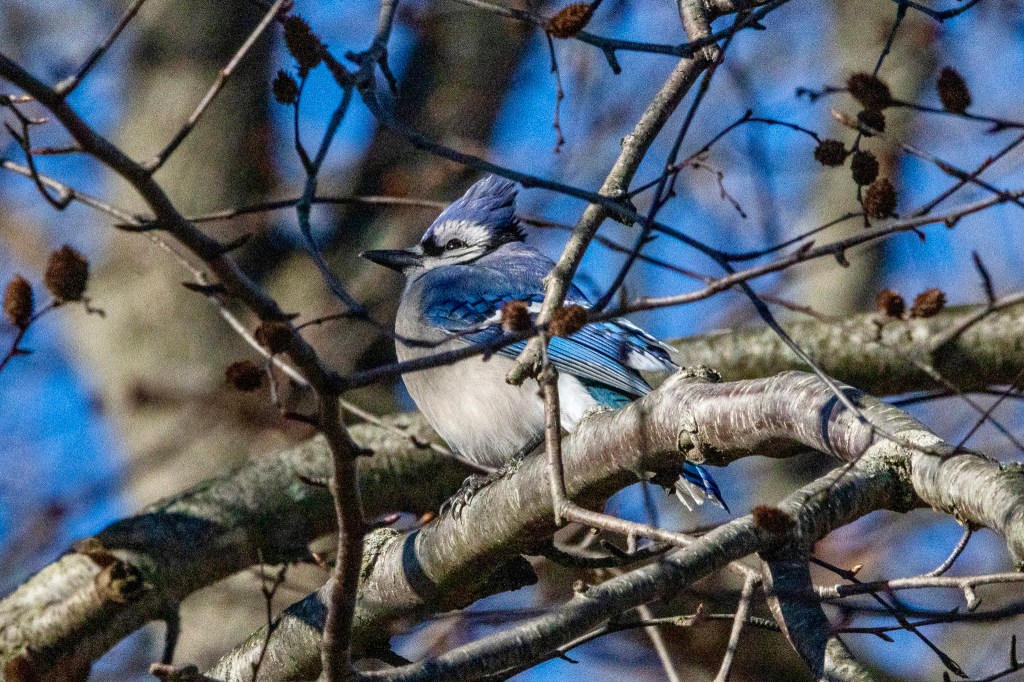
I did, however, spot a blue jay and catch it on camera.
Blue Jay at Mercer County Park.
As 4 p..m. approached, I made a quick run back to the Pole Farm, hoping that perhaps a short-eared owl or Northern harrier would appear at sunset. I saw three harriers, including the “gray ghost” male, but they were too far off for a decent shot.
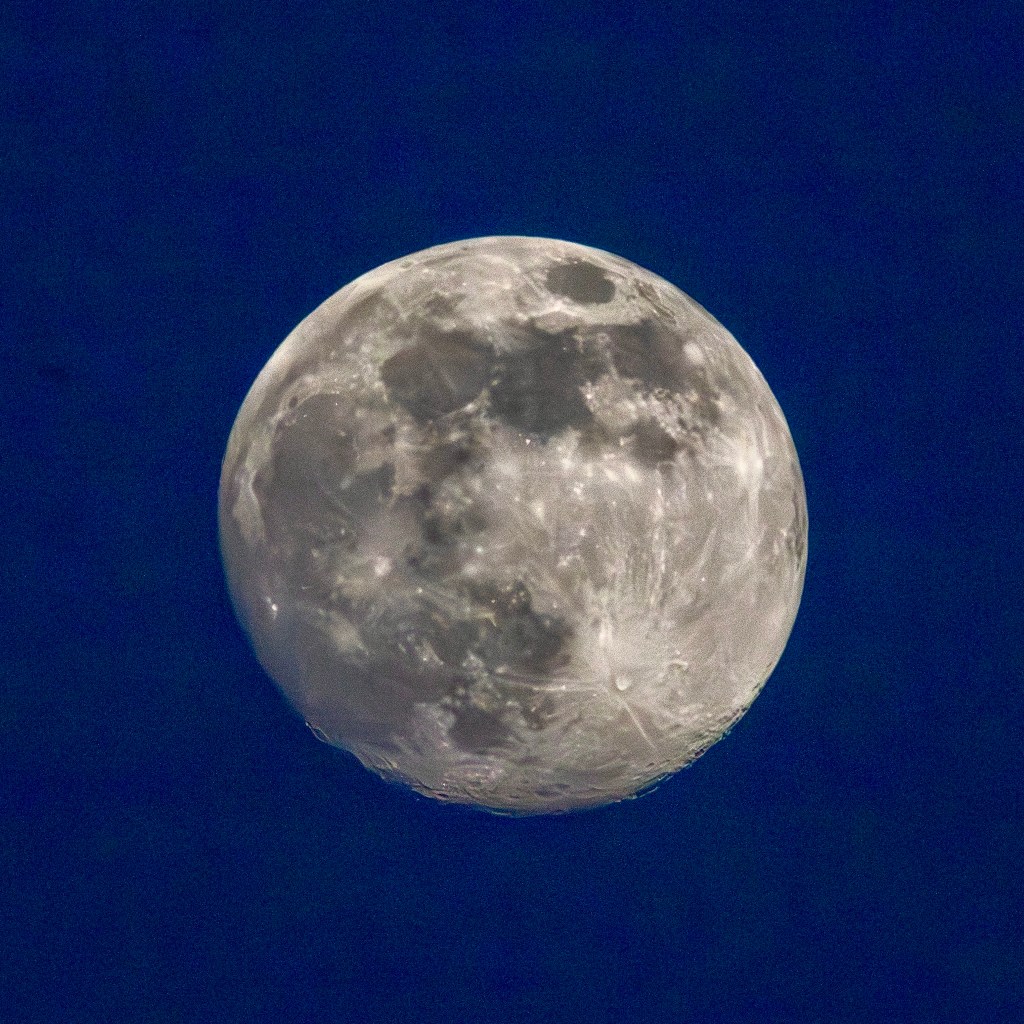
I did shoot the moon, literally, and I’m happy to end this post with that shot. Good birding and good shooting to all in ’26.
Come to think of it, 26 is Saquon Barkley’s jersey number on the Philadelphia Eagles. Go birds! 🦅
The nearly full moon hovering over the Mercer Meadows Pole Farm a few minutes before sunset.
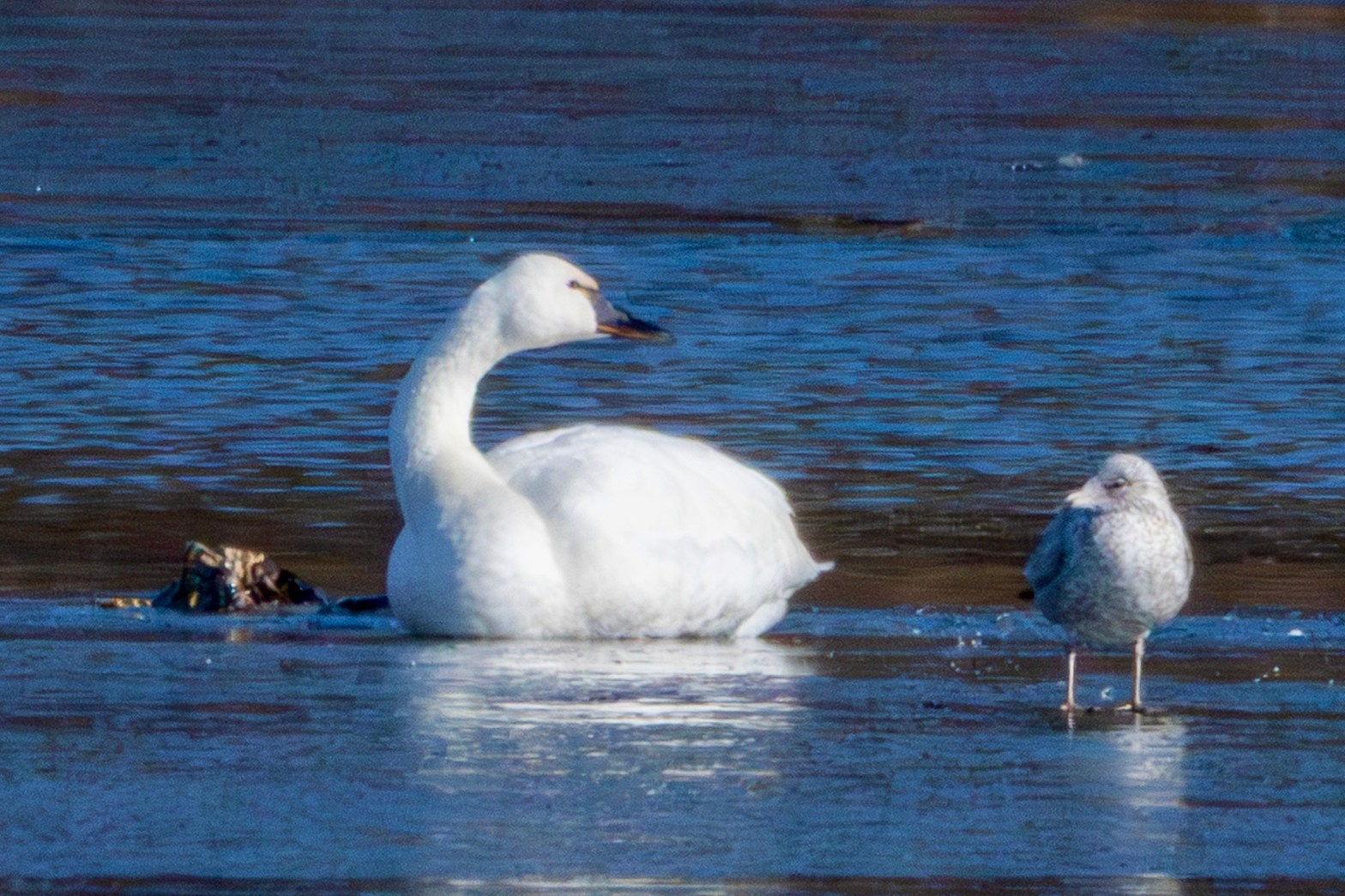
For my last outing of 2025, I headed to John Roebling Park late this morning, hoping to catch sight of a tundra swan that was reported there yesterday. I had only to walk a short way up the trail from the parking lot to spot the bird, chilling with a few gulls in the middle of Spring Lake.
Finding this rare visitor from the Arctic at Abbott Marshlands bore a certain irony. Previously, visitors to the park could expect nearly every day of the year to see a pair of mute swans on the lake or on the nearby marsh. But the mute swans disappeared sometime in the spring and have not come back, to my great chagrin.
The tundra swan turns its head and looks across the lake.
But the tundra sighting was welcome on this cold and sunny final day of 2025, a natural point of reflection. I logged 142 species in Mercer County, seven better than last year. I’m not driven by numbers (well, maybe a little) but I’m pleased with the result. I missed several weeks of birding in the immediate weeks after undergoing knee surgeries in January and November. Still, I managed to file 316 checklists on e-Bird, filling some of the gaps by birding from home while recuperating.
I counted 11 lifers in 2025, bringing my total to 240. While I didn’t go birding in any new counties in New Jersey, I was able to get a few of those lifers in West Virginia, Maine and Pennsylvania.
For 2026, I look forward to more birding in more places and more time on the trails with birding friends. I thank all my readers for taking time to read my posts, visit my site and offer comments. I am fortunate for your friendship, from near and far. Happy New Year! 🦅
With winds gusting to 50 mph today, I was not in the mood to battle the cold when I expected few birds would be flying. Instead, I headed to the Princeton University Art Museum, intent on pursuing a weird idea: to find birds depicted in the museum’s collections.
The new museum, which opened to the public Oct. 31, was built on the same spot on campus where the previous museum was located. The new museum has a greater gallery capacity in which to show off its outstanding collections.
On this, my second visit to the new building, I spent the bulk of my time on the second floor, where the standing exhibits are based, everything from ancient sculpture to modern paintings.
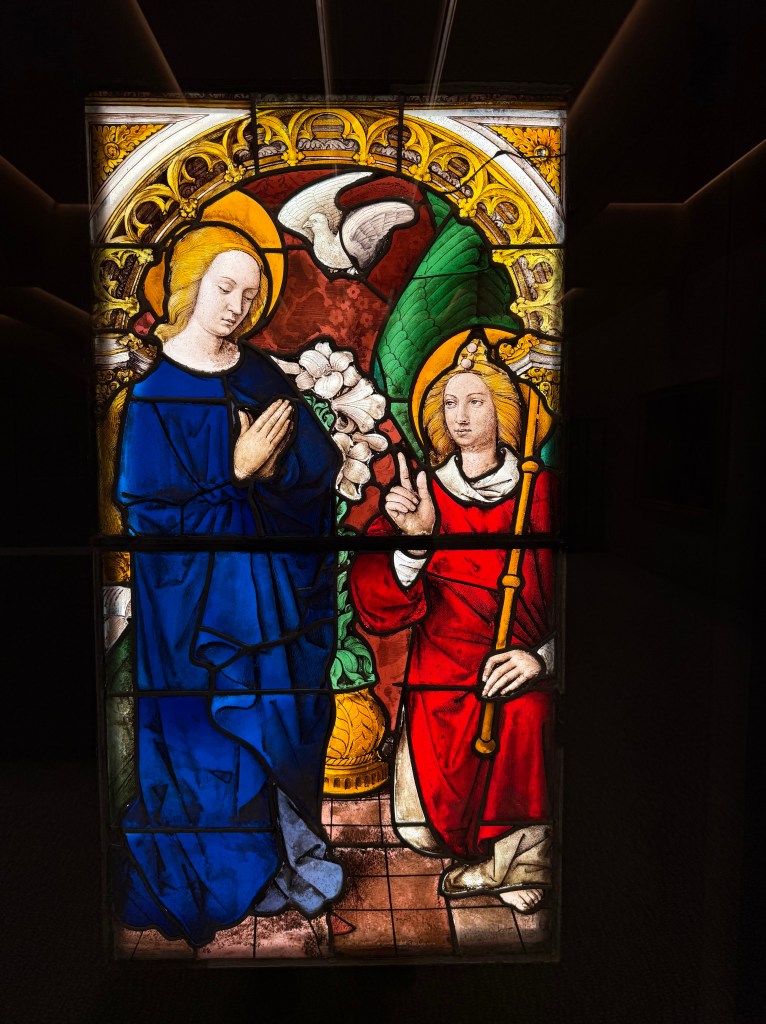
At the top of the stairway that takes visitors from the lobby to the second floor, I spotted the first bird: a dove hovering between the angel and Mary in a stained-glass depiction of the Annunciation. The placard explaining the piece included commentary from Virginia Raguin, an emeritus professor at my alma mater, the College of the Holy Cross, where I minored in art history.
Stained-glass depiction of the Annunciation, circa 1600 from either the Netherlands or northern Italy.
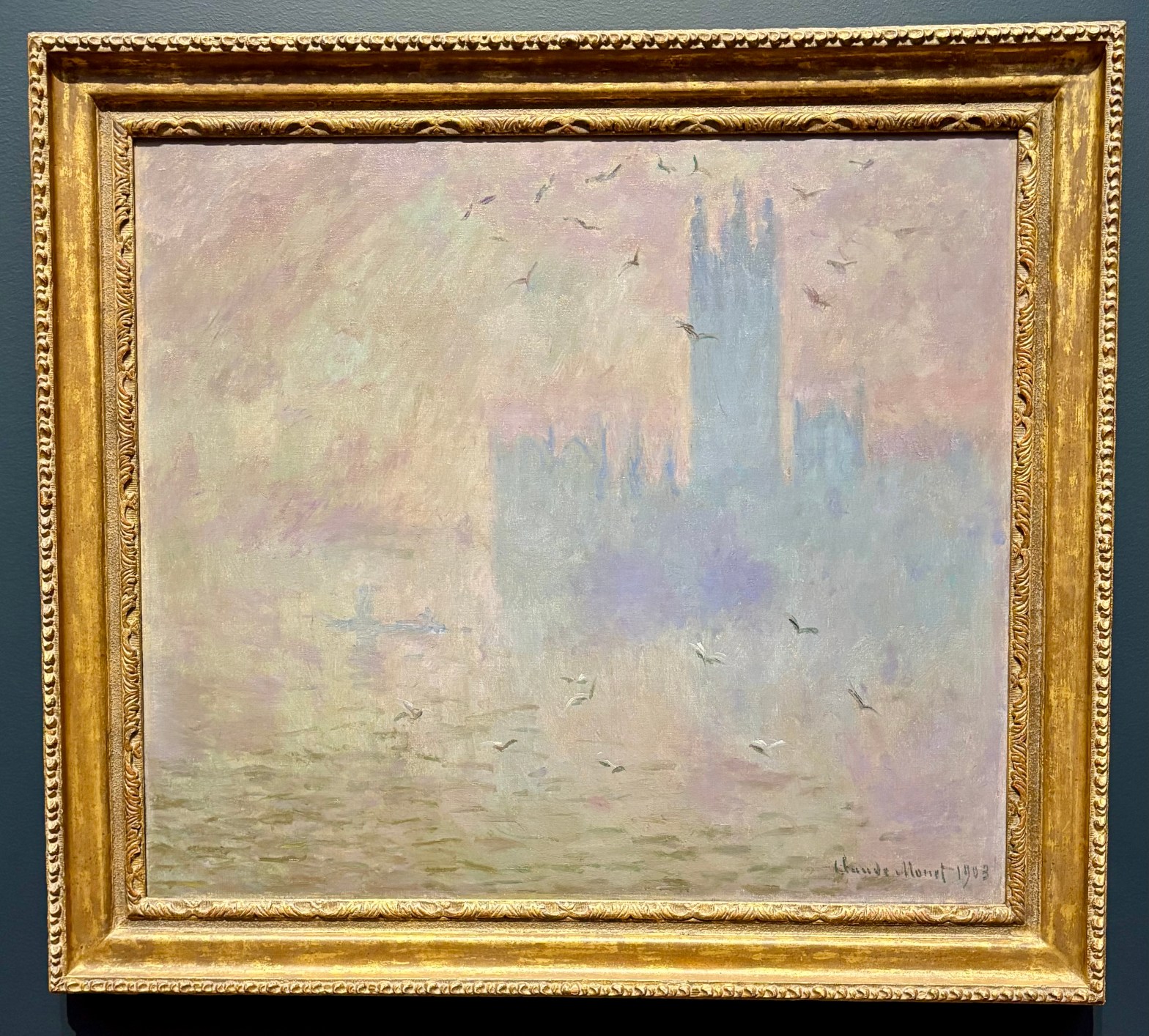
As I entered a gallery that features several Impressionist paintings, I was drawn to a 1903 Monet featuring a flock of seagulls flying before the Houses of Parliament in London. A photo of that painting tops this post.
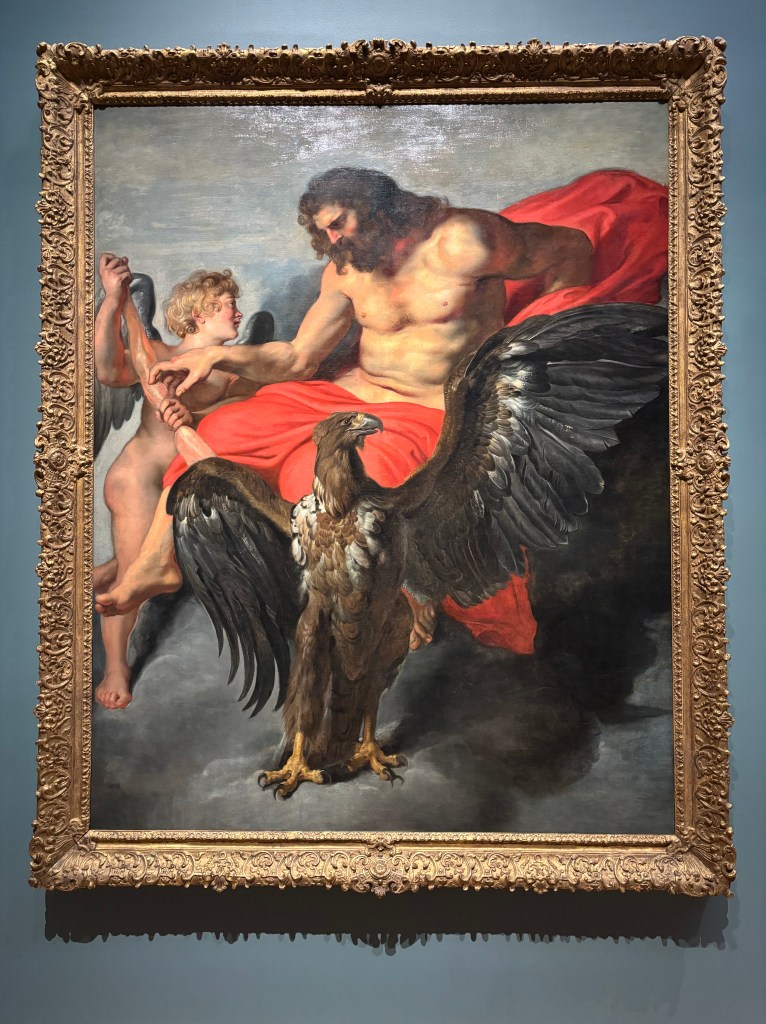
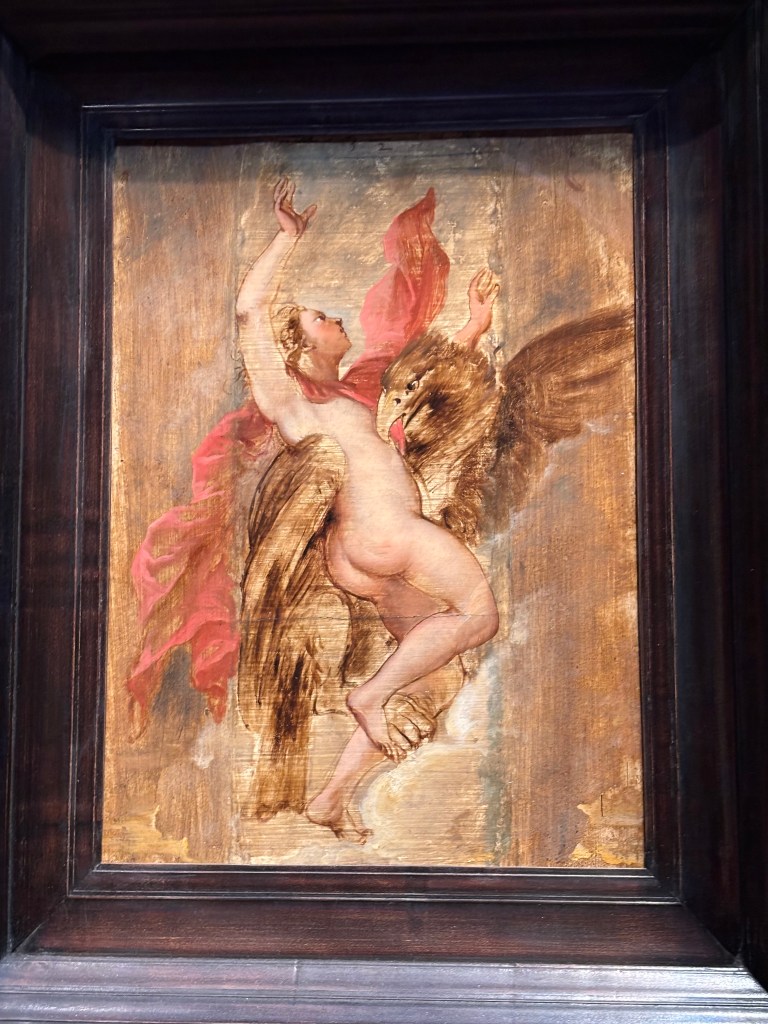
Turning a corner, I found a spectacular painting from the early 1600s, Cupid Supplicating Jupiter, credited to Willem Panneels, after Peter Paul Rubens. A huge eagle dominates the foreground of the painting. On the same wall was a painting by Rubens himself depicting Jupiter, in the guise of an eagle, abducting Ganymede, who would become cup-bearer to the god (aka Zeus to the Greeks).
The eagle steals the scene in this painting of Cupid appealing to Jupiter.Abduction of Ganymede.
The eagle paintings were the most spectacular depictions of birds that I found during my visit, and I make no claim that I saw every bird in the galleries. There are hundreds of objects on display, many of them small items displayed in glass cases.
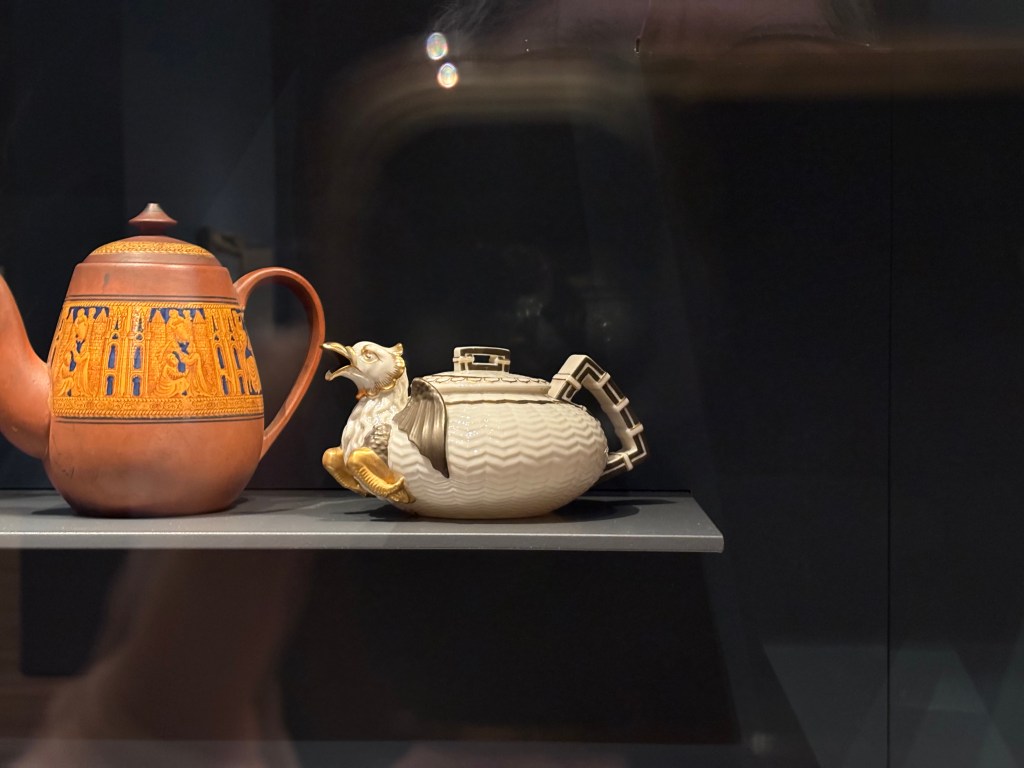
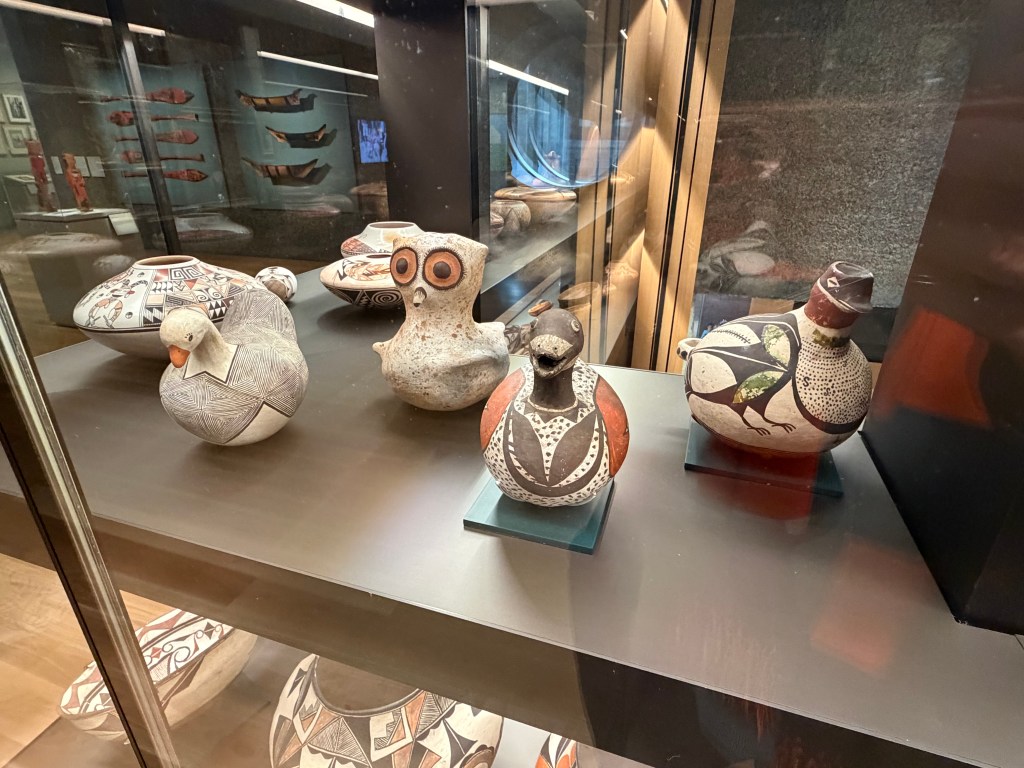
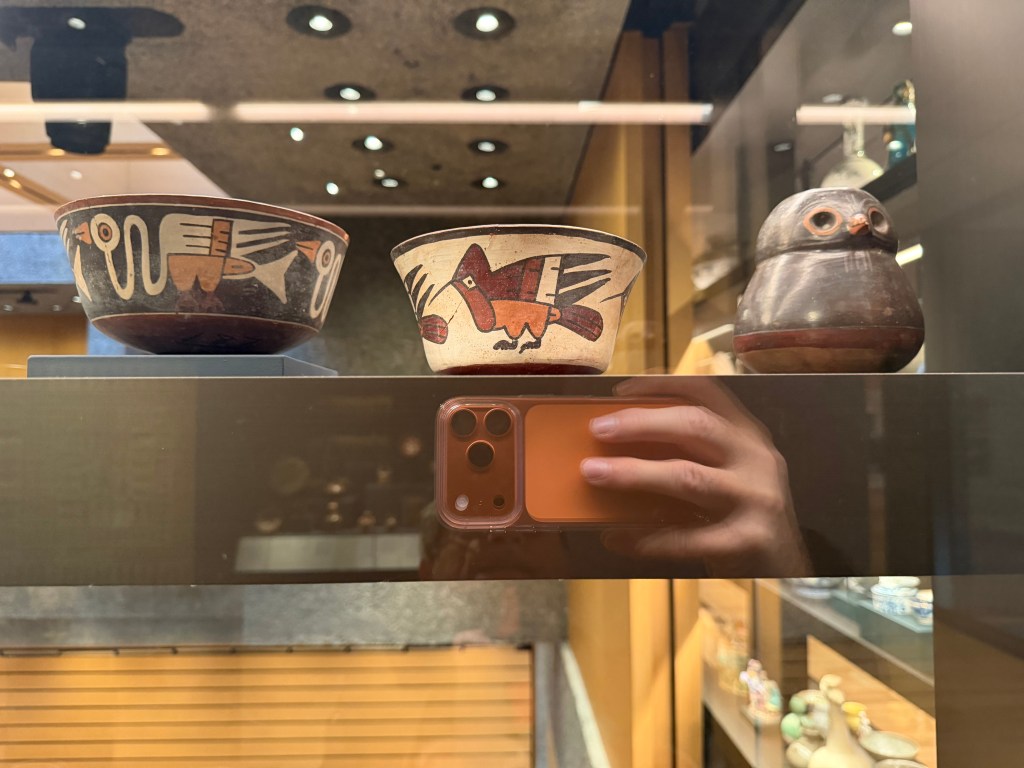
One of my favorite aspects of the new museum is what I jokingly refer to as the Gallery of Useful Pots to Put Things In. It’s a splendidly lit set of cases surrounding an atrium, and the shelves are full of cups, bowls, pitchers, ewers and other items from a wide range of cultures. I’ve included a few of those items in the gallery immediately below.
A duck, perhaps?Owl and duck, methinks.A cool pitcher with a long beak.L-R, a bowl with a goose-necked bird, a bowl with a bird, and an owl. Note how my hand and iPhone are reflected below the objects.
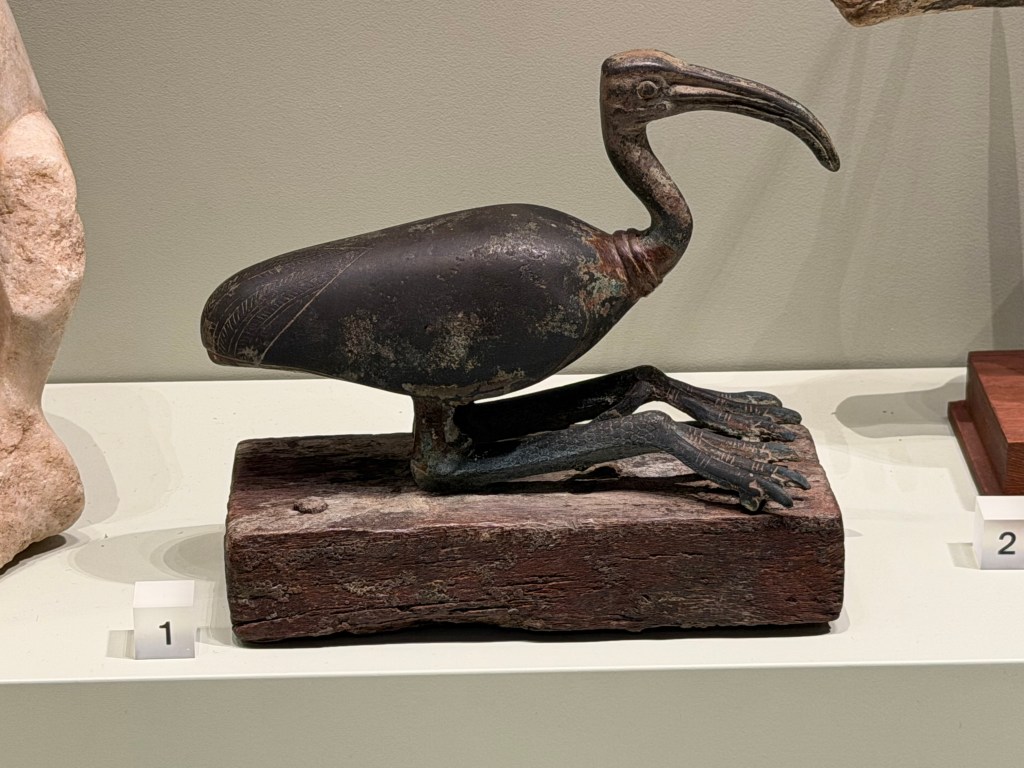
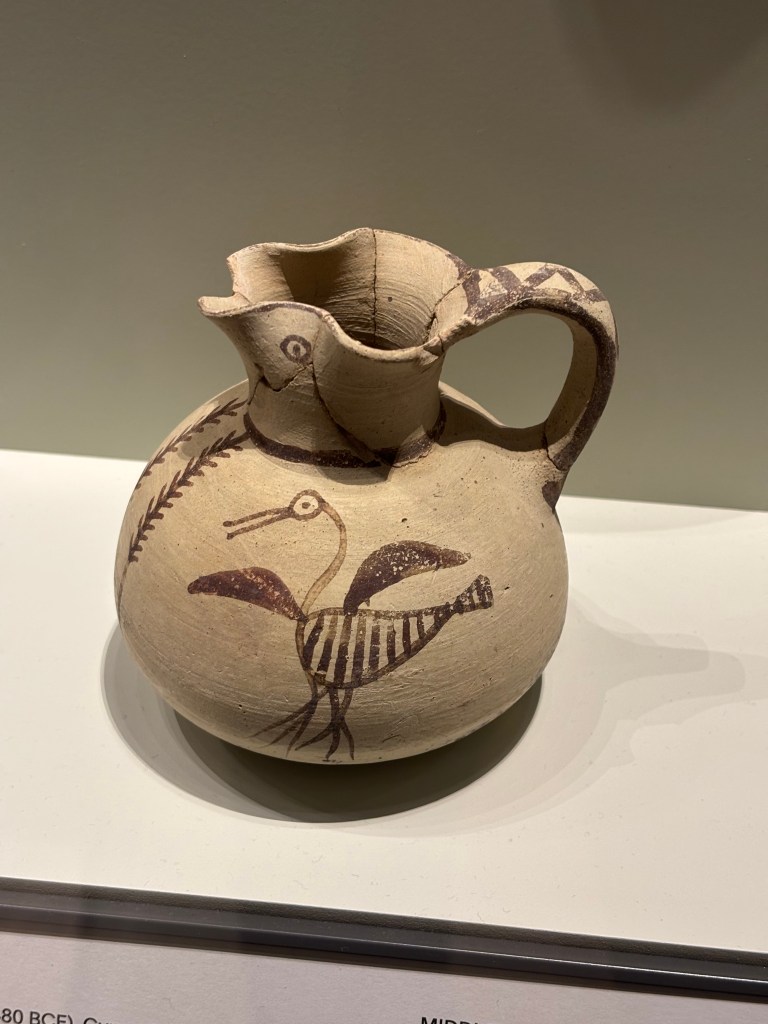
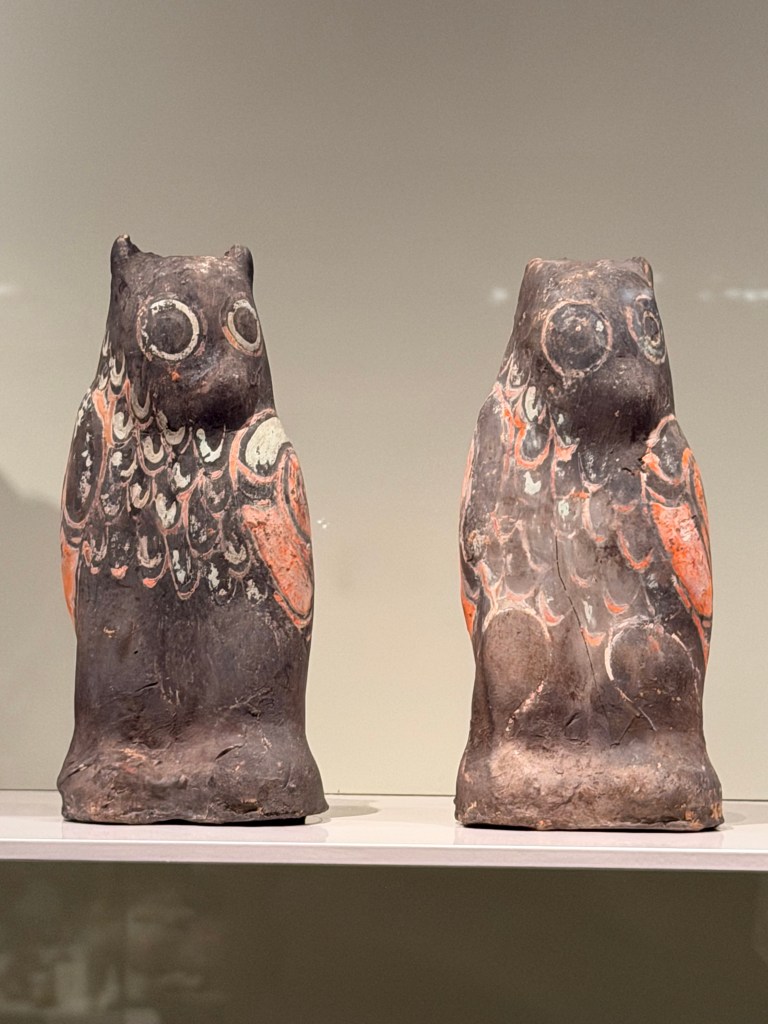
Throughout the galleries, I found several depictions of birds from up and down the centuries of human history. This gallery shows a few more.
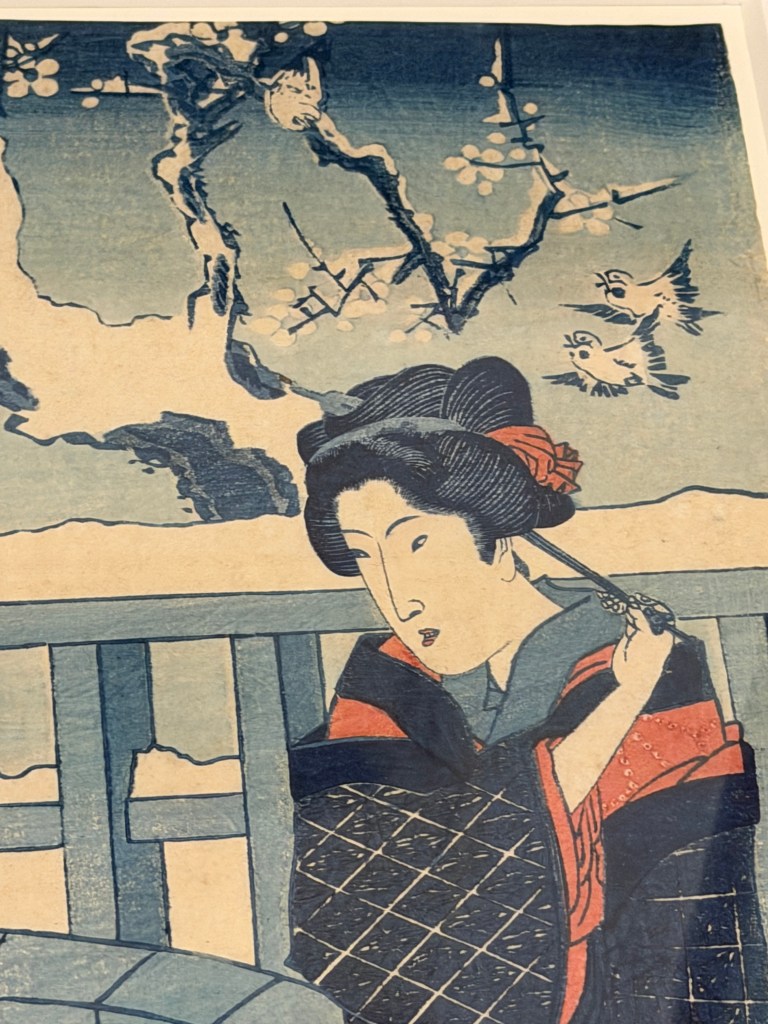
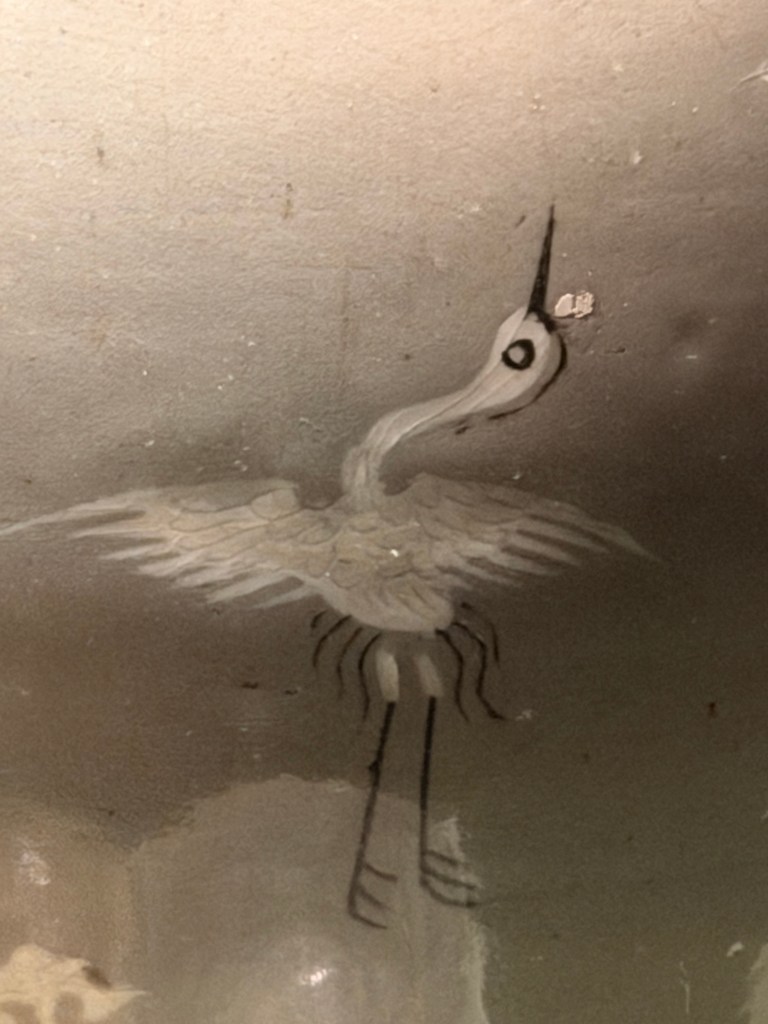
Bronze ibis, Egypt (712-332 BCE)Oinochoe (jug), Cypress, ca. 750-550 BCEOwls, China, 2nd-1st century BCEBirds top right, Snowy Morning, Japan, 1830Crane detail, vase, Korea, 12th-13th century
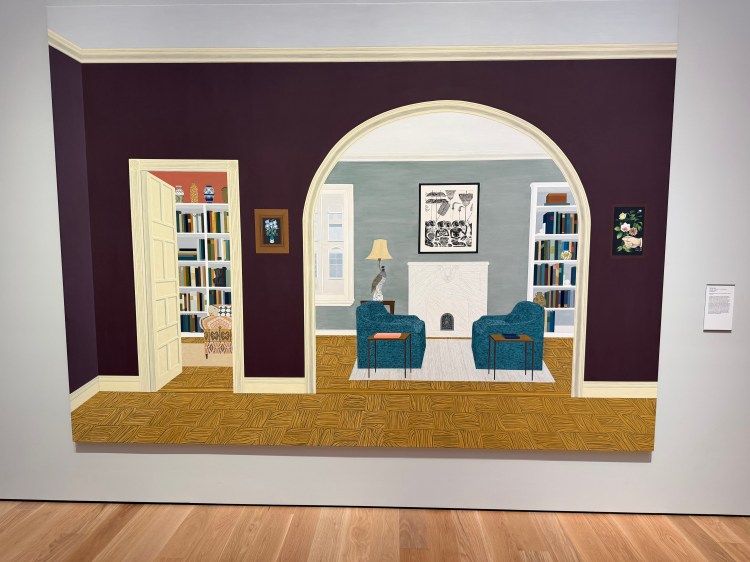
One of my favorite paintings seen today was by a contemporary artist, Becky Suss. Her “August, 2016” work that takes up most of a wall includes a lamp featuring a base resembling a peregrine falcon.
“August 2016” by Becky Suss
What I’ve posted represents most of the birds I observed, but I’m sure there are more to discover on future visits, which will be frequent. The museum is free to all comers and is open daily, with the exception of a few major holidays. If you can’t make it to Princeton, the museum’s website has a rich trove of photos of its collections. 🦅
My friend Jim and I crossed the Delaware River from Trenton this morning on a hunt for a rare visitor from the Arctic: a rough-legged hawk. Amazingly, we spotted the bird almost immediately, but the morning had much more in store for us.
The rough-legged hawk had been reported the previous few days hunting around the Penn Warner Club, a private fishing and recreation area at the south end of Morrisville, Pennsylvnia. The town is along the Delaware River roughly 30 miles north of Philadelphia.
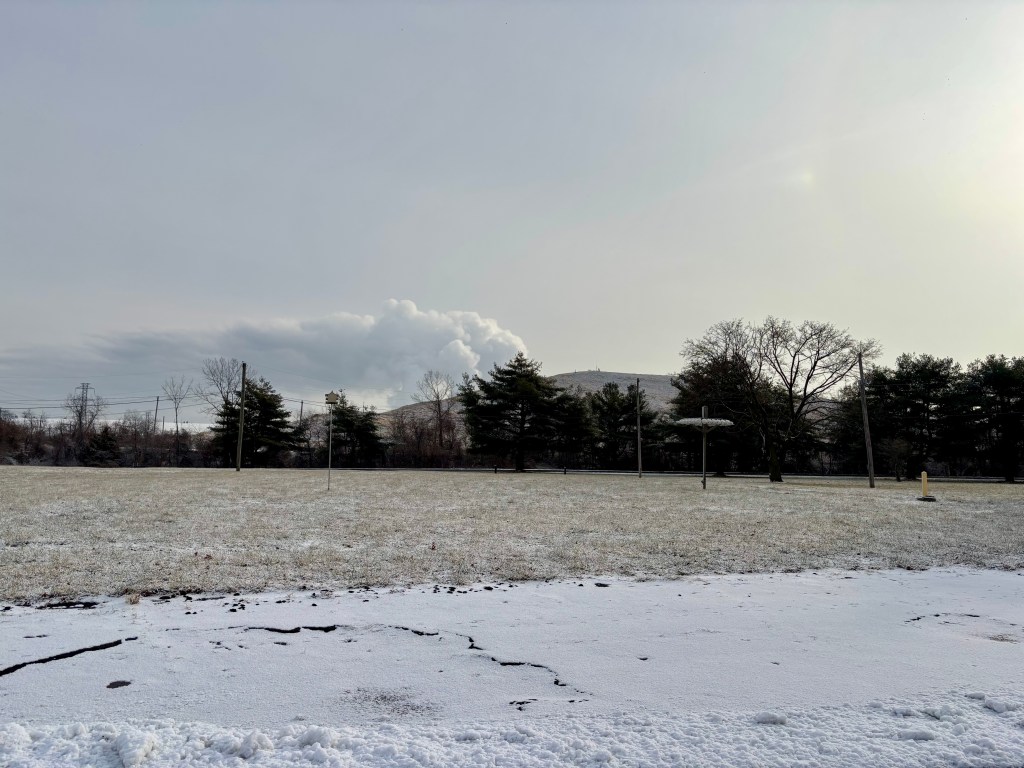
View to the North from the club parking lot. We spotted the rough-legged hawk along the ridge line in the distance. Two red-tailed hawks perched on posts at the top of the hill.
As Jim and I drove into our target area on Bordentown Road, he spotted two bald eagles in a roadside tree –– a good omen. We turned to the road that would take us to a club parking lot and soon spotted a hawk-like bird perched on a pipe at the top of the ridge to our left. Pulling off to the side of the public road, we hopped out of the car and trained binoculars and cameras on the bird.
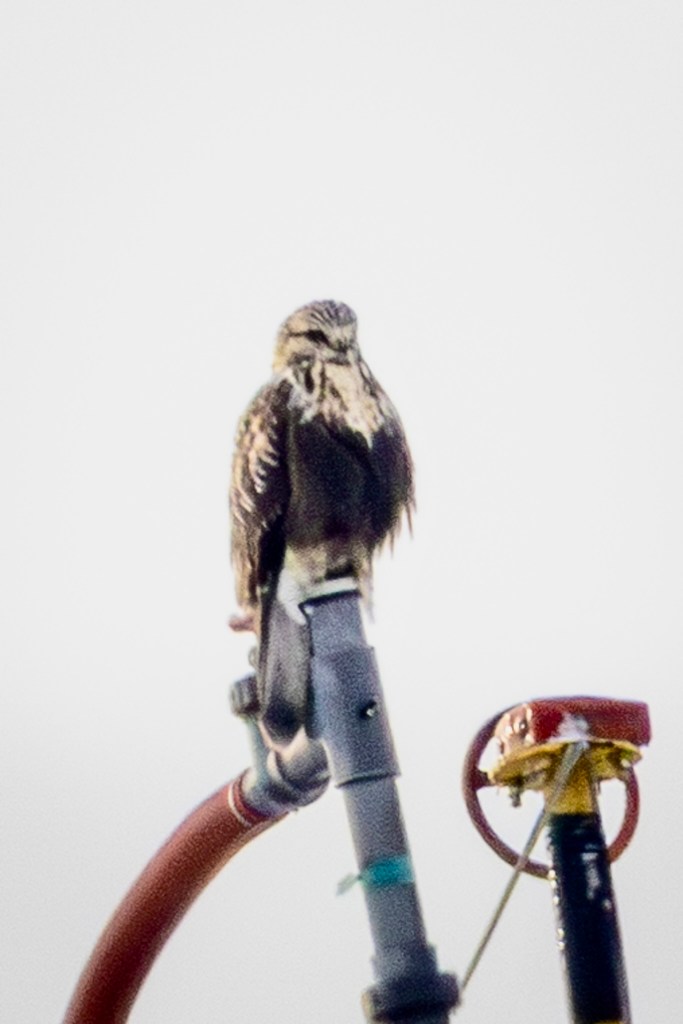
Rough-legged hawk.
After a minute or two, the bird flew off. We checked our camera screens and got our proof. The bird had a mostly white face with a white bib above a dark body — a rough-legged hawk.
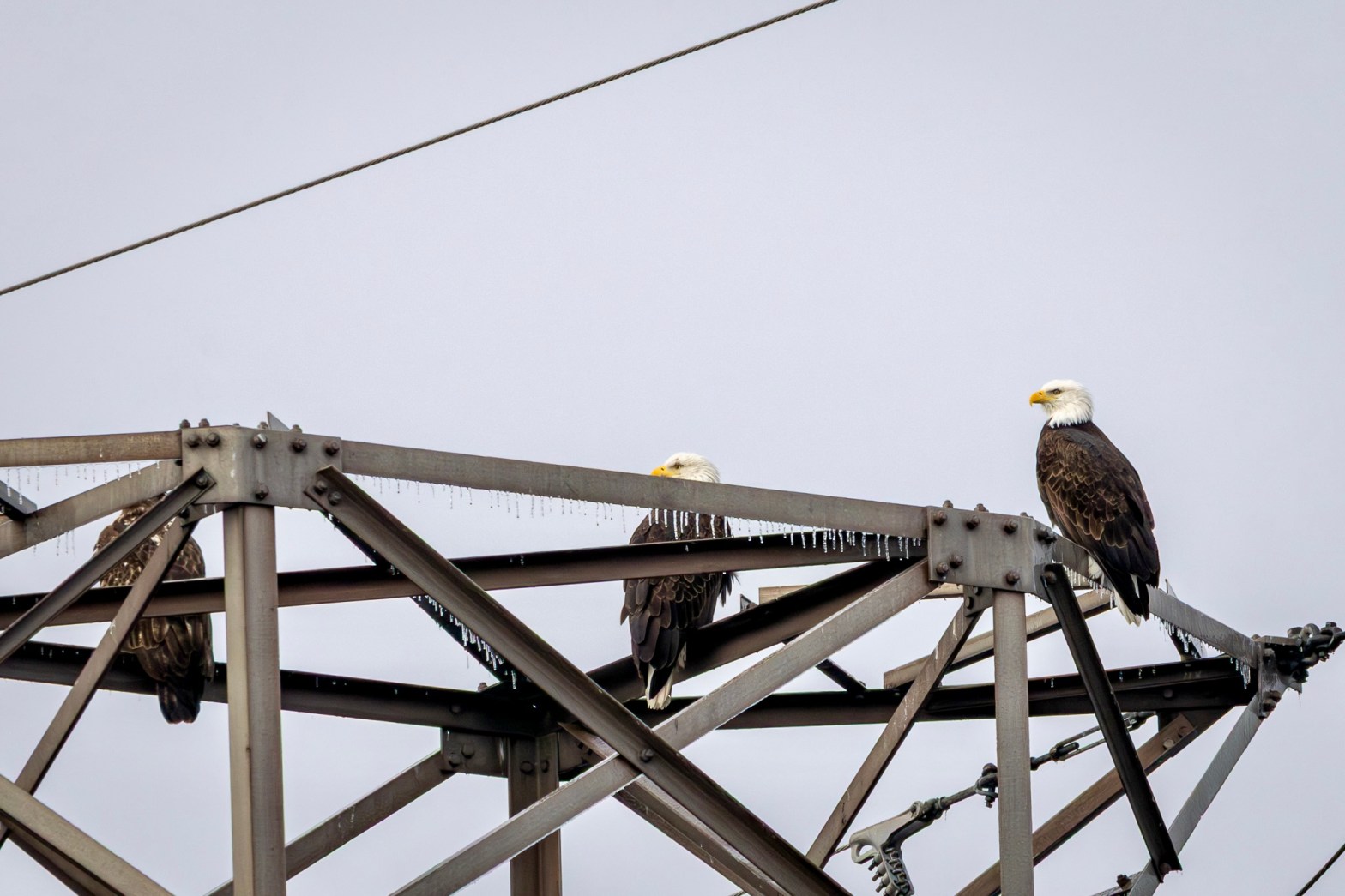
We drove to the club parking lot a short way ahead and spotted a few more bald eagles in trees along the way. Once at the lot, we spotted four bald eagles atop a power transmission tower, and I watched as a fifth eagle harassed one of them. Both flew off.
At another point, we saw three eagles atop another tower, and there were many others alone or together in trees and on an ice sheet on a lake off the road.
The eagles were a mix of adults and juveniles, so many young ones that I was heartened for the future of the bird that once was on the precipice of extinction.
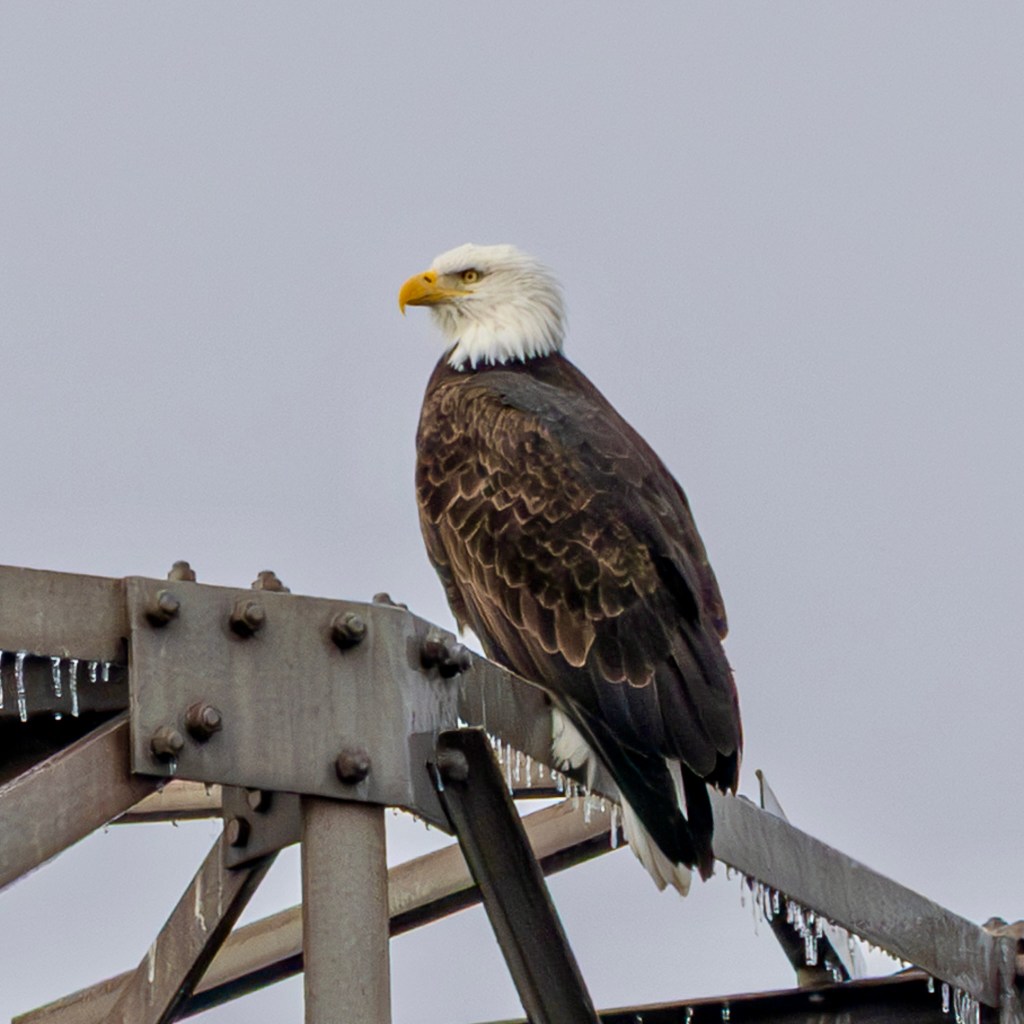
Mature bald eagle up high, atop a power tower.
A passing motorist told us there were more bald eagles down the road, and we confirmed that as we drove south. We stopped near a bridge that spanned a cove where we saw a coot, buffleheads and ruddy ducks. Farther out on the water were hundreds of common mergansers, with many others flying overhead.
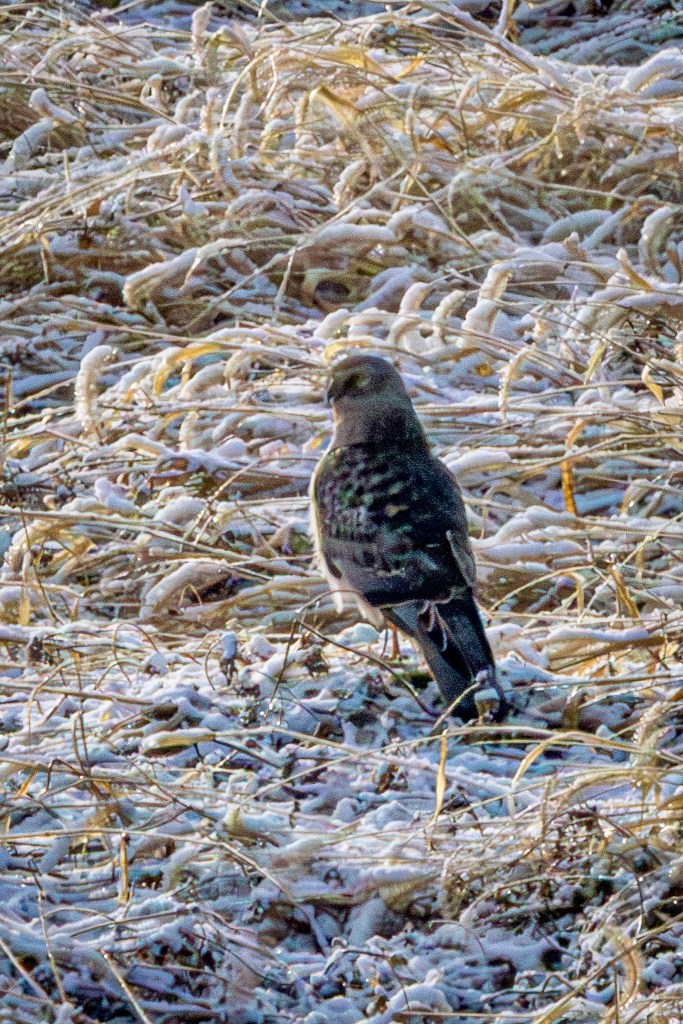
Male “gray ghost” Northern harrier standing on the ground.
Toward the end of our two-hour visit, we spotted red-tailed hawks, male and female Northern harriers, and an American kestrel. Jim’s hunch that a bird we saw atop one of the power towers was a peregrine falcon turned out to be accurate once we got home and checked our photos.
We figure we saw around 30 eagles, an astonishing total and the largest number I’ve ever seen. My previous high total was 27 bald eagles I saw at Mendenhall Glacier in Juneau, Alaska, 30 years ago.
I gained a lifer in the rough-legged hawk, which we spotted a second time on our way back up the road. It flew from one post to another, so we drove a bit to see it clearly and closer on the second post. As soon as I pulled my camera out of the car, the bird flew off. I believe Jim got a shot of that, and we decided it was time for us to head off, too. 🦅
Note: the Penn Warner Club is private, members only, as signs near the gates to several sections plainly note. Jim and I parked briefly on the sides of the road and at a few pullouts. Several other birders parked with us at the parking lot by the club’s main entrance. We did not venture farther onto club land and don’t recommend it for others.
While pulling into the Pole Farm parking lot the other day, I declared my goal: to spot an American tree sparrow. Reports of the winter-visit birds had been trickling in on e-Bird, but I’d yet to see one this season.
I was in luck, however, on this day-before-Christmas visit. I’d brought along my friend Jim, who has logged more species in Mercer County than anyone on e-Bird and has near-instant recognition of any bird appearing.
We were hoping to spot a long-eared owl, as we’d seen one in the woods the week before. We checked in the areas where we’ve seen long-eared owls in years past but couldn’t find any.
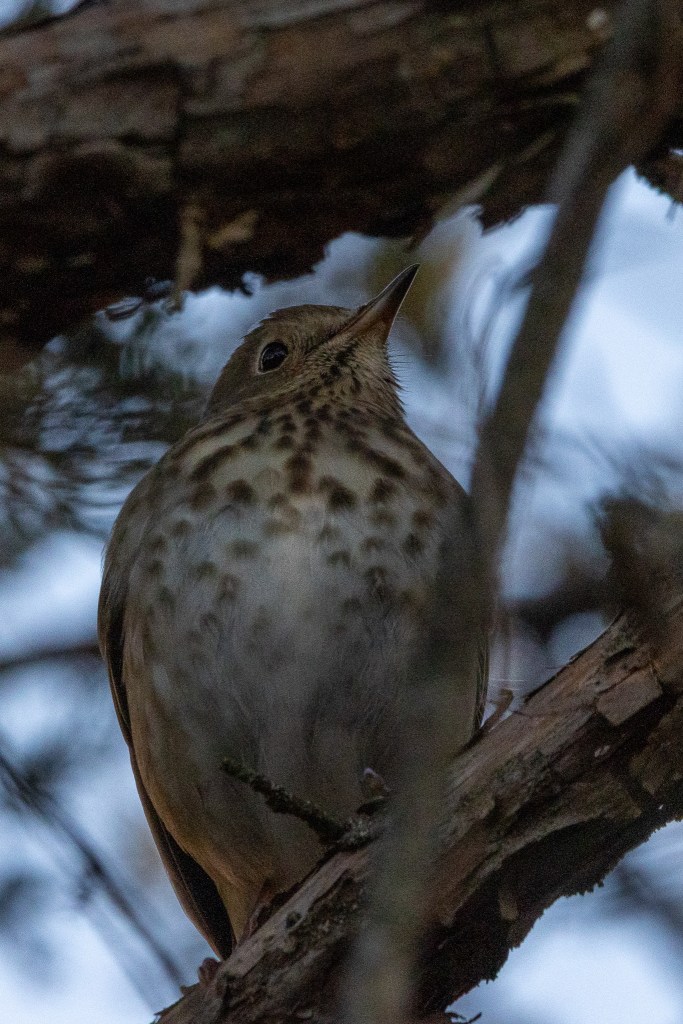
Jim spotted a hermit thrush at the old AT&T Building One site, and the bird parked in a cedar tree long enough for us to get good looks at it.
The hermit thrush, which we heard calling repeatedly before finding it.
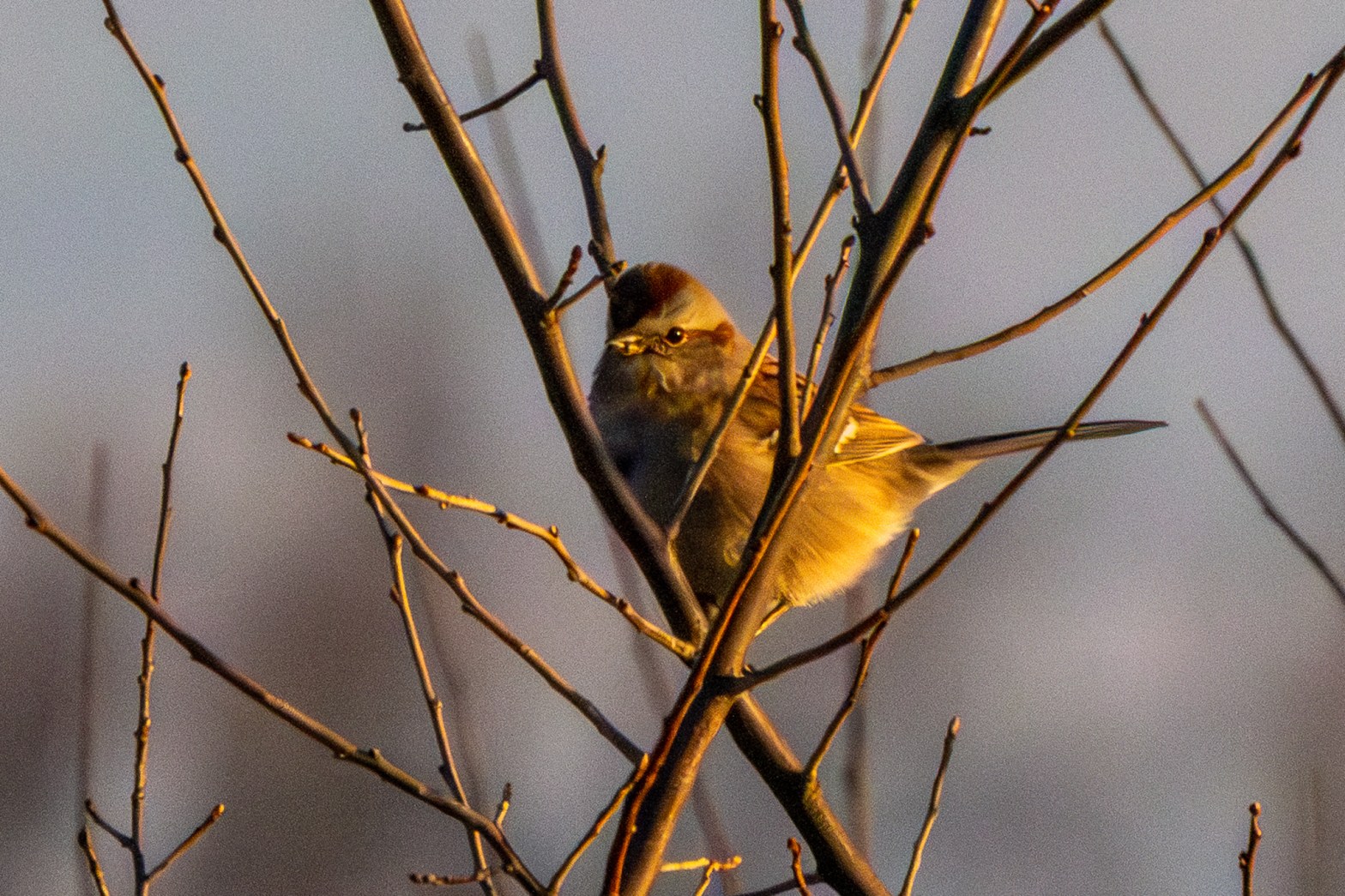
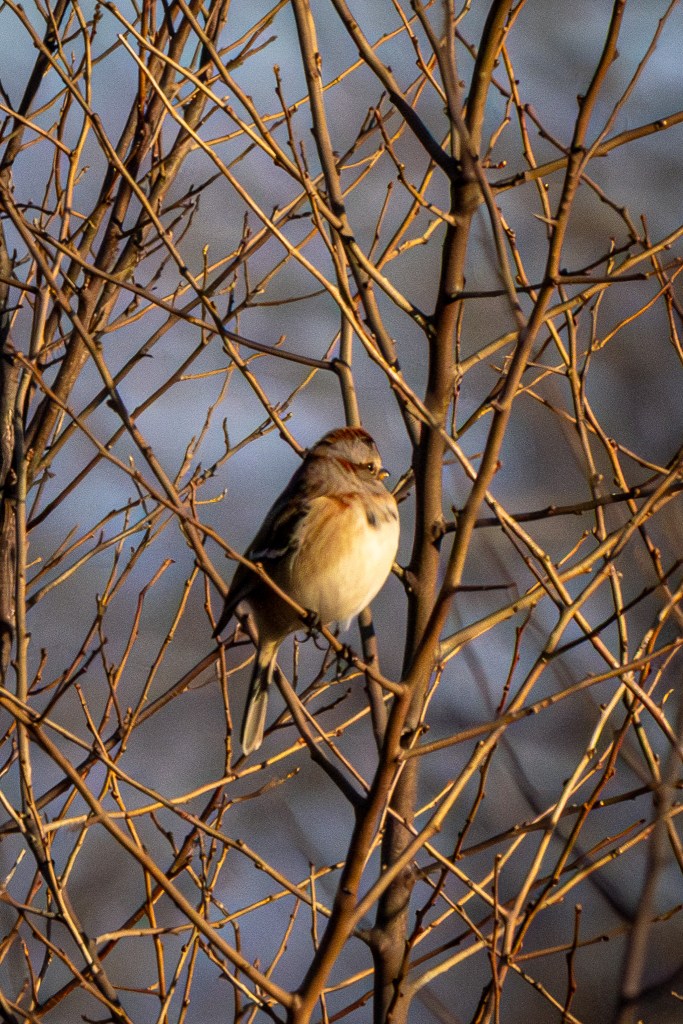
As we exited the woods and headed down the trail back to the car, I spotted a few sparrows to my left and started shooting. Jim quickly made the ID: American tree sparrows — eureka!
One of the tree sparrows. From this angle, you can just make out its bicolored beak, black upper and yellow lower.
I’ve made a couple of quick visits to the Pole Farm late in the day lately in the hope of spotting short-eared owls, which typically emerge just before dawn and at sunset. I had spotted one earlier this month, but it appeared to be an anomaly.
As one of my other birder friends noted, you can tell the owls aren’t out because the Cold Soil Road parking lot isn’t full at 4 p.m. as it is when the shorties are hunting in force.
Even though I’ve seen only the one short-eared owl, I have seen a few Northern harriers at sunset, including the “gray ghost” male. I haven’t captured the ghost on camera yet this season, but I’ll keep trying. 🦅
From the fall through the winter and into spring, the golf course that sprawls just beyond our property line becomes a haven for Canada geese. I daresay the fairways of Cobblestone Creek Country Club see more takeoffs and landings in one day than Pearson Airport in Toronto.
My wife and I generally are amused by the geese that nibble on the grass. Occasionally, they get crosswise and one will charge another for a few moments until harmony is restored.
The geese spread out on the first three holes of the golf course’s back nine that we can see out our kitchen and dining room windows. We have a fascinating vantage point from which to watch their behavior.
Upon approach to the course, the geese typically arrive in waves of wedges. The leader of the first vee circles over the course, apparently checking for the best spot to land. Once that group touches down, others follow quickly. Within a few minutes 200-300 geese are munching away on the ground.
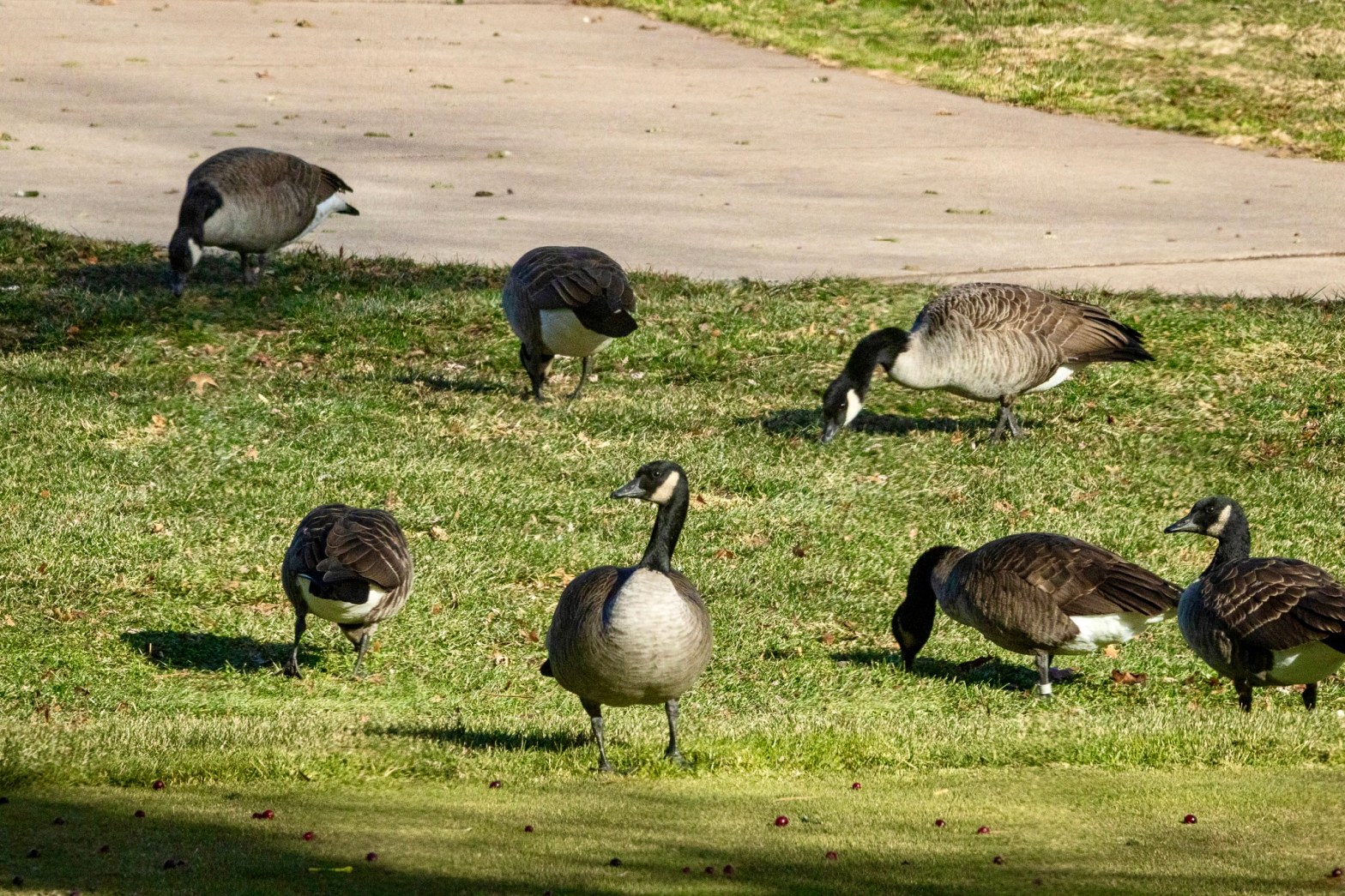
What we find particularly fascinating is that “sentinel geese” set up at the edges of the foraging swarms. Most of the time the sentinels squat on the ground, although sometimes they stand briefly, as does the goose in the center foreground of the photo topping this post. While most of the flock eats contentedly, the sentinel geese face away and watch for the approach of anything untoward.
Occasionally, anything untoward means a pickup truck from the golf course maintenance crew that rolls down the cart path to scare the geese off. As one, the geese squawk raucously, rise and fly away en masse — likely to another part of the course.
Canada geese migrating over the Mercer Meadows Pole Farm in October 2020.
U.S. federal law has protected Canada geese for more than a century, and New Jersey also has its own protections for them. The species is thriving today, with year-round resident and migratory populations. While they don’t rank high on the colorful-feather scale, Canada geese are part of our natural ecosystem, and I’m glad and grateful that they enliven our days. 🦅





 The Jersey Birder