We’re in a long stretch of frigid weather, and it was 6 degrees when I headed off yesterday morning for a birding jaunt with my ace birding pal Jim. Our first stop was a new one for me: the Trenton sewage ponds.
Yes, the cement-framed pools at the Trenton sewage treatment plant near the edge of the Delaware River are a birding hotspot. As Jim explained, the ponds are warm year round and attract bugs, which in turn attract birds. As we walked up the driveway to the plant, through the gated fence we immediately saw a couple of swallows (ID undetermined) fly up and then back down toward the dark water in one of the pools.
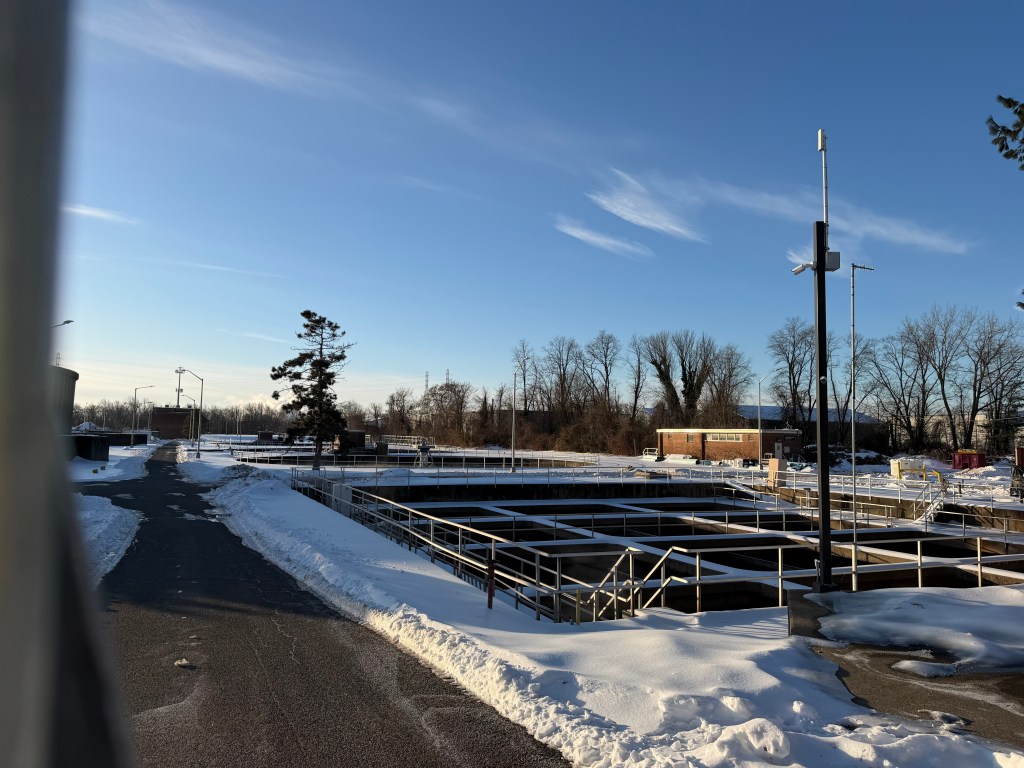
It wasn’t a busy morning for birds. We saw a handful of yellow-rumped warblers and watched as a Merlin flew overhead with something in its claws. We trudged back to the car and took a look at the Delaware, which at this spot appeared frozen solid. There were even drifts of snow atop the ice.
We took the “Trenton Makes, The World Takes” bridge over to Morrisville, Pennsylvania, and drove to the north end of the levee along the Delaware. There we spotted two female goldeneyes swimming with a female common merganser in a small channel of open water. About 100 Canada geese snoozed nearby.
After a short stop, we drove up to Patterson Farm in nearby Yardley, hoping to catch site of the Lapland longspurs that have been hanging out near some humpback piles of mulch. As we approached the mounds, we saw cars parked on a curve, which was where the stakeout was.
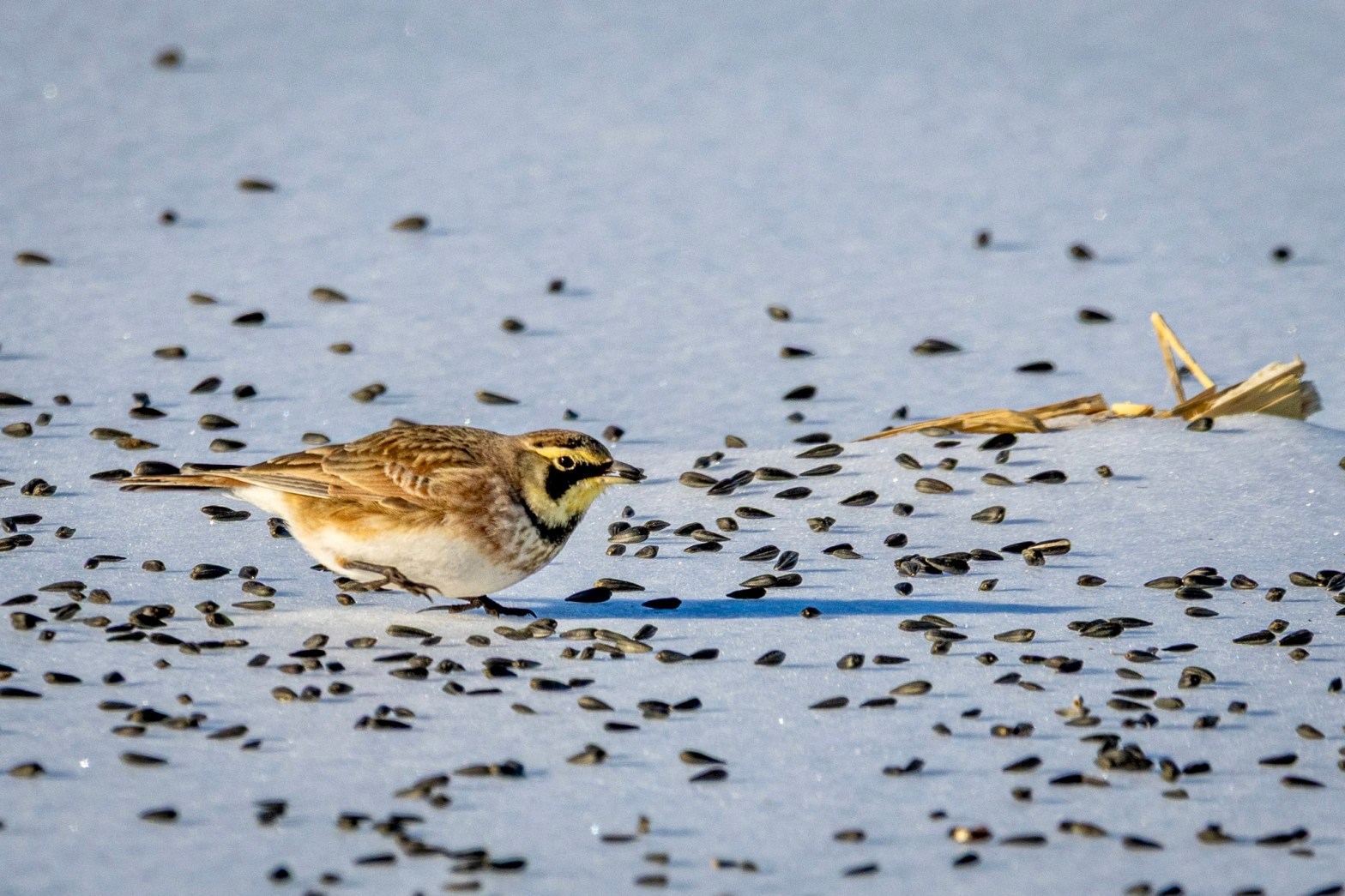
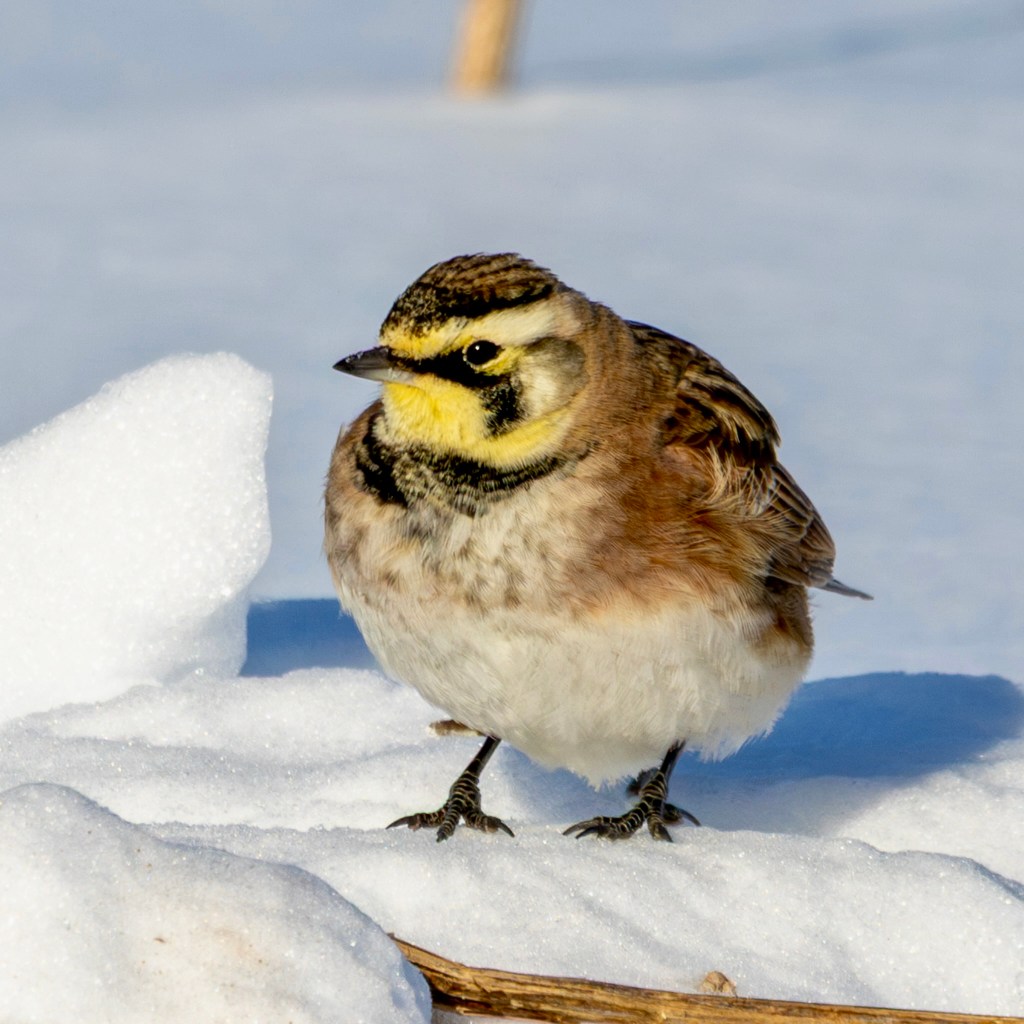
While we spent close to an hour at the spot, we never spotted a longspur. That was a small disappointment, because I was able to see my first horned larks. I estimate there was a flock of 50 of them feeding on the snow-covered fields.
The birds were close to where we parked, feeding in one spot for a few minutes and then taking off to another. The larks kept returning to where we were, no doubt because somebody or somebodies had strewn seed out on the snow (as seen in the photo topping this post).
At one point, a peregrine falcon swooped in over the fields and spooked the larks. The peregrine made a big banking turn and headed off, flying so quickly I didn’t even think about taking a photo. I did take a lot of photos of the horned larks and kept a few favorites, including this one.
Even with the cold weather, it was fine day of birding. How often do you get to say you went to a sewage treatment plant, crossed the Delaware and recorded a lifer? 🦅
 The Jersey Birder
I was interested to see three turkey vultures in the trees behind my apartment complex yesterday morning. When I lived in the farmland of upper Monmouth County, I’d see them all the time. But since moving more to this suburban community, not so much. Not sure why they were here unless there was a dead deer in woods. But to see three of them here was odd.
LikeLike
We have lots of turkey vultures around here. They are often flying over our yard. They congregate on top of the Lawrence Township water tower, too.
LikeLike
I have never seen a horned lark. I would never have thought to visit a sewage treatment plant for a birding experience.
LikeLike