A new year for birding begins

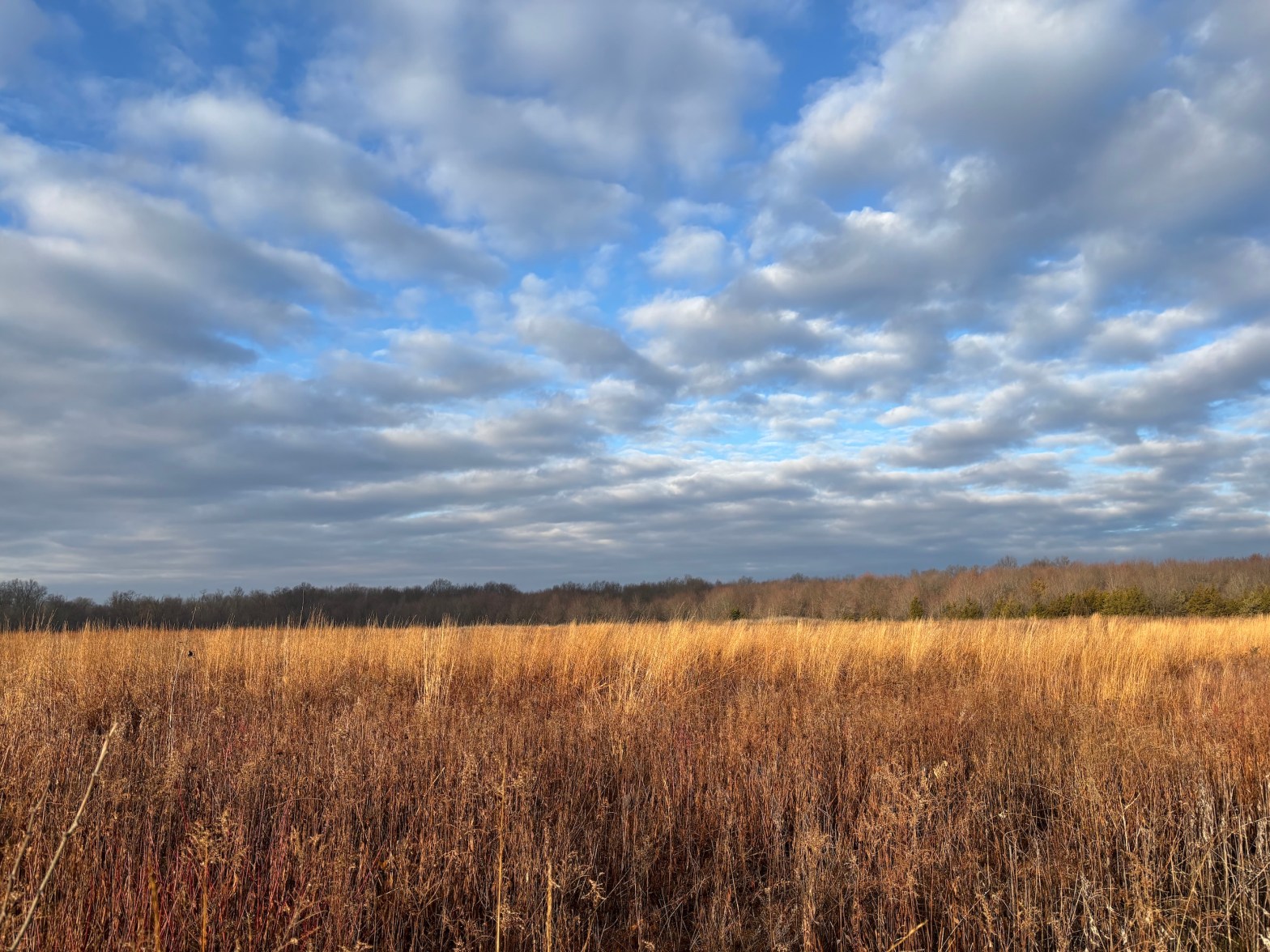
On this first day of 2025, I got a fast start on birding. I began the day under a beautiful cloud-dappled sky at the Mercer Meadows Pole Farm, logging 13 species in an out-and-back walk on the central trail.

Three American crows flew into a tree as I got out of my car, making them my first official sightings for 2025. A short while later I spotted an American tree sparrow close to a few song sparrows.

Curiously, I didn’t see a Northern harrier, which is unusual for this time of year. Surprisingly, I got a nice look at a field sparrow sitting before a metal fence at the AT&T Building One site. I’m always happy to get a field sparrow photo, and this bird certainly was cute.

Field sparrow at the Pole Farm.

Three Savannah sparrows were in the grasses as I made my way back down the trail but I didn’t get a clear shot.

When I got home, I watched the usual suspects show up at our feeders: house sparrows, downy and red-bellied woodpeckers, a white-breasted nuthatch and dark-eyed juncos. A white-throated sparrow poked its head out of one of the bushes at the front of our house.

A big flock of Canada geese was back on the neighboring golf course, and I figure it’s the same geese who were here yesterday. Among them was an immature snow goose, which surely must be the same one we saw yesterday.

At mid-afternoon, I drove to Trenton to see what was on the water at John A. Roebling Park. Mallards were plentiful, as were ring-necked ducks, gadwalls and Northern pintails. I didn’t spot any Northern shovelers or teals on the marsh, but a pair of mute swans were plying Spring Lake.

The swans on Spring Lake.

On the way home, I diverted briefly to Colonial Lake in Lawrence Township to see what I might see. A group of ring-billed gulls were on the water, and I was pleased to spot a male hooded merganser in the middle of the lake. While I couldn’t get a crisp shot of that bird, several mallards floated close by in nice light.

All told, I spotted 29 species today. Birding for me isn’t all about the numbers, but when I get a good daily score, I feel good about it. 🦅
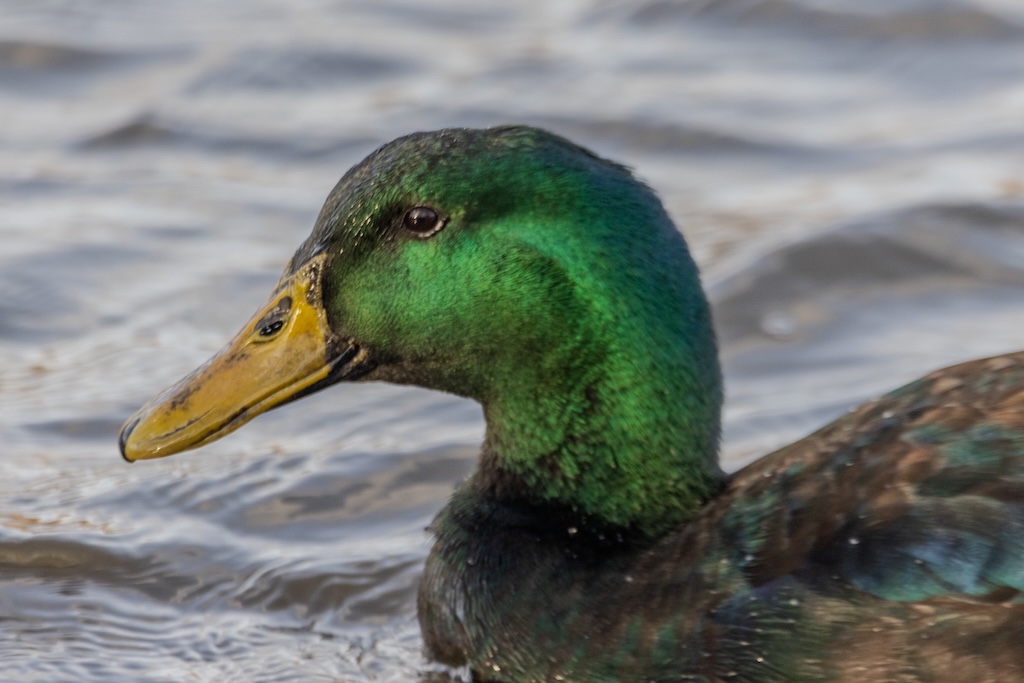
Male mallard at Colonial Lake.

A snow goose helps us see in the new year

“What’s that white bird out there?” my wife asked at the breakfast table this morning. “Out there, in the geese.”

As there were about 200 Canada geese on the neighboring golf course, just beyond our property line, it took me a while to pick out the white bird. I grabbed my camera, dashed outside and blasted off several shots, hoping I’d be able to get a clear ID.

The bird was the same size as most of the Canadas surrounding it. It was white but had black streaking on its back, and I couldn’t clearly make out its beak. While I wondered if I was shooting pictures of some sort of weird hybrid, my wife grabbed a bird book, stuck her head out the back door and said, “It’s a snow goose. An immature snow goose.”

Right she was.

This is our ninth winter in our house. We have seen thousands upon thousands of Canada geese out on the golf course, some of them risking my wife’s wrath by waddling into our yard. Yet until today, I’d never seen a snow goose among them. Nor have I knowingly seen a cackling goose, the odds of which have to be better than finding the snow goose.

But a snow goose it was, and I’m taking that as a good omen for 2025.

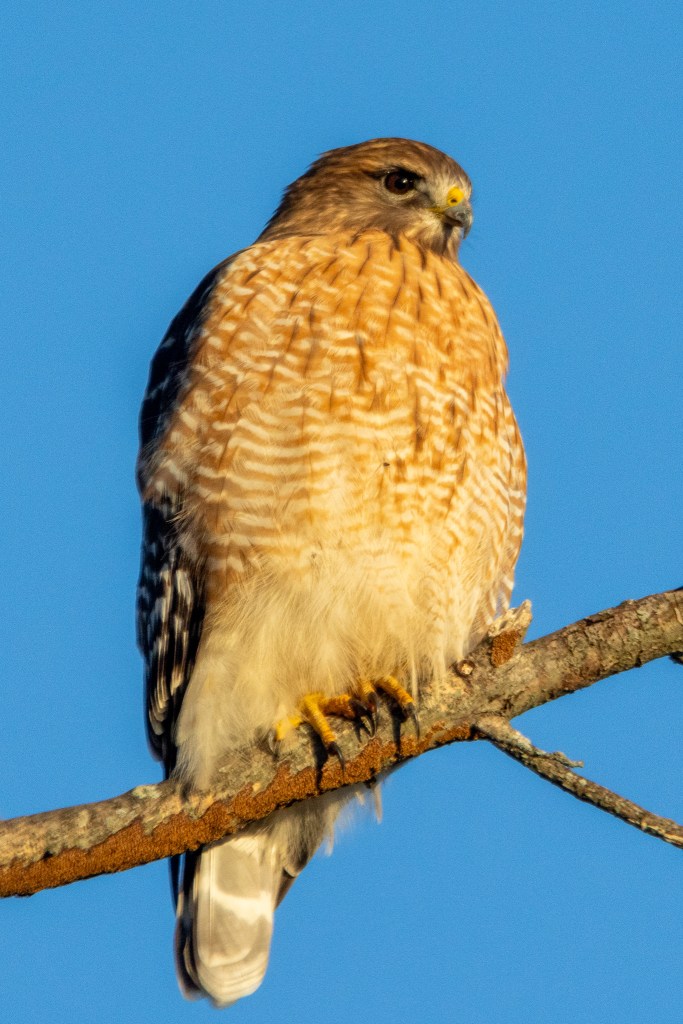
I had good karma this morning in my walk at the Mercer Meadows Pole Farm, catching a red-shouldered hawk perched on a branch in the large tree near the parking lot. There weren’t many other birds perching or flying beyond a few sparrows, but that’s how birding goes — feast or famine.

Red-shouldered hawk perched on a tree branch.
Red-shouldered hawk.

The sun was streaming beautifully later in the day, and I went back to the Pole Farm for a late afternoon walk. I spooked a Northern harrier off a post, and I think this is a fine frame with which to end the year.

Northern harrier flying.
Northern harrier soaring at the Pole Farm.

As for 2024, I failed at meeting my goal of birding in all the New Jersey counties in which I hadn’t previously visited. I added three counties in that ambitious goal, and I won’t delude myself into thinking I can complete the map in the coming year.

I did record 152 species worldwide this year, thanks in part to December visits to Prague and Dresden, Germany. That trip also contributed to my adding 15 species to my life list. I’m happy with that. I shall sleep contentedly tonight, likely dreaming about the adventures that lie ahead in 2025. 🦅

My 10 favorite bird photos of 2024

Ranking one’s favorite photos is a difficult task, akin to ranking one’s favorite desserts, cars or children. While over the span of a year I take scores of clunkers, I also look back fondly on the keepers.

My list of favorites is a mish-mash: some make the list for their technical quality, others rate because I find the birds appealing.

My top image is, appropriately, at the top of this post. It shows a red-tailed hawk swooping across a field at the Mercer Meadows Pole Farm, which itself is my favorite birding location. I took the photo on April 27 while birding with my friend Andy, and that day was probably my single best day for birds and photography combined this year. The photo, taken on my Canon SL2, is clear and sharp, thanks to plentiful sunshine. Give credit to the bird, too: it cooperated by flying in and out of a tree near the parking lot.

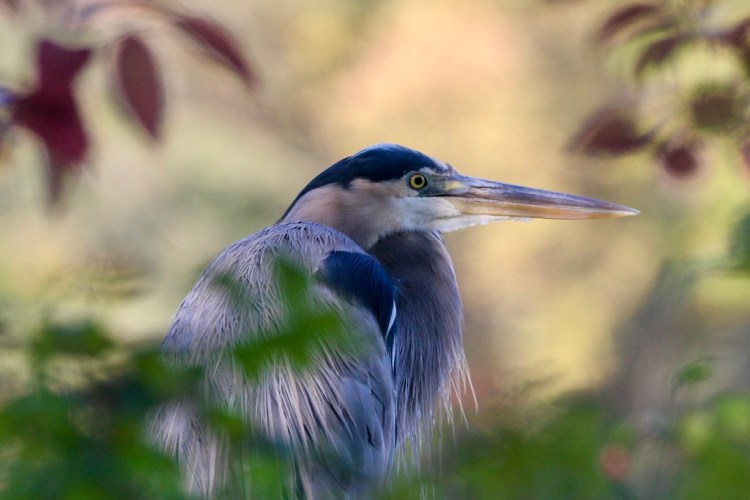
While that shot shows a bird in flight, my No. 2 favorite features a great blue heron standing still at the Millstone River impoundment in Princeton on Oct. 19. With my SL2 starting to fail, I brought my old Canon XT out of mothballs and used it to capture the heron framed by branches.

Great blue heron in profile, surrounded by leaves from tree branches.
2. Great blue heron

Most of my shots tend to zero in on the birds, but my No. 3 favorite is a wide shot I snapped of an Eastern meadowlark at the Pole Farm on Oct. 12. It was the last best shot I got out of the SL2. I have since upgraded to a Canon R7.

An Eastern meadowlark perches on a  small tree with red leaves, surrounded by tall grasses and goldenrod plants.
3. Meadowlark in a meadow.

I was going to switch to a gallery for the remaining shots, but WordPress isn’t cooperating (i.e., I messed something up). So here are the others. Apologies for the different caption styles — and happy new year! 🦅

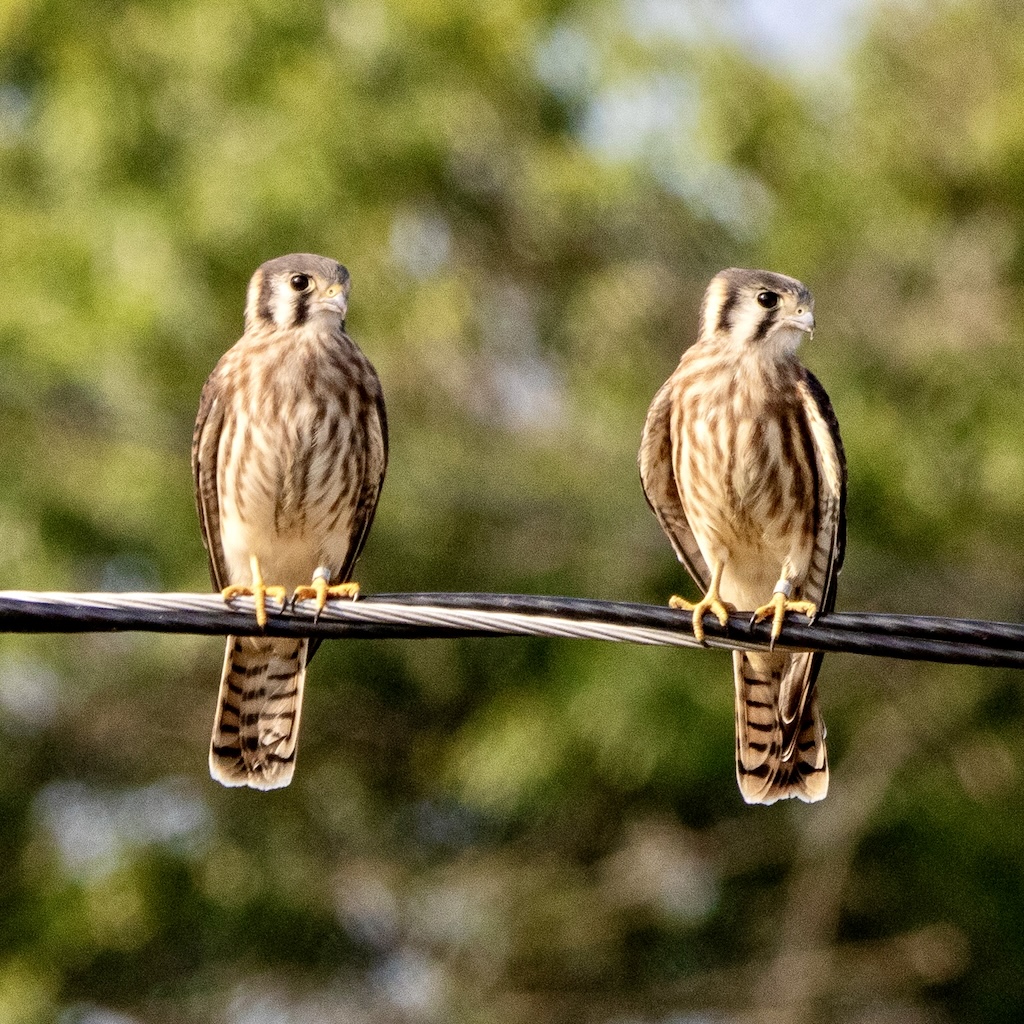
Two American kestrels perched side by side on a cable.
6. American kestrels, newly fledged.
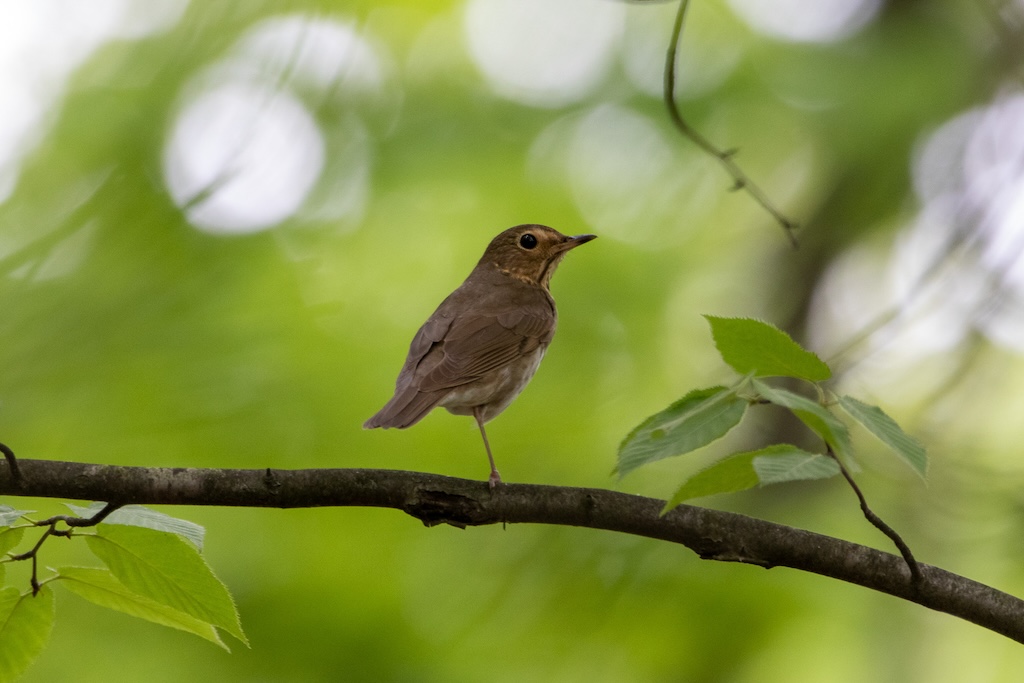
Swainson's thrush perched on one leg on tree branch.
7. Swainson’s thrush.
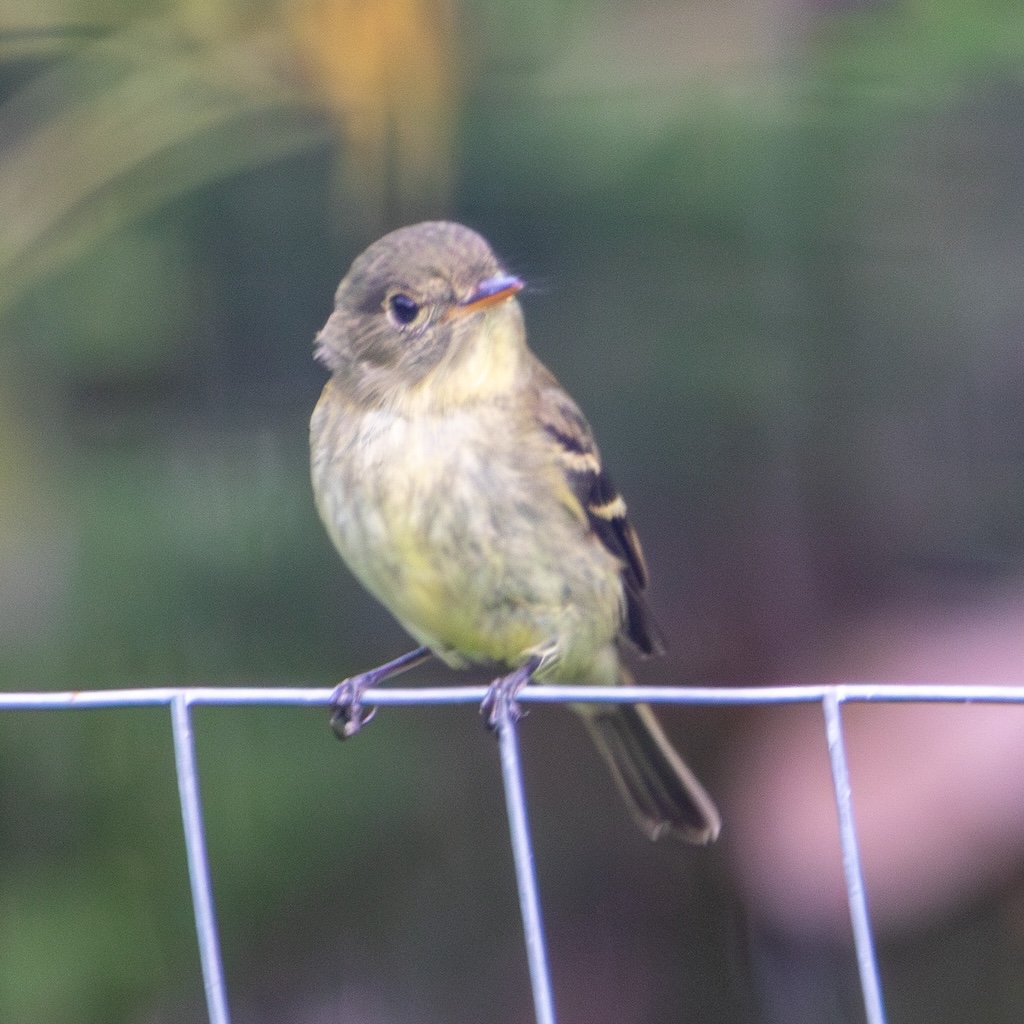
Yellow-bellied flycatcher sitting on fence.
8. Yellow-bellied flycatcher, a lifer.
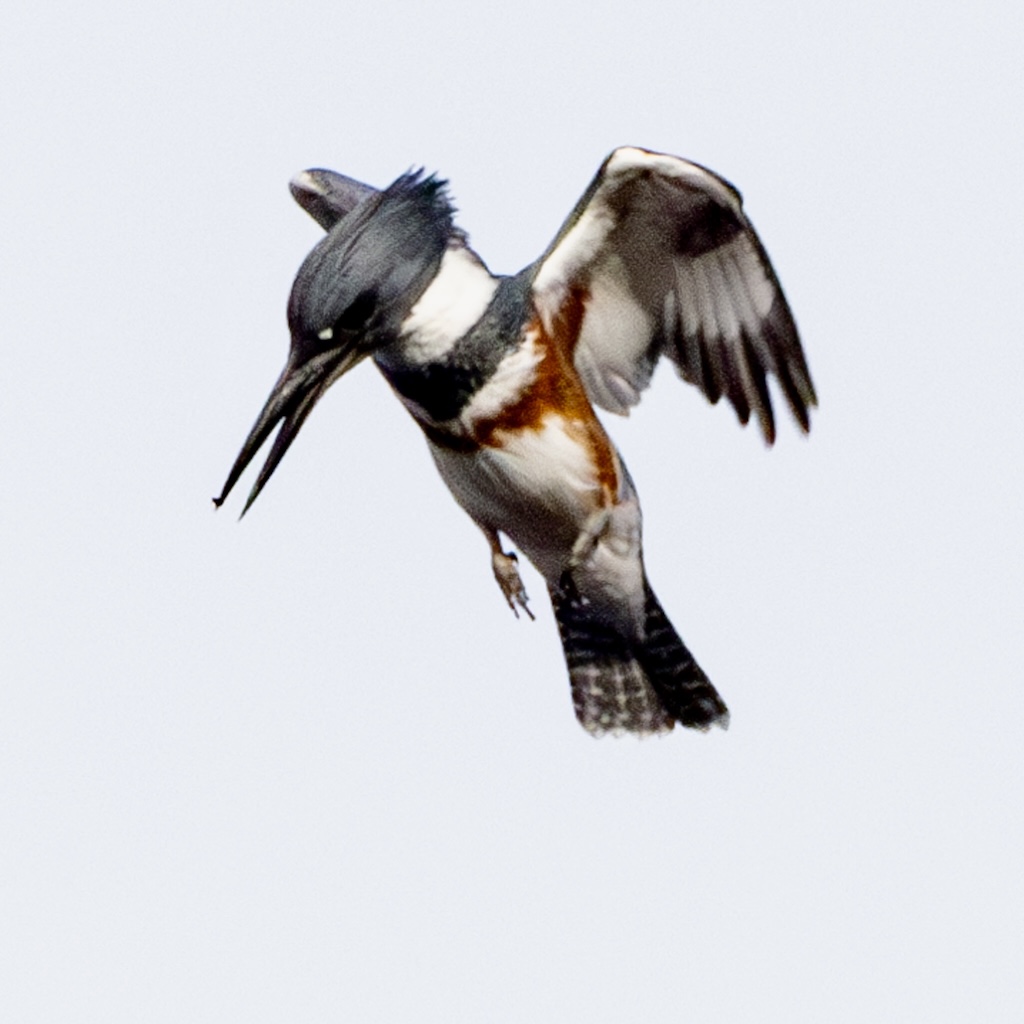
belted kingfisher ready to strike.
9. Belted kingfisher.
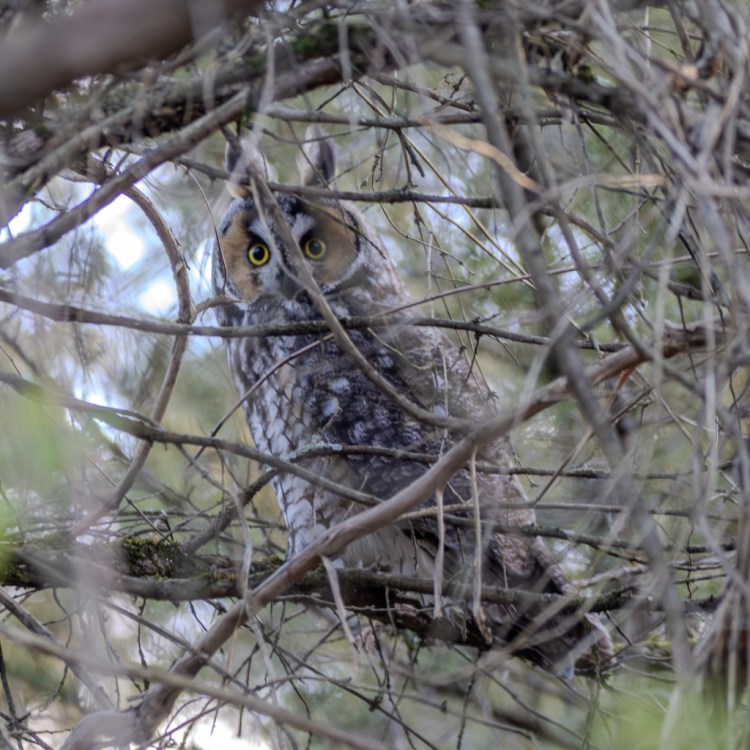
Long-eared owl partially obscured by small tree branches.
10. Long-eared owl.

Boring story: Why our maple tree has holes

A few weeks ago, we noticed that there were holes bored into the trunk of the maple tree in our back yard. That has to be the work of woodpeckers, I figured. Some of the holes seemed large enough to swallow any of the downy woodpeckers that visit our suet feeder daily.

The holes also seemed larger than what red-bellied woodpeckers could fashion, unless they worked long and hard. Could it be the work of a pileated woodpecker?

We’ve had those big fellas in our yard two or three times that we’ve observed in the eight plus years we’ve lived here. Friends were visiting at lunch yesterday when I looked out the dining room windows and spotted a pileated woodpecker hammering at the maple tree that holds up one end of our hammock.

Not making the connection to the holes in the tree, I thought only of excusing myself from the table, grabbing my camera and trying to get a few shots of the bird.

The bird flew to another tree, then headed off to our neighbor’s yard. The woodpecker flew back to our maple, pounding on a large side branch. Smaller branches partially obscured the bird on both opportunities, and the only relatively unobstructed shot I got is the one topping this post.

The photo, I discovered, shows the cavity into which the bird’s beak is attacking. I now can state with certainty that a pileated woodpecker, maybe more than one, is the culprit behind the holes.

I gladly accept those cavities and more if they continue attract such a magnificent creature as the pileated woodpecker.

As an aside, I’ve switched from pronouncing pileated as “py-lee-ate-ed” to “pill-ee-ate-ed.” The sources I’ve consulted say you can go either way. The word’s root is the Latin word for the pileus, the red cap given to freed slaves. Thinking back to the eight years of Latin that I studied in high school and college, I decided to go with the short i, just as I would pronounce pileus in Latin. 🦅

A no-owl Noel. But there were songs.

Merry Christmas to all! I hope your holiday is a happy one.

After wrapping a few gifts yesterday afternoon, I went to the Mercer Meadows Pole Farm and joined a few other photographers on an owl stakeout. I spent 90 minutes awaiting the arrival of short-eared owls. They didn’t show.

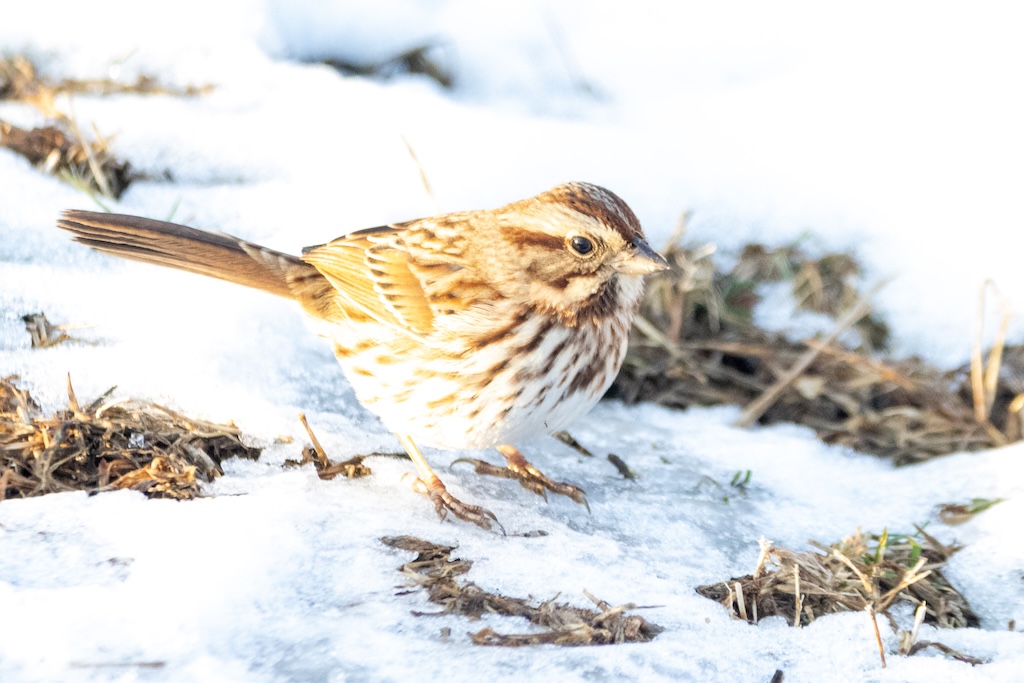
But amusingly, as I was standing in the cold, I noticed a few song sparrows foraging on the ground. One was almost underfoot. I marveled at what either was its fearlessness or its obliviousness to this homo sapiens a yardstick away.

I had to back up a step and pull my Zoom back to its 150mm setting to get the bird wholly in the viewfinder. The sparrow stuck around long enough that I had the presence of mind to shoot a bit of video.

The other photographers seemed to pay the sparrows no heed and they may not even have noticed them. I’m glad I did.

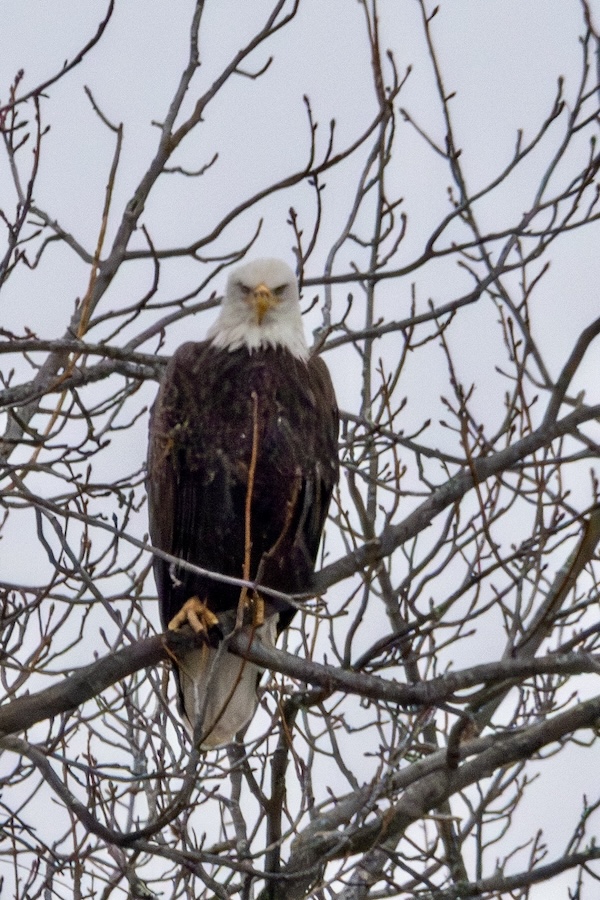
Today, I made a short trip to Veterans Park in Hamilton, where the lake is mostly frozen and snow covered. I saw some gulls and the gaggle of domestic geese who live at the park year-round. The one memorable sight was a bald eagle perched in a tree across the lake. I’m not sure its stern gaze was directed at me. I’ll give the bird the benefit of the doubt. 🦅

Bald eagle gazing down from a tree branch.
Bald eagle, staring me down?

Short-eared owls are flying again at the Pole Farm

While we have yet to experience the packed-parking-lot frenzy of last winter, short-eared owls are back at the Mercer Meadows Pole Farm and starting to show themselves before the sun goes down.

The “shorties” have been in the park for several weeks. Birders have reported seeing them before dawn and after sunset. We’ve been waiting for them to start flying ahead of sunset, and it seems we’re getting to that point.

On Sunday afternoon, I went out to the park about 45 minutes before sunset. I joined about 10 more photographers near the big curve where the paved Lawrence-Hopwell Trail starts its gentle slope up to the woods in the center of the park.

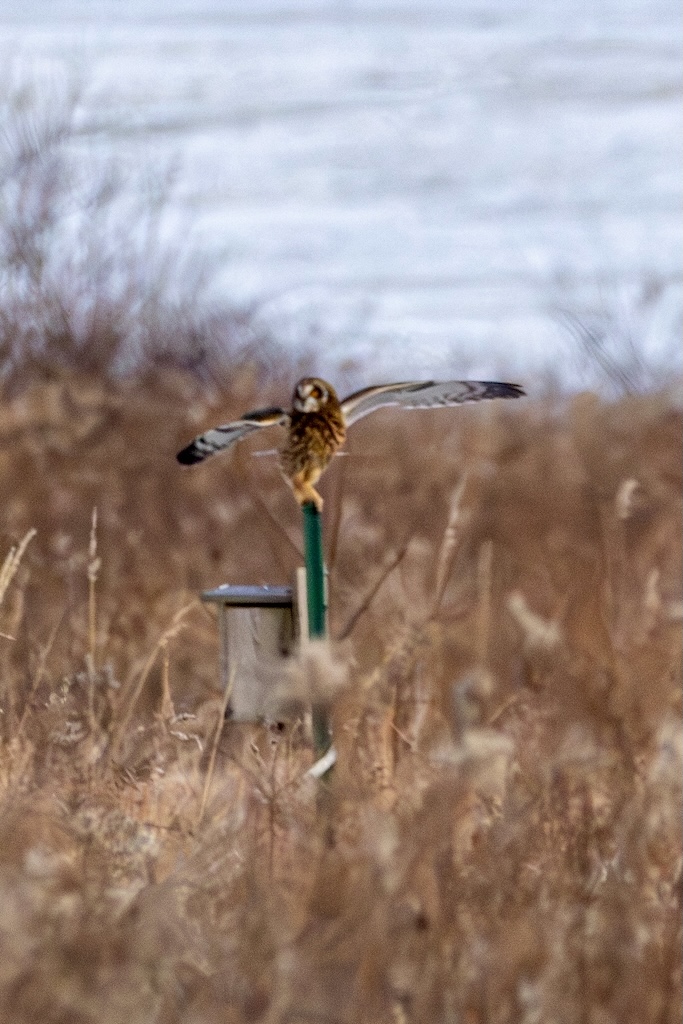
Owl sitting at the base of a tree.
The owl in the field, far off.

One short-eared owl was sitting at the bottom of a spindly tree on the far side of the field that runs between the trail and Cold Soil Road. Other birders noted that the owl had been perched closer to the trail when they arrived around 3:30. A few of them got a good view and presumably some good photos of it.

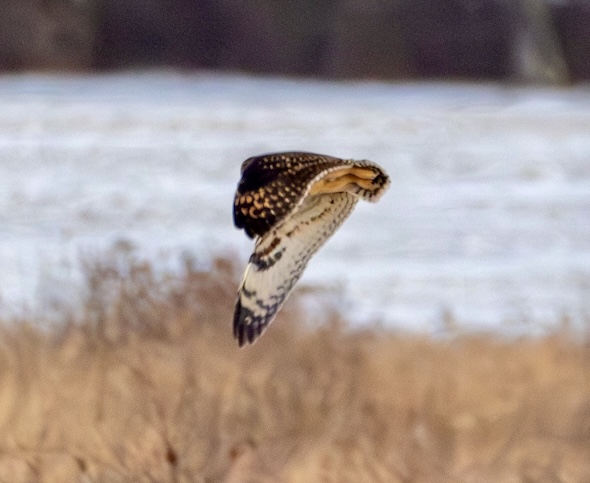
Around 4:30, the bird took off to our left, sailing and dipping over the field. Eventually it flew back toward and beyond us. In the dwindling light, I was able to capture the shot topping this post. I can’t recall if the owl was landing or taking off.

Meanwhile, two other short-eared owls appeared over the field behind us. At one point, they were high and almost directly overhead when one of them charged the other.

Word will get around that the owls are back. I reckon more people wearing camouflage jackets and bearing long lenses will start showing up. Here’s hoping they behave themselves and stay on the trails.

Rangers are patrolling, and one showed up about 4:45 Sunday evening. A few of us photographers were nearly back to our cars when the ranger started rolling up the trail, telling people the park was closing.

If you’re hoping to see the owls yourself, please know that these magnificent wild creatures have their own schedules that may or may not correspond to yours. Hope you get lucky and come on a day when they come out. And dress for a cold wait.

Owl turning in flight.
The owl turns away from the photographers.

A trio of eagles greets me

With the mercury at a frigid 11 degrees Fahrenheit, I scraped the ice off the windshield of our Subaru this morning and drove to the Millstone River Impoundment in Princeton.

Three bald eagles flying away, mature birds at top and bottom with an immature in the middle.
The adults are top and bottom, the immature in the middle.

To my delight, a few minutes after I stepped out of my car I spotted three bald eagles circling overhead. Two of them were mature and one was a juvenile, and they chased each other in the sky within easy view as I crossed the footbridge that spans what I believe was once a lock on the Delaware and Raritan Canal.

I was so surprised at the sight that I fumbled with my camera, eventually swinging it up to snap several shots as the birds headed off over Lake Carnegie.

The adults then settled on the opposite side of the lake, perched in a tree. What became of the juvenile, I don’t know. 🦅

A blad eagle soars over tree branches.
One of the mature eagles flying overhead.

A winter solstice treat: birds in the snow

With each passing year, it seems we’re getting less and less snow than we did previously. We got a surprising two inches of the white stuff overnight, and I gleefully headed out to the Mercer Meadows Pole Farm, anticipating some bird-in-snow shots.

While it seemed most of the birds decided to sleep in at the winter solstice, a few did pop out and give me an opportunity to capture them in pixels. The most cooperative bird was the cardinal topping this post. He perched high up in a tree at the edge of the woods, and he was obliging enough to face the sun, which had at last emerged from the clouds.

I like the shot up top because it clearly shows the snow behind the bird. Although the snow is not quite as prominent, I like this next shot — the last one I snapped this morning — even better because the bird is stretching forward. That makes the composition more dynamic than the top photo.

Northern cardinal stretching forward on a tree branch.
Mr. Cardinal leans forward. If you look closely, you can see around the bird a few dots of snow that the breeze stirred up.

After I’d walked more than a mile on the trails, I had encountered about a dozen dark-eyed juncos foraging on one of the trails and flitting among the trees. At that point, I was in the woods and the sun was not fully out. I’m grateful that by shooting in the c-RAW format, I was able to produce a decent image.

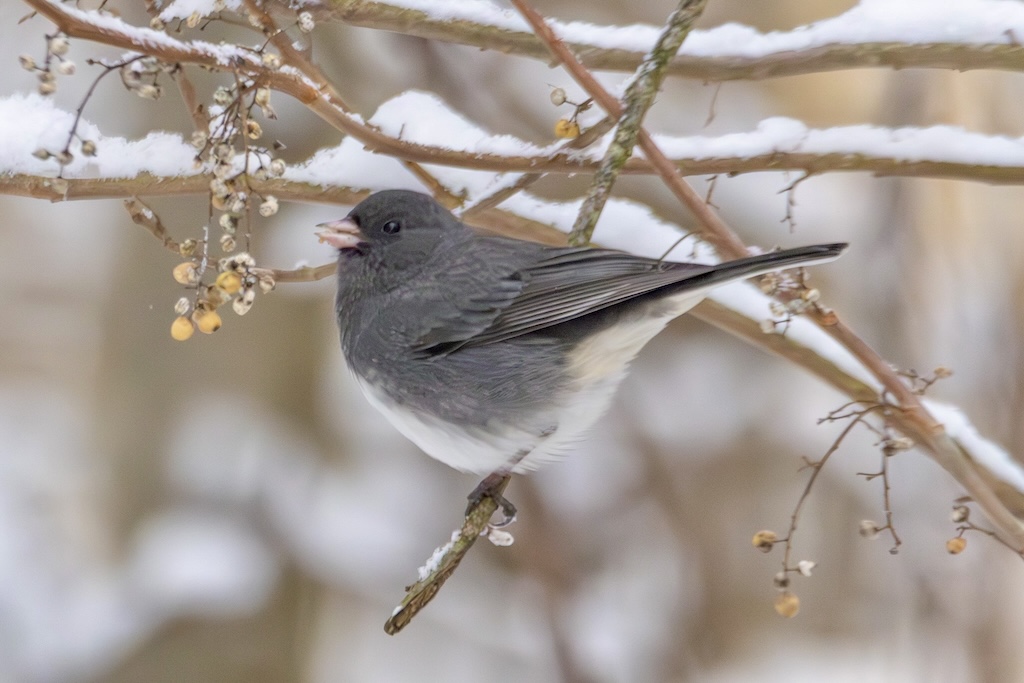
Dark-eyed junco looking at yellow berries from a tree branch.
Dark-eyed junco snacking on a tree.

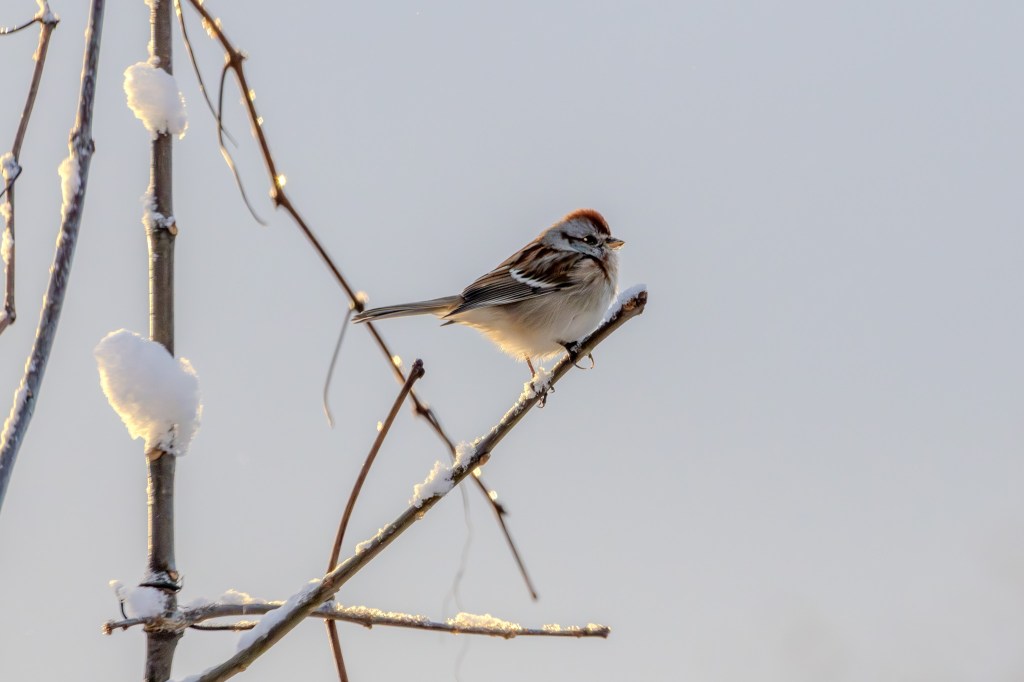
Once I brought my images up on screen at home, I got a bonus: a couple of frames of an American tree sparrow. Thinking it was another junco, I pointed my camera up toward the bird and snapped a couple of frames. Nothing against the juncos, but I was glad to add the tree sparrow to my e-Bird checklist. They aren’t as abundant as the juncos, and I love their rufous caps and bicolored bills.

An American tree sparrow sits on a tree branch, backlit by the sun.
American tree sparrow perched on a branch.

This afternoon, I headed down to Trenton marsh (Abbott Marshlands) for a short, windy walk. Spring Lake was heavy with gadwalls and ring-necked ducks. Two mute swans were also on the water, out of range for a decent photo.

It was great to see the swans. Until a few months ago, I could always count on seeing a pair of them on the lake or, more typically, on the nearby marsh. But they disappeared in either late spring or early summer.

I can’t tell, of course, whether these are the same birds. Whoever they are, I’m glad they’ve come calling. 🦅

Adding to my life list in Europe

One of our sons had a meeting in Prague, so my wife and I booked flights to join him afterward on our first trip to Europe as a couple. I knew the trip would mostly be about seeing the sights (and they were spectacular) so I didn’t bring my big Sigma zoom lens that I use for birding here at home.

I did pack my 75-300mm Canon zoom, figuring I’d get a couple of chances to use it in Prague and on a day trip we’d take to Dresden, Germany. As it turned out, I only got to use the Canon on our last day in Prague, when we walked across the famed Charles Bridge over the Vlatava River. About half the bridge is shown in the background of the photo topping this post.

Eurasian jackdaw perched on the head of a statue.
A Eurasian jackdaw parks on a statue head.

Black-headed gulls swarmed the bridge and the areas surrounding it. The bridge, which dates to the 14th century, has 30 statues flanking it. Not surprisingly, the statues serve as landing spots for the birds.

We crossed the bridge in the hour before sunset under heavy cloud cover, so conditions were not ideal for photos. But I still got a few shots I’m comfortable sharing here.

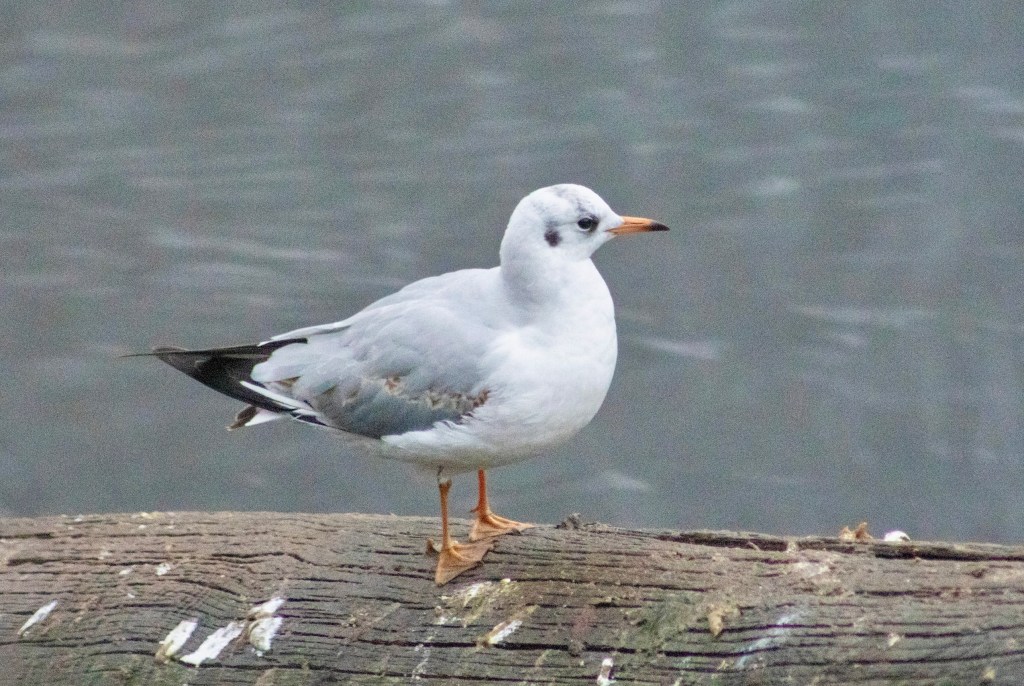
Black-headed gull perched on wood along the river's edge.
One of the black-headed gulls at the edge of the Vltava.

The black-headed gulls and jackdaws were new entries on my life list. My wife pointed out a mute swan on the water. I’ve seen plenty of them in the U.S., but I was surprised to find out when I posted the swan on e-Bird that it counted as a lifer. That’s because mute swans aren’t native in the United States, same as the European starlings we see most days.

Other lifers spotted from or near the Charles Bridge were tufted ducks and Eurasian coots, which look remarkably like their American counterparts.

Five tufted ducks swimming.
Tufted ducks. Note the tuft on the head of the bird at top center.

We spent most of our time in Old Town Prague, and other than pigeons, I saw only a few birds. No sparrows, but I did spot two Eurasian blackbirds in the trees as we walked through a small park on our way to Wenceslas Square.

Last Saturday, Dec. 7, we boarded a train for a two-hour trip to Dresden, Germany. The train followed the Elbe River most of the way, and we passed through some hills that had a smattering of snow on them. We spotted a few birds from the windows. I had a good look at a great cormorant spreading its wings at the river’s edge.

Dresden was humming because it was the day of the annual Stollenfest, when the bakers and pastry makers in town make a huge Christmas stollen and parade it through the streets. The tradition goes back a couple of centuries.

Here comes the stollen!

After we watched that delightful spectacle, we walked through a park along the Elbe. I heard a bird singing, whipped out my Merlin app and it lit up with a great tit. I spotted one in a tree, but with only my normal kit lens attached to my camera, I had no chance at a decent photo.

A couple of carrion crows strutted on the ground. They seemed slightly smaller than their American cousins but had the same swagger.

All told, I added nine birds to my life list, bringing the total to 229. Given that I spent barely the equivalent of two hours looking for birds, I think that’s a good haul.

I hope to return to the Czech Republic and to Germany some day and find more new birds in the Old World. Meantime, I’ve headed back out to my usual haunts, glad to be home and better for experiencing six days in Europe. 🦅

The outdoor avian portrait studio

Like life, birds move pretty fast. But every so often they park in place, giving us photographers an opportunity to compose and take their portraits. I had two cracks at it today, this first day of December.

As I was making my way back to my car this morning at the Mercer Meadows Pole Farm, I spotted a blob in a tree at the AT&T historical exhibit. The blob was a bird, a hawk no doubt, but which variety?

As I got closer, it was plain to see from the patterned feathers on its chest that this was a red-shouldered hawk. It was calmly perched, swiveling its head every now and then. Two other photographers were parked nearby. I changed positions a few times, aiming to get a better angle clear of branches and with the bird lit up a bit more by what little sunlight was piercing the clouds.

One of my last shots produced the shot atop this post. It’s cropped from a wider image that shows the bird from the chest up. If birds had yearbook photos, this one might do well for the hawk.

Running an errand in the afternoon, I stopped by the Millstone River Impoundment in Princeton. By then, the sun was plentiful. I counted 30 double-crested cormorants floating in the water, the largest number I’ve ever seen at this spot.

Ring-billed gulls were swarming over the bridges that cross the water and a few were sitting on the sides of one of them. That’s where I found the gull immediately below.

Ring-billed gull in profile, from mid-neck up.
Ring-billed gull in Princeton.

That bird and a couple of others perched nearby flew off once I started walking forward, and I soon spotted a great blue heron just off the bridge. I’m fairly certain it is the same blue heron I’ve seen in that area virtually time I’ve visited. The heron paid me no heed, and I got several nice shots. I chose the one below. With that fabulous chest plumage and the bird’s intent stare down the long beak, I didn’t want to crop any closer.

Great blue heron gazing intently.
Great blue heron, who I’ve decided to call Clyde, after former NBA star Clyde “The Glide” Drexler.

I have no clue whether this heron is male or female, but I’m guessing it’s a male. I thank him and the other birds I saw today for posing in my plein air studio. 🦅