A song sparrow gone wrong

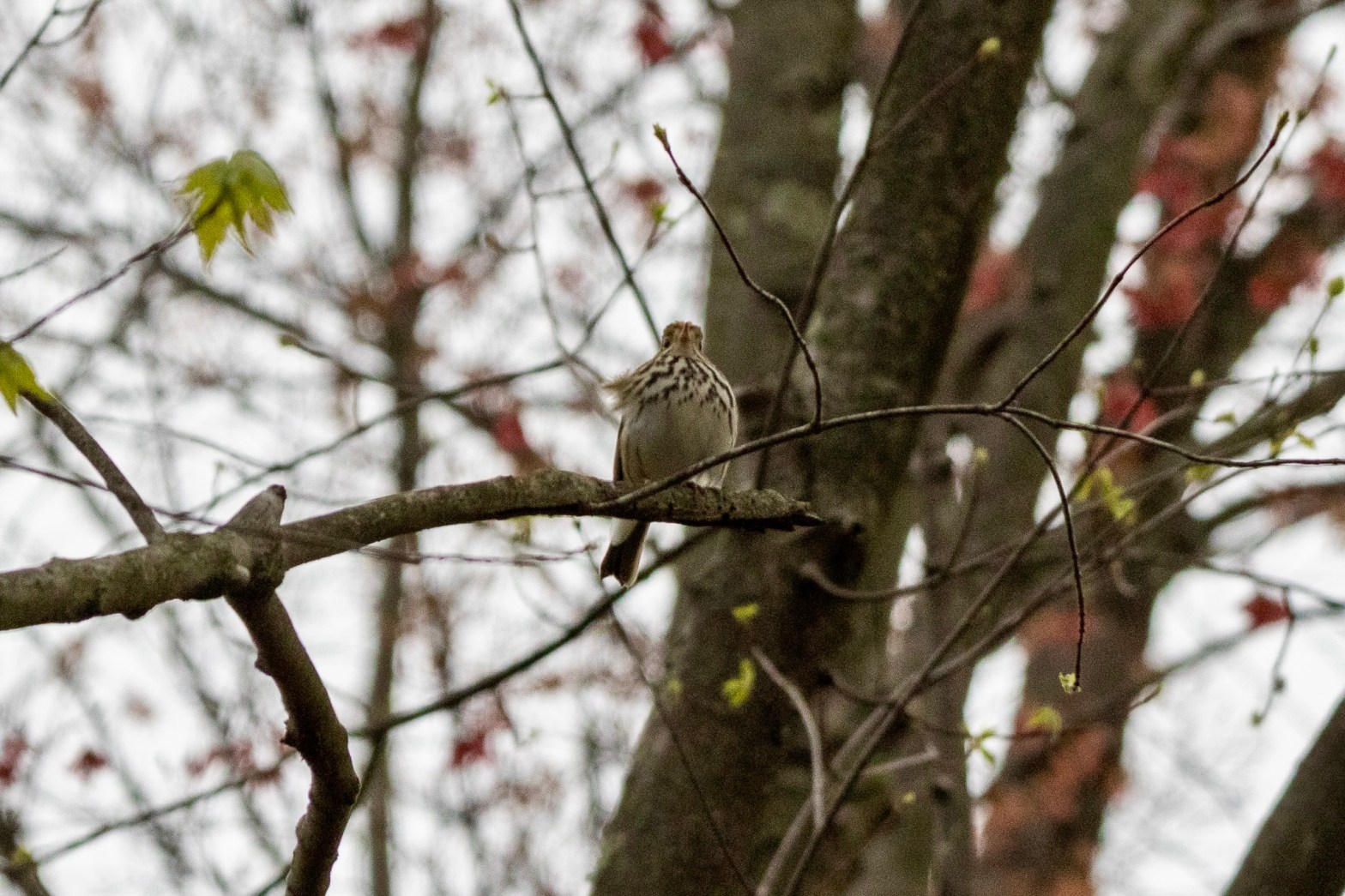
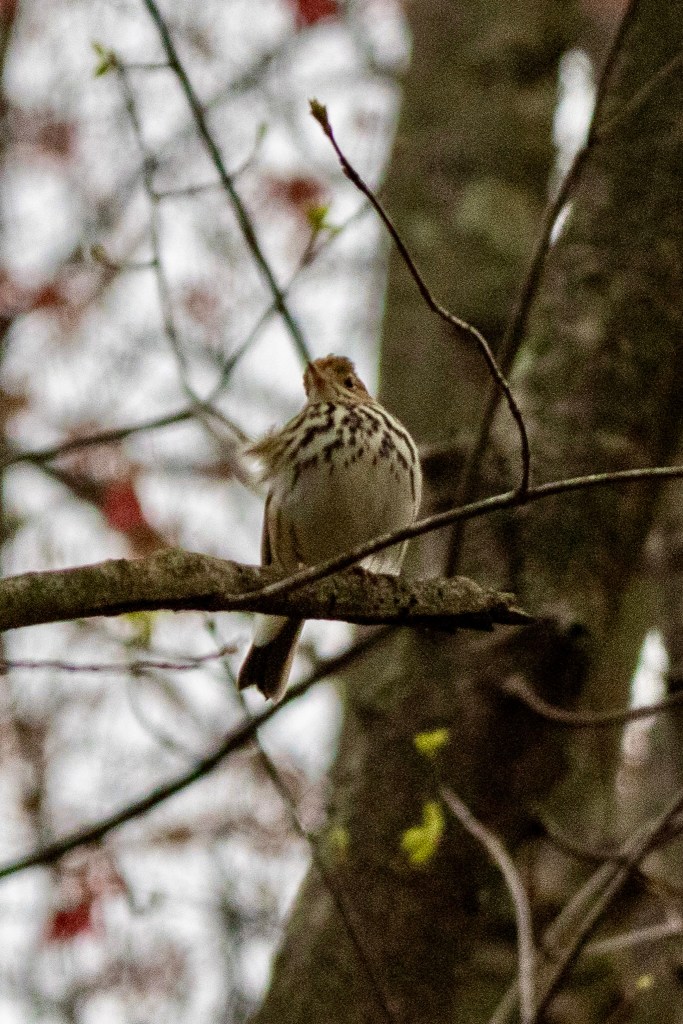
For the last several days, a song sparrow has been pecking at a couple of windows on the back end of our house. While my wife has been bemusedly coping with most of the attacks, I finally got a photo of the offending fellow this morning.

If you look at the window in the photo above, you’ll see scratch marks aplenty.

This sheet of paper has kept the bird away from its first window of choice.

This is the second window the bird has been attacking. His first target was a nearby window, over which we taped a large sheet of newsprint. I don’t think the bird has been back there.

This is isn’t our first encounter with ersatz bird attacks on reflective services. In previous Springs, I’ve watched a sparrow bash the side-view mirror of our Subaru. At our previous home, a robin persistently jabbed at one of our living room windows until I taped newspaper sheets over it.

There are various ways to keep birds, who see their reflection and apparently think they’re attacking a rival, from bashing one’s windows. We’d place some decals up if we had them. You can also hang streamers — anything to break the plane that the bird is misinterpreting.

We’ll probably put up another newsprint sheet in hopes of turning the bird away. But we have several windows that give us views into our yard, so this small human-bird skirmish could go on a while. 🦅

A real estate rush at the Pole Farm

Even without the formal arrival of Spring on the calendar, you know it’s a new season at the Mercer Meadows Pole Farm. The tree swallows are back, jetting over the fields and checking out the bird boxes.

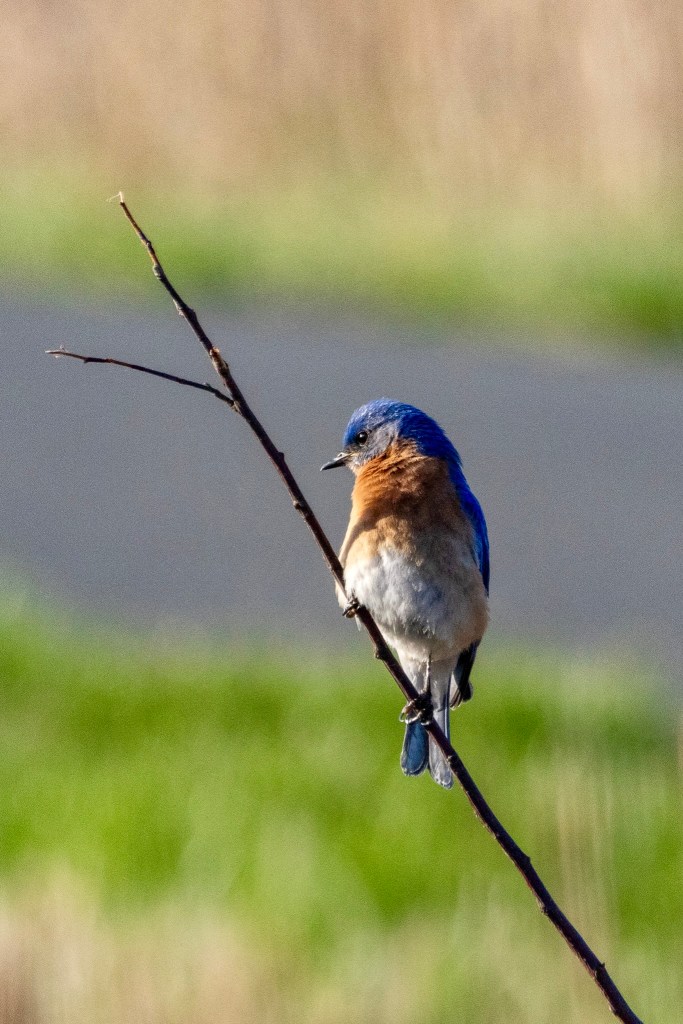
The boxes are cozy quarters for the swallows and Eastern bluebirds, the latter staying in the park year-round. But when the swallows return, they jostle with the bluebirds for residency in the boxes.

I spotted my first swallows of the year the other day, with two of them flitting around one of the boxes near the edge of the woods. I was too far off to bother with trying to shoot a photo.

Tree swallow sitting atop bird box, head turned toward the photographer.
“Who are you???”

As I trekked back to the parking lot I spotted one on one of the boxes not far from the trail. The bird was looking straight across the box, but when I pressed the shutter on my camera, the bird turned its head and gave me what I interpreted as a look of “don’t bug me.”

The field sparrows have started singing again, and I also got to watch a couple of bluebirds poke in and out of a another box near the swallow. Warmer, sunnier days lie ahead.

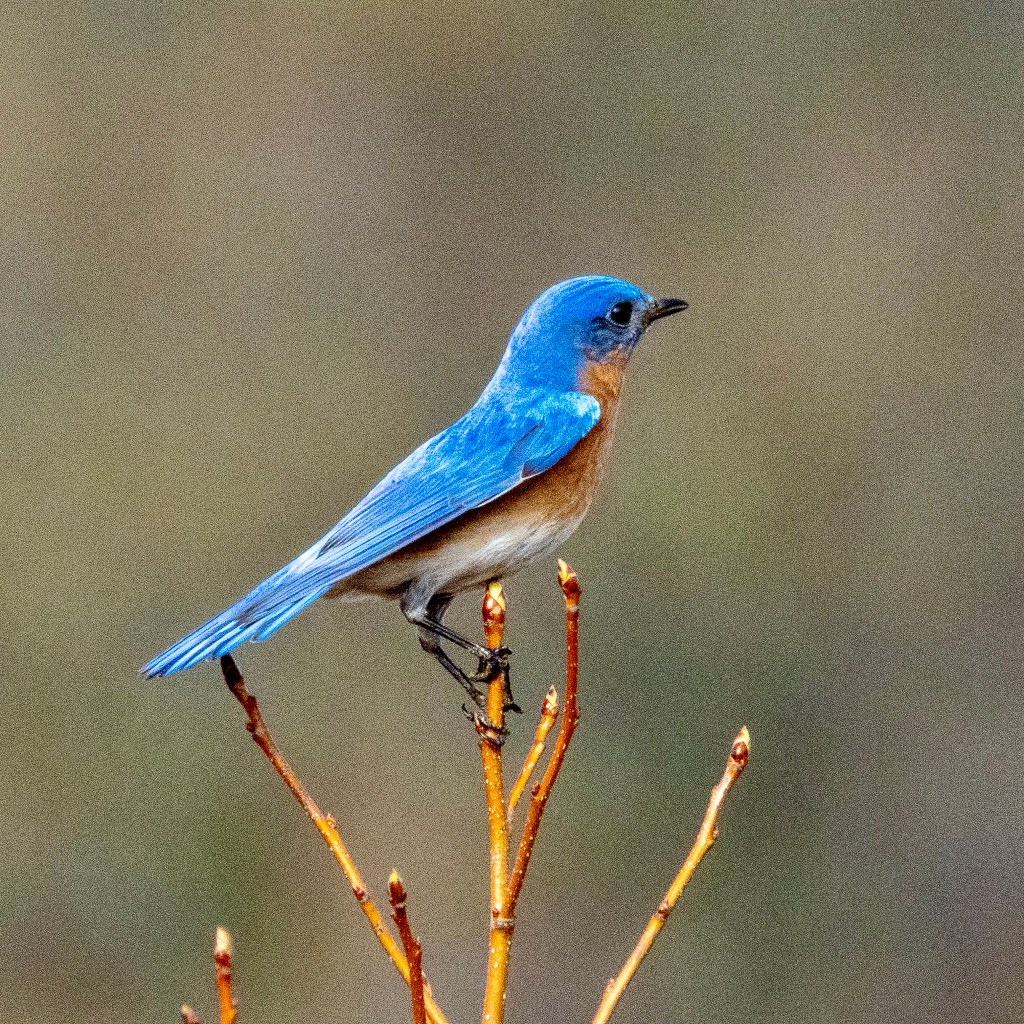
Eastern bluebird keeping watch near its bird box.

A meadowlark serenade

My birding opportunities are limited this week, so with the sun shining and the temperature flirting with 60 degrees, I decided to make a quick dash to the Mercer Meadows Pole Farm after work.

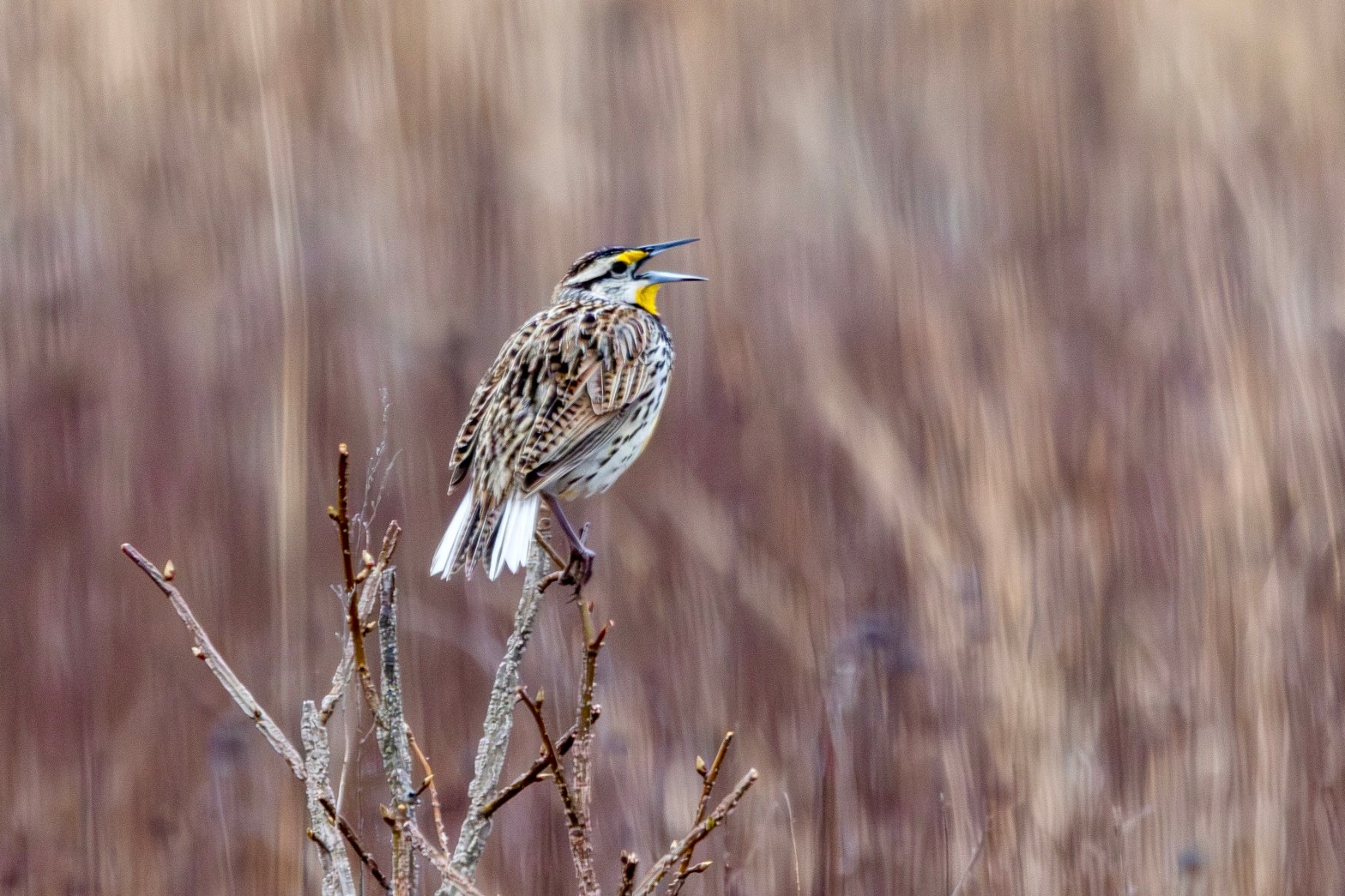
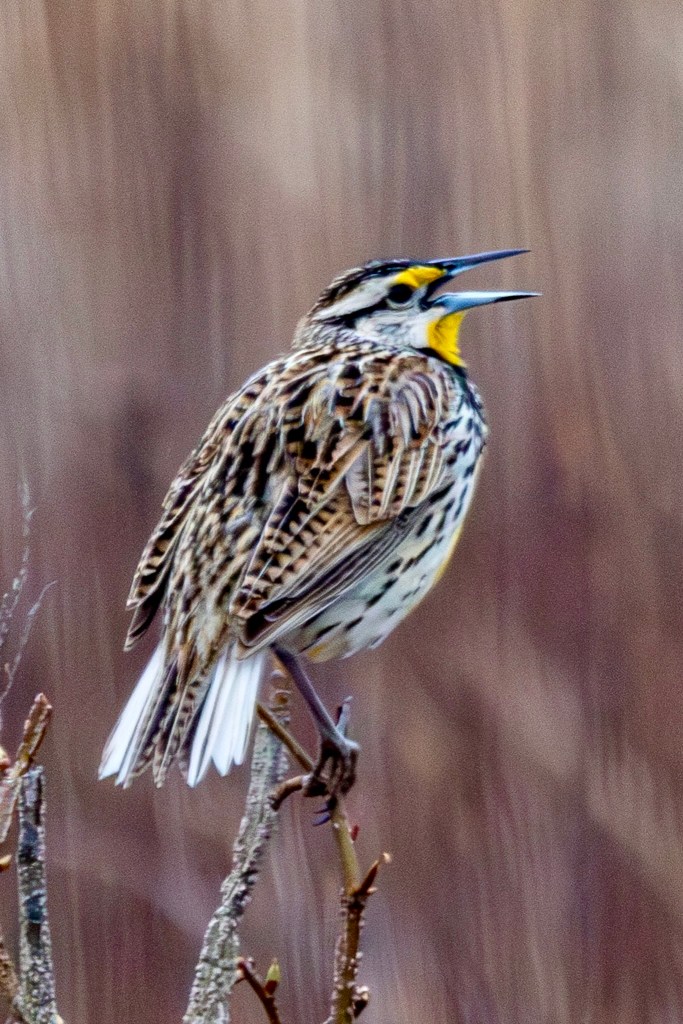
The highlight of my 2-mile stroll was a chorus of Eastern meadowlarks singing in the fields as I made my way back to my car. At first thinking I was hearing an echo, I figured out that larks were alternating their songs from one side of the trail to the other. Two birds were in one tree at one point, and I encountered a third lark singing farther down the trail.

I had relatively clear views of two of the birds. They were a good distance away from me and lit up by the descending sun. I had to contend with power lines strung behind them, and I was able to maneuver just enough to get them out of the frame.

I’d heard a few meadowlarks in recent trips to the Pole Farm, but not the sustained singing I heard this evening. Nor I had been able to spot one on those previous outings, so my reward tonight was sonic and visual. What a treat! 🦅

Meadowlark singing from tree in field of grasses.
A different frame of the same bird depicted at the top of this post. It was the first of the three meadowlarks I spotted.

My big zoom is back!

I was able to pick up my Sigma 150-600 mm Contemporary lens from the camera shop on Friday afternoon. I am happily back out shooting with it again. The problem with the zoom mechanism locking up is gone, and the repair gave me another fix I wasn’t expecting.

Ever since my Canon R7 arrived several months ago, I’ve had problems with a long lag in the camera turning on when the Sigma lens is attached. I learned to listen for a whirring noise coming from the lens before the camera would turn on — a problem I don’t have with my shorter Canon zooms or my Canon pancake lens.

While panicked at first thinking the camera was the problem, I eventually realized the issue was with the Sigma alone, and I learned to have a little patience each time I’d turn the camera on. I chalked the issue up to an older, large lens doing its best to connect to a new mirrorless camera.

But once I mounted the Sigma on the R7 after the repair, I discovered that the camera now turns on instantly, just as it does with my other lenses. So the lag time with the Sigma pre-repair was truly a problem with the lens, one that needed fixing. I’m thankful that it was solved along with the zoom jams.

The Sigma is now working flawlessly, including the zoom locking switch, which had been balky before.

While bird traffic seems to be picking up, there was not a whole lot of activity at the Mercer Meadows Pole Farm or Trenton marsh yesterday, and it was a similar story today at the Millstone River Impoundment and the Dyson Tract along the Delaware and Raritan Canal.

An American robin was surprisingly cooperative at the canal, posing what to me almost seemed as if it were a high school senior portrait session. The bird was on a branch at eye level to me, turning left and right before flying off.

The Pole Farm highlight was a song sparrow singing just off the edge of one of the trails, and one of those images tops this post.

Zoom troubles take my Sigma lens offline

The blackbird above must have been channeling my feelings this morning. Over the last several weeks, my Sigma 150-600 mm Contemporary lens that I use for almost all my birding outings was increasingly acting up. The lens’ zoom function was locking up intermittently, limiting my shooting to a narrow band of 400 mm to 500 mm, for example.

I pointed the camera and lens up, down and all around, hoping to shake loose whatever was impeding the zoom mechanism. Maddeningly, the problem was sporadic — I’d have full range for part of an outing, only to have the zoom seize up halfway through.

On Tuesday morning, the zoom was stuck again as I was walking the center trail at the Pole Farm. All of a sudden, my haze filter fell to the ground. As I picked it up, I said aloud, “Maybe this will help.”

Amazingly, I tried the zoom and it became unstuck, giving me full range once more.

Yesterday, when the lens locked up again, I decided I could no longer put off taking it into a camera shop for repair. I hope to get the lens back within a week or two. Meantime, I’ll be using my old Canon 150-300 and hoping the birds come a little closer.

Here are a few of the last shots I took with the Sigma — the red-winged blackbird topping the post, and an American tree sparrow. 🦅

An American tree sparrow perches in a field.

Watching a bald eagle is good for the soul

The other day I headed to the Millstone River Impoundment in Princeton to see what I could see. This would turn out to be a visit of quality over quantity. The scores of common mergansers that had flocked here a few days before had flown off, and only a few gulls and Canada geese were above or on Lake Carnegie.

After a short walk, I turned back and sauntered across one of the wooden pedestrian bridges at the park. While passing a fisherman on the bridge, I looked up and spotted a mature bald eagle circling overhead.

I’ve often seen eagles at the lake, usually for only a few fleeting moments. Today, however, this single eagle was circling over the lake in the strong breezes, and I watched it for a good 20 minutes or more.

Bald eagle screeching, just after landing on a tree branch.
“I stuck the landing!” the eagle appears to say.

Most of the time, the bird was too high up or too far off for me to bother with raising my camera. At one point, the eagle was landing on a tree across the lake, and I snapped a few hurried shots. Keeping my eye on the bird, I walked quickly up the trail to set myself directly across from it.

The eagle took off and headed back the way I’d come, briefly going out of sight. Not pressed for time, I sat on a lakeside bench and waited a bit. A few minutes later, the eagle flew back toward me and beyond, eventually parking in another tree across the lake.

After a short rest, the bird flew off out of sight, and I headed back to my car in the hopes that at least some of the frames I was able to shoot were sharp.

View from below of a bald eagle with outstretched wings.
I spent a lot of timing looking up, trying to track this eagle.

Although it’s not super crisp, my favorite shot from the outing was the one topping this post. I’m still waiting for an opportunity for an eagle facing the sun to swoop close to me for a killer shot, but that would be a bonus.

Just getting to observe that magnificent bird for several delightful minutes was a treat that made my day. 🦅

Backup plan: shooting birds at the home feeder

Today I made two trips to Mercer Meadows, to the Pole Farm at mid-morning and to the Reed-Bryan Farm in late afternoon. The only bird shots I took were of an American kestrel sitting atop a bird box, too far off for a clear photo.

When I got home this afternoon, I spotted a chickadee briefly perched at our main tube feeder out the dining room window. The bird flew off before I brought my camera over, but I decided to wait a bit to see if the chickadee would come back.

It didn’t, but I had plenty to shoot. First was a white-breasted nuthatch, a small and likely juvenile one, who needled into the feeder for a few treats. That’s the nuthatch atop this post.

A song sparrow came by and so did a couple of white-throated sparrows, incuding one that had a dark spot on its breast that made me wonder if it was a hybrid with a song sparrow.

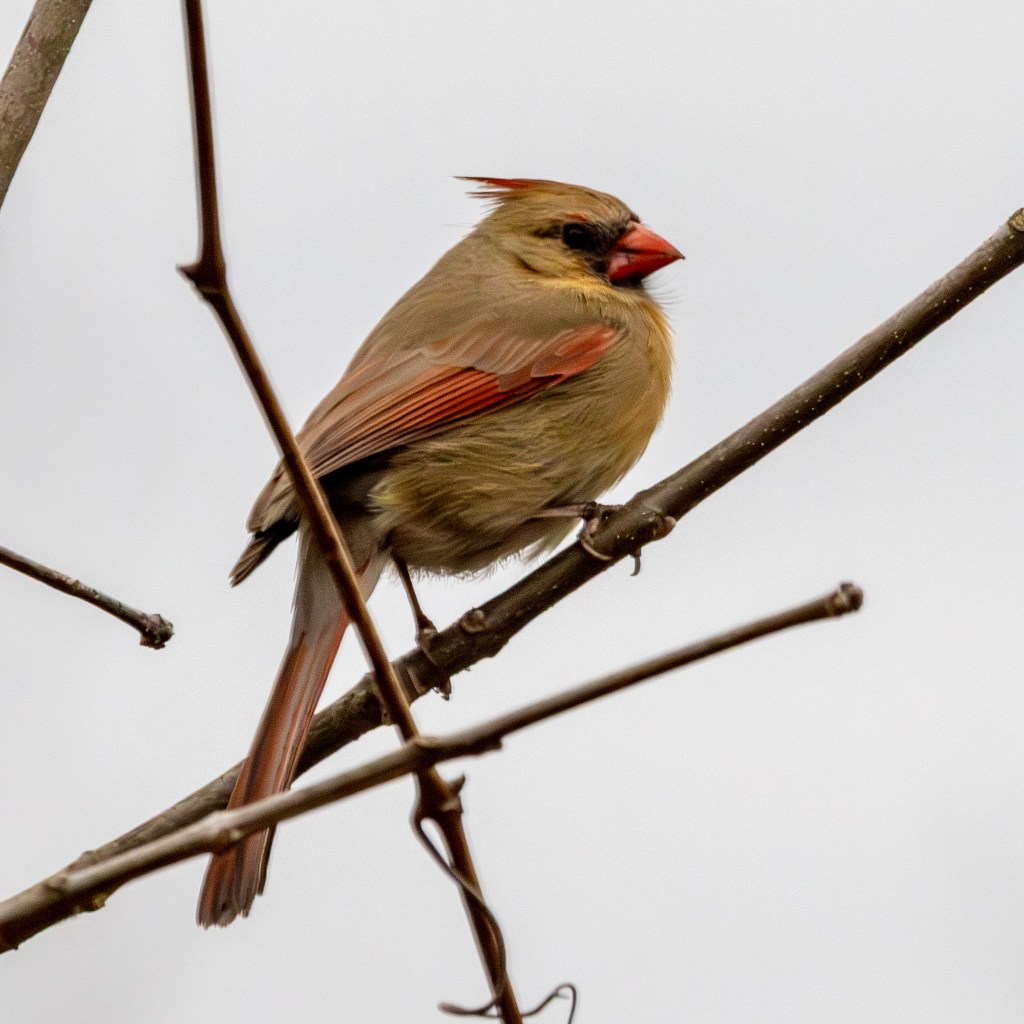
Also stopping by was a female Northern cardinal, which I assume is the same one that’s been coming by several times a day and chasing off any house sparrow or other bird that deigns to land on the perch while she’s feeding. No other birds showed up as I watched her, so I put down the camera and edited the shots I had.

Even though I struck out at the park today, it’s nice to know I usually can rely on finding birds cavorting in my yard. 🦅

The cardinals are singing again

Can Spring possibly be near? One sure sign is birdsong, and my mood lightened last week when I heard Northern cardinals singing at the Mercer Meadows Pole Farm for two consecutive days.

On the third day, I heard one singing as I went out to my car for a morning appointment. Again yesterday, I heard a couple of them singing at the Pole Farm and at least one singing in or near our yard.

The weather seems to have taken a turn for the warmer, with the mercury poking into the 40s yesterday. It appears we’ll top 50 degrees for the next few days.

I love all four seasons and the birds they bring. It’s a thrill when the woods move from the relative silence of winter to the enlivening songs of Spring.

I wasn’t able to get a cardinal photo last week, so I’ve posted one from last February, anticipating the next season of song. 🦅

A horned grebe does not disappoint

Reports came in Saturday on the Birding in Central New Jersey GroupMe chat channel that a horned grebe was hanging out with the Canada geese at Mercer County Park. More sightings were reported this morning, and I thought, why not? I’d never seen a horned grebe, let alone one near home. This was likely as good of a chance as I’ll get.

I drove over to the park’s West Picnic Area after lunch and saw hundreds of geese clustered in an inlet near the Lake Mercer marina and along a sheet of ice paralleling the trail that follows the lake shore.

I also spotted two women looking out onto the water and thought they might be birders who’d spotted the grebe, an unusual visitor to Mercer County. They were looking for bald eagles and weren’t aware of the grebe, but we got to chatting and started looking for the grebe.

I wandered up the trail a bit and turned around once I reached the end of the ice sheet because no more birds were in sight. When I walked back, my new friends excitedly pointed to a small gray and white bird making its way in the water. To our delight, it was the grebe.

I fired off a few hasty shots, all of which were fuzzy, and the grebe dove into the water and went out of site. Meanwhile, a hooded merganser showed up and occupied our gaze for a while.

Horned grebe floating on lake.
Horned grebe afloat.

I decided to go back up the trail to see if I could spot the grebe again, and I found it floating in the water just off the end of the ice sheet.

I took a few shots before heading back to alert my new friends. They walked back with me to where the grebe was, and it put on quite a show. It dove, stayed underwater a short while, then popped back up, repeating that pattern for several minutes and giving us time to take several photos.

Horned grebe dips its beak into the water.
The horned grebe dipping its beak into the lake, moments before diving back into the water.

It was kick to add the horned grebe to my life list, and sharing that experience with others made the day even more special. 🦅

Hooded merganser floating on lake.
Here’s the male hooded merganser. No offense to the grebe, but this bird took the best photo of the outing.

Getting up close to a Northern harrier

Over my many visits to the Mercer Meadows Pole Farm, I’ve seen scores of Northern harriers flying overhead and perched on poles or trees. Rarely do I see them relatively close by, as whenever I approach they scram.

Today was different. As I was walking up the central path to the woods, I spotted a harrier sitting on the ground at the edge of a path recently cut through the tall grasses in the big field the trail bisects.

Close-up of Northern harrier illuminated by the sun.
Thanks to a zoom lens and the bird facing toward the sun, I was able to get this close-up of the harrier.

Approaching slowly and as quietly as I could, I stopped a few times to take photos of the bird, a female. As I drew nearly even with the bird, approximately 25 yards away, I took a few more shots, then decided to check my camera settings.

After about 20 seconds of fiddling with my camera, I looked up to see the bird had flown away.

As I headed up the trail, at the next swath of cut grass I was surprised to see the harrier swoop in and sit near another female harrier. They were farther away than my previous encounter, and they sat for a minute or so before taking off simultaneously and flying away from me.

While I’ve taken a few photos of airborne harriers in the same frame over the years, this was the first time I can recall seeing two parked in close proximity. On a cold morning, it was a cool way to start the day. 🦅

Two female Northern harriers sit in the grass.
A pair of harriers in the grass.